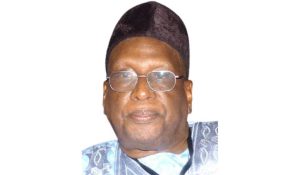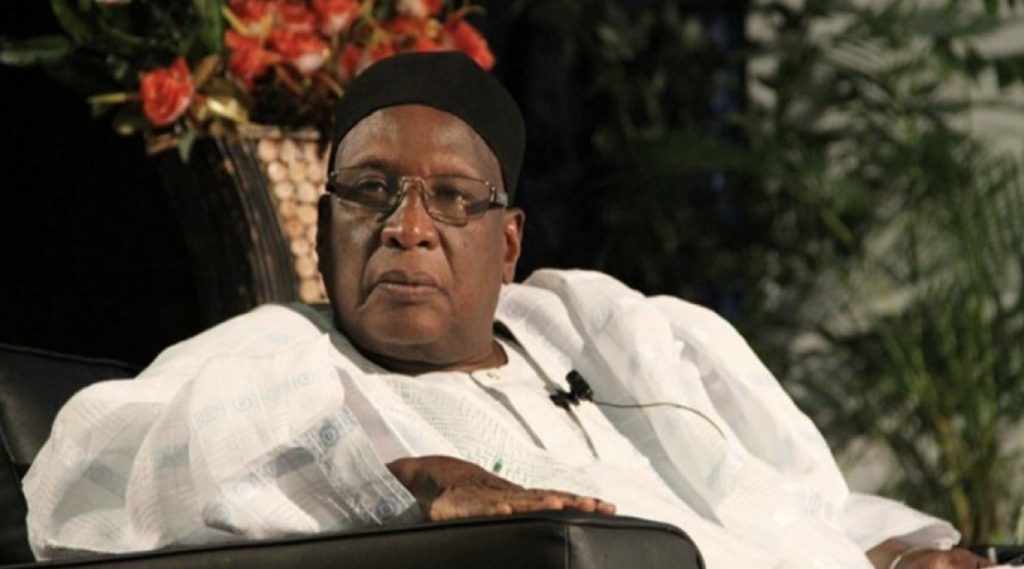
Elder statesman, Bamanga Tukur
President Bola Ahmed Tinubu and Vice President Kashim Shettima have paid glowing tributes to elder statesman, renowned businessman and former Governor of the old Gongola State, Alhaji Bamanga Muhammad Tukur, describing his death as a monumental loss to Nigeria and the African continent.
Tukur, who died on Saturday at the age of 90, was remembered by the nation’s two highest leaders for his outstanding contributions to public administration, governance, business, politics and Africa’s economic development.
In a condolence message, President Tinubu described the passing of the Tafidan Adamawa as the end of “a remarkable chapter in Nigeria’s political and economic history.”
According to the President, Alhaji Tukur built an enduring legacy through decades of service in both the public and private sectors.
Born on September 15, 1935, Tukur rose to national prominence as General Manager of the Nigerian Ports Authority (NPA) from 1975 to 1982, where he played a key role in modernising Nigeria’s maritime sector and improving port operations.
President Tinubu also recalled Tukur’s entry into partisan politics during the Second Republic, which culminated in his election as Governor of the old Gongola State in 1983. He later served as Minister of Industries under the administration of General Sani Abacha between 1993 and 1995 and became Chairman of BHI Holdings and the DADDO Group of Companies.
On the continental stage, the President noted that Tukur championed Africa’s economic renaissance through his leadership as Executive President of the African Business Roundtable and Chairman of the NEPAD Business Group, where he consistently advocated intra-African trade, private sector-driven growth and sustainable development.
Tinubu also acknowledged Tukur’s tenure as National Chairman of the Peoples Democratic Party (PDP) from 2012 to 2014, praising his commitment to strengthening democracy.
The President said: “Alhaji Tukur was urbane, generous and deeply rooted in the values of integrity and service that the Adamawa Emirate and the nation hold dear. He was a man of big ideas and bold enterprise who believed in Nigeria’s limitless potential. Nigeria will sorely miss his wise counsel and fatherly guidance.”
Vice President Shettima, in a separate condolence message, described Tukur as “a true patriot, a global citizen and an institution in his own right.”
He said the former governor’s death was not only a loss to Adamawa State or the Fombina Emirate but also a monumental loss to Nigeria and Africa.
“I am deeply grieved by the passing of our father, mentor and one of Nigeria’s greatest institution-builders, Alhaji Dr. Bamanga Muhammad Tukur, CON, the Tafidan Adamawa, who returned to his Creator today, September 12, 2026, at the age of 90, just three days shy of his 91st birthday.
“Alhaji Bamanga Tukur lived a life of impact in three distinct but interlinked worlds — as a technocrat who built Nigeria’s modern maritime infrastructure, as a statesman and politician who governed with vision, and as a pan-African business leader who put Africa’s private sector on the world map,” Shettima stated.
Highlighting Tukur’s achievements at the Nigerian Ports Authority, the Vice President recalled that he was appointed to tackle the notorious port congestion caused by the “cement armada” in 1975.
“Nigerians of my generation will never forget that in 1975, when Nigerian ports were gridlocked by the infamous cement armada, a young, brilliant Bamanga Tukur was called to lead the Nigerian Ports Authority. He did not just clear the congestion; he built for the future,” he said.
Shettima noted that Tukur conceived and delivered the Tin Can Island Port Complex, modernised Apapa, Warri, Calabar, Sapele and Onne ports, and significantly expanded Nigeria’s cargo-handling capacity.
“That singular intervention saved the Nigerian economy from collapse and created the gateway that still powers our trade today. In doing so, he became the first African Vice President and later a global icon in the International Association of Ports and Harbours in Tokyo, flying Nigeria’s flag high at a time when few Africans had such an opportunity,” the Vice President added.
Reflecting on Tukur’s political career, Shettima said that although his tenure as governor was cut short by the December 1983 military coup, his vision for rural development and education left a lasting impact.
He further praised the late elder statesman’s leadership of the PDP, saying: “Even his fiercest political opponents attest that Tukur was a man of consensus, a man who chose the stability of the party over his own comfort when he voluntarily resigned in January 2014.”
Shettima also highlighted Tukur’s continental influence, saying: “Beyond Nigeria, Baba Tukur was Africa’s pride. As founder and Executive President of the African Business Roundtable and Chairman of the NEPAD Business Group, he was one of the earliest voices to argue that Africa must trade with itself and that African businesses must drive African development. The ideas he championed are what have now blossomed into the African Continental Free Trade Area (AfCFTA).
“He was a true global citizen — an Adamawa son who sat on the Ghana Investors Advisory Council, advised the President of Benin Republic, and was honoured by Côte d’Ivoire and Togo for his continental service.”
President Tinubu extended condolences to the Tukur family, the Fombina Emirate, the Government and people of Adamawa State, as well as Nigeria’s political and business communities.
Similarly, Vice President Shettima sympathised with the family of the late elder statesman and the people of Adamawa State, assuring them that Nigeria would never forget his immense contributions to national development.
Both leaders prayed for Almighty Allah to forgive Alhaji Bamanga Tukur’s shortcomings, grant him Aljannatul Firdaus and comfort his family and all those mourning his passing.