Nigeria’s First Lady, Senator Oluremi Tinubu, has disclosed that the Federal Government is expanding its Tertiary Education Trust Fund, TETFund/Renewed Hope Initiative, RHI, ICT Experience Centre programme to 15 additional tertiary institutions across the country.
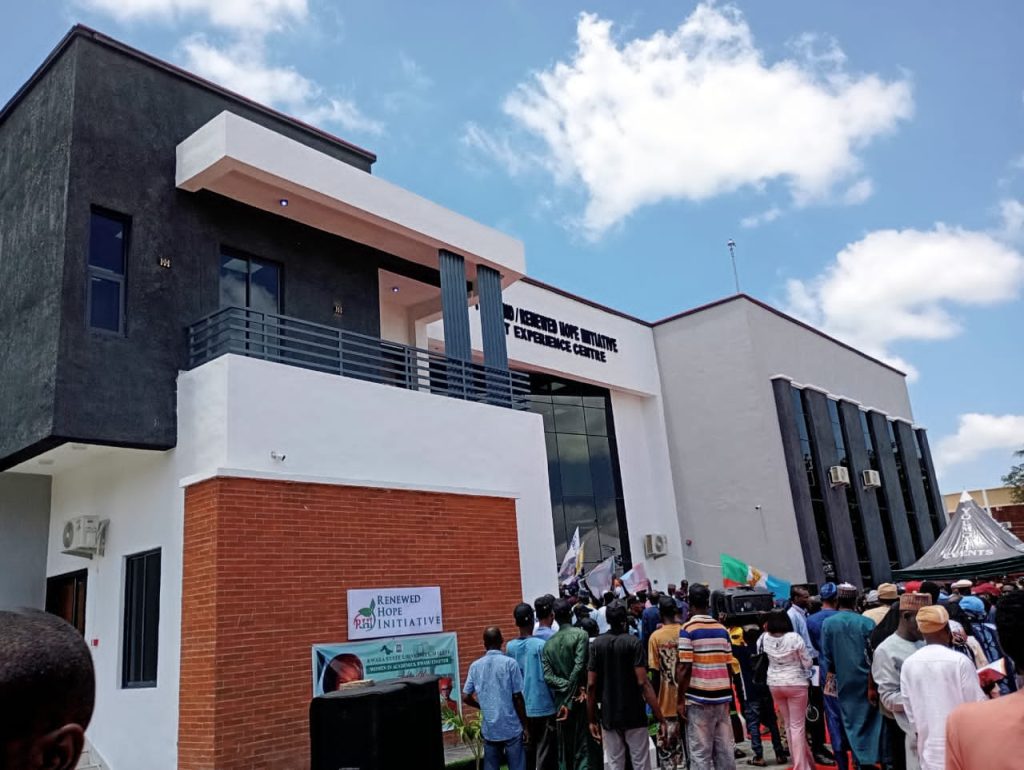
Tinubu stated this on Tuesday while Commissioning the ICT Experience Centre in Kwara State University University, Malete.
Represented by the wife of the Vice President, Hajia Nana Shettima, she said construction was already ongoing in institutions across Adamawa, Bayelsa, Borno, Delta, Edo, Enugu, Imo, Katsina, Nasarawa, Niger, Ondo, Osun, Rivers, Yobe and Zamfara states.
According to her, the expansion was part of efforts by the administration of President Bola Tinubu to equip Nigerian youths with the knowledge and skills needed to thrive in a technology-driven and competitive global economy.
“The centre we are commissioning today represents opportunity, innovation, knowledge and hope for the future of young people in Kwara State and beyond,” she said.
She added that the initiative was a testament to the Federal Government’s commitment to advancing education and digital inclusion, in line with the Renewed Hope Agenda’s focus on youth empowerment, education, innovation and economic transformation.
Tinubu said the KWASU facility was designed as a modern technology centre equipped with ICT laboratories, interactive digital displays, conference facilities and exhibition spaces to promote learning, creativity, research and technological advancement.
She noted that KWASU was one of six tertiary institutions selected for the pilot phase of the programme, with one institution representing each of the country’s six geopolitical zones.
The First Lady said centres had already been commissioned at institutions in other geopolitical zones, while those at Kaduna State University and Taraba State University would be commissioned soon.
She urged students of the university to take ownership of the facility and maximise the opportunities it provides.
“To our dear students, this centre has been established for you, to help you learn, innovate, develop solutions and unlock your full potential,” she said.
She further urged them to use technology positively “to transform your lives, communities and our nation.”
Also speaking, the Executive Secretary of TETFund, Arc Sonny Echono, represented by the Director of Monitoring and Evaluation, Arc Olajide Babatunde, said the TETFund Board had approved funding for an ICT Experience Centre in each of the six geopolitical zones, with each centre costing about N1 billion.
Echono said the centres were designed to equip students and lecturers with critical digital skills in areas including artificial intelligence, cybersecurity, robotics and software development.
“As technology continues to transform economies, the Board of Trustees recognised the need to align Nigeria’s education system with emerging global technology and industrial standards,” he said.
He said the facilities would expose beneficiaries to contemporary technologies and their applications in sectors such as security, agriculture, healthcare, media and mining, while enhancing graduate employability and fostering innovation.
The TETFund boss described the KWASU facility as one of the foremost ICT Experience Centres being delivered across the country and the third to be commissioned in 2026.
“The facility is appropriately furnished and fully air-conditioned, with supporting power and municipal infrastructure. Beyond providing the equipment, it offers a conducive environment for acquiring practical competencies, exploring ideas and developing innovative solutions,” he said.
He commended the First Lady for her “passion for empowerment and advancement of our young people,” saying her commitment had provided invaluable support and encouragement for initiatives aimed at preparing Nigerian youths for the technology-driven global economy.
He urged KWASU management to take full ownership of the facility, ensure that its equipment was properly maintained and secured, and regularly update it in line with technological advancements.
Earlier, the Vice-Chancellor of KWASU, Prof. Shaykh-Luqman Jimoh, described the centre as a strategic investment in human capital, innovation and entrepreneurship.
He said the facility represented “vision, belief and an investment in the Nigerian youth to better shape the future of our nation.”
Jimoh thanked the First Lady for facilitating the intervention, saying the project had demonstrated that the Federal Government recognised the potential of Nigerian students and was investing in the knowledge, skills and technologies required for them to compete successfully in a rapidly changing world.
“This centre is an investment in human capital, in innovation, in entrepreneurship, and most importantly, it is an investment in the future of Nigeria,” he said.
The vice-chancellor assured that the centre would be put to maximum use for the benefit of students, researchers and the wider university community.
“We will use it, we will explore it, experiment in it, learn and innovate in it,” he said.