EU, Federal Government, others back Abuja showcase of fashion, culture and green enterprise
By TOM CHIAHEMEN, Abuja
From the catwalk to the circular economy, Nigeria’s fashion industry is preparing to make a statement that goes beyond style.
With preparations gathering momentum for the 2026 edition of Nigeria Fashion Week (NFW), organisers are positioning the three-day event not merely as a celebration of fashion, but as a platform where creativity, culture, environmental responsibility and enterprise converge.
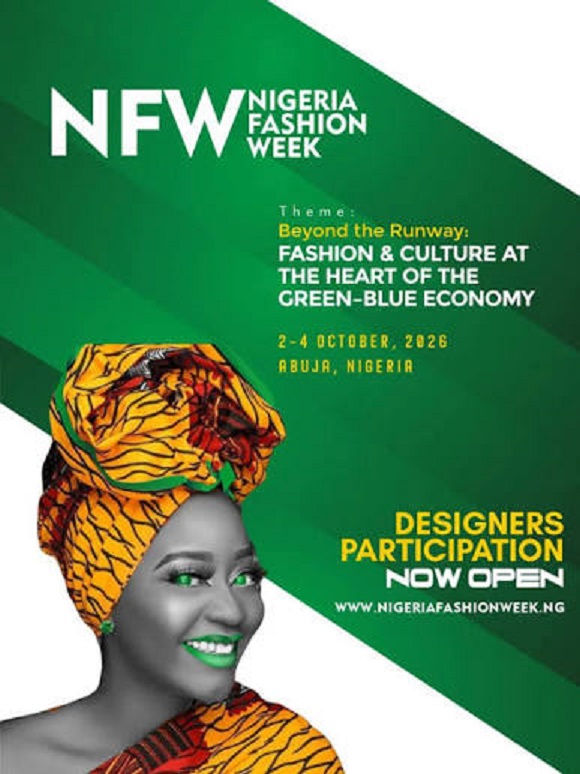
The Nigeria Fashion Week, one of Africa’s established fashion and creative-industry platforms, is scheduled to hold from October 2 to 4, 2026, in Abuja, bringing together designers, buyers, retailers, manufacturers, investors, policymakers, diplomats, development partners, media practitioners and fashion enthusiasts from Nigeria and beyond.
At the heart of this year’s event is the theme: “Beyond the Runway: Fashion and Culture at the Heart of the Green & Blue Economy (Going Green 5).”
It is a theme that seeks to redefine the place of fashion in Nigeria’s economic conversation—moving it from the traditional imagery of glamour and the runway to questions of sustainability, innovation, employment, environmental stewardship, cultural diplomacy, tourism and economic growth.
EU backs sustainable fashion initiative
The European Union Delegation to Nigeria and ECOWAS has confirmed its support for NFW 2026, with a focus on sustainable fashion, circular production and green enterprise.
The partnership will support the Going Green 5 Initiative, a major component of this year’s Fashion Week, which promotes recycling, upcycling, creative reuse and responsible sourcing as practical pathways to reducing waste and extending the life of materials.
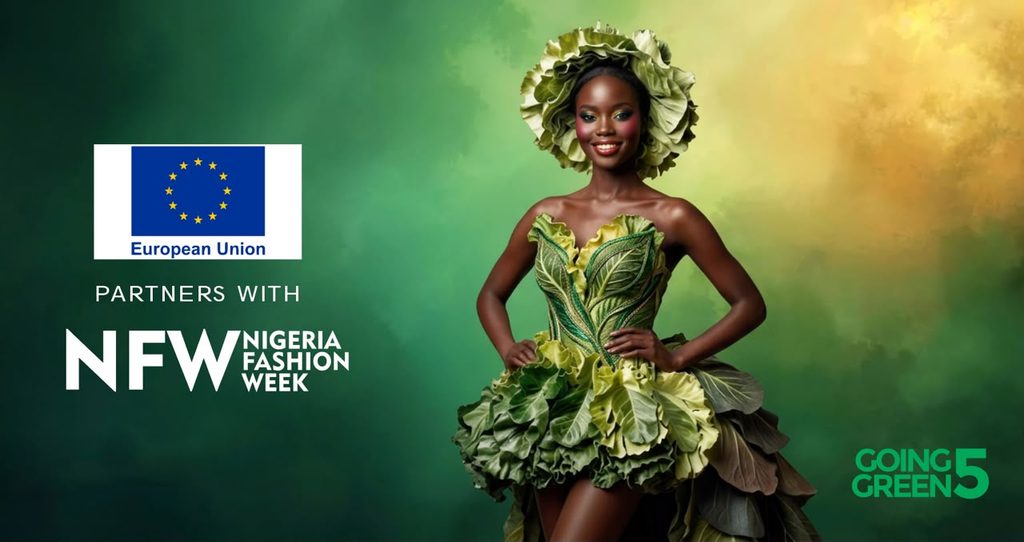
The initiative also seeks to demonstrate that what is ordinarily regarded as waste can, through imagination and innovation, acquire a second life—and potentially become a source of income, enterprise and employment.
A major attraction will be the Going Green Collection, a signature runway presentation featuring Nigerian and international designers whose creations will incorporate recycled, upcycled, reclaimed and other environmentally responsible materials.
In effect, the runway will become more than a stage for displaying clothes. It will become a visual argument for the circular economy—demonstrating how creativity can transform discarded materials into products of aesthetic, cultural and commercial value.
Speaking on the partnership, EU Ambassador to Nigeria and ECOWAS, Gautier Mignot, said the initiative was consistent with the EU’s wider cooperation with Nigeria in advancing a greener and more circular economy.
“The European Union has been working with Nigeria to advance the circular economy, reduce waste and promote more sustainable patterns of production and consumption. Fashion is an important part of this conversation.”
Mignot noted that Nigeria’s fashion industry possesses considerable creative and entrepreneurial potential, particularly in transforming materials that might otherwise become waste into new products, businesses and economic opportunities.
He stressed that sustainability must ultimately influence what is produced, how it is produced and what happens to materials after use.
According to him, encouraging recycling, upcycling and responsible production can help reduce the environmental footprint of the fashion industry while opening new avenues for innovation, entrepreneurship and employment, particularly among young people.
Trees, fashion and a greener Nigeria
The environmental conversation will not end on the runway.
The EU partnership will also support the Trees for Nigeria Campaign, an environmental initiative of Nigeria Fashion Week that will bring together designers, models, young people, government representatives, development partners, celebrities, international delegates and other participants for tree-planting and environmental-awareness activities.
Beyond these symbolic gestures, the organisers envisage a broader conversation involving designers, manufacturers, policymakers, investors, environmental practitioners, development partners and young creatives.
Discussions will focus on sustainable fashion, the circular economy, green innovation, youth entrepreneurship and responsible production, with the objective of exploring practical ways of making Nigeria’s fashion industry more sustainable and competitive.
For Lexy Mojo-Eyes, President of Nigeria Fashion Week and President/CEO of Legendary Gold Limited, the collaboration with the European Union represents an important bridge between Nigeria’s creative economy and the global sustainability agenda.
“Fashion has the power to influence how people live, consume and produce,” he said.
Through Going Green 5, Mojo-Eyes said the organisers wanted to demonstrate that Nigeria’s creative economy could become a powerful driver of environmental responsibility, innovation and sustainable enterprise.
He described the EU partnership as one that gives the initiative an important international dimension.
Musawa reaffirms Federal Government support
The Federal Government is also throwing its weight behind the event.
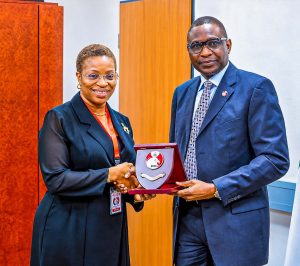
Minister of Art, Culture, Tourism and the Creative Economy, Hannatu Musa Musawa, has reaffirmed her support for Nigeria Fashion Week during a meeting with a delegation from Legendary Gold, organisers of the event, Qualitrend Group, the Government Relations Partner, and members of the organising committee led by Mojo-Eyes.
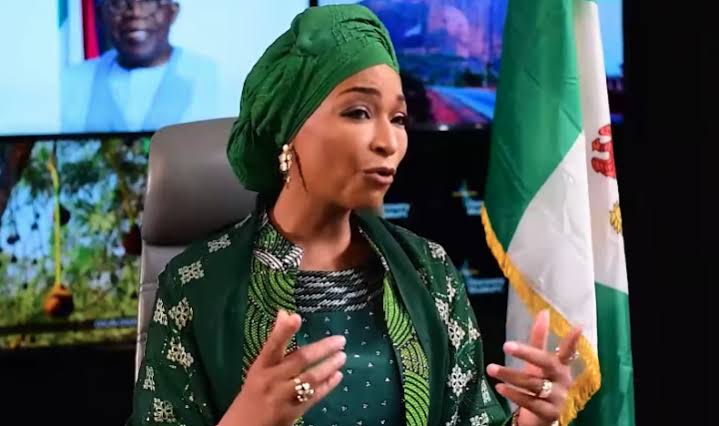
- MUSAWA
The Minister reiterated the Ministry’s commitment to positioning Nigeria’s creative and cultural industries as significant drivers of entrepreneurship, economic growth, job creation, exports and global competitiveness.
Particular emphasis, she said, would be placed on opportunities for women and young people.
For Mojo-Eyes, fashion is much more than clothing and appearance. It is an expression of art, identity and culture—and an economic ecosystem that connects tourism, investment, manufacturing and a wide range of businesses along the fashion value chain.
That ecosystem is expected to be on display in Abuja when the 2026 Fashion Week gets underway.
Three days of fashion, business and ideas
The three-day event will feature runway showcases, exhibitions, business engagements, sustainability activities, the Nigeria Fashion Entrepreneurs Forum and the Nigeria Fashion Awards.
The programme is expected to provide a meeting point between creativity and commerce, connecting designers and other creative professionals with buyers, investors, manufacturers, policymakers and international partners.
The significance of such a platform lies partly in its ability to reposition fashion as an industry capable of contributing to conversations far beyond aesthetics.
In an economy increasingly searching for new sources of jobs, exports, entrepreneurship and foreign exchange, the organisers believe the fashion and creative industries can play a more consequential role.
The EU partnership therefore adds another layer to the 2026 edition: the proposition that fashion can be both beautiful and responsible; commercially viable and environmentally conscious; deeply rooted in culture while simultaneously speaking the language of global enterprise.
About Nigeria Fashion Week
Established in 2002 by Legendary Gold Limited, Nigeria Fashion Week is a national platform promoting Nigerian fashion, textiles, garments, leather, footwear, beauty and creative enterprise.
Over the years, it has provided opportunities for designers, manufacturers, models, entrepreneurs and other creative professionals, while connecting Nigerian fashion with domestic and international markets.
The event is organised in collaboration with the Federal Ministry of Art, Culture, Tourism and the Creative Economy, Federal Ministry of Foreign Affairs, National Council for Arts and Culture, and Nigerian Tourism Development Authority.
Other partners include Bizness Group, Africa Magic, Blue Seal Energy Group, Transcorp Hilton Hotel, Tetrazini, Soul Lounge Resorts, Africa CEO Club, WAP TV, Qualitrend Group, News Central, Prince Donatus, Kennis FM and PG Records.
With its 2026 theme, Nigeria Fashion Week is seeking to make the runway a metaphor for something larger: a fashion industry that does not merely showcase what Nigerians can create, but demonstrates how creativity itself can become an instrument of sustainability, enterprise and national development.