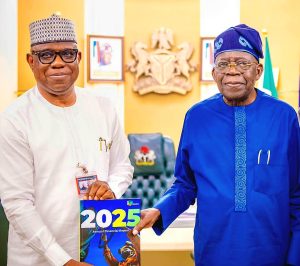
Minister of Finance and Coordinating Minister of the Economy, Taiwo Oyedele
Federal Government spent N9.39 trillion on wage adjustments, minimum wage increases and allowances for public workers between June 2023 and December 2025, the Minister of Finance and Coordinating Minister of the Economy, Taiwo Oyedele, has disclosed.
Oyedele made the disclosure on Wednesday August 19 during a Channels Television media briefing on the government’s economic reform programme, where he outlined the financial gains and expenditure pressures associated with the measures introduced since President Bola Tinubu assumed office.
According to the minister, the N9.39 trillion spent on workers’ remuneration during the 31-month period exceeded the N5.4 trillion share of subsidy-removal savings that accrued to the Federal Government.
The figures come amid ongoing debate over the utilisation of savings generated from the removal of the petrol subsidy and other economic reforms.
Oyedele said the Federal Government generated about N20.4 trillion in additional resources during the period from subsidy-related savings, increased independent revenue and additional borrowing.
However, he said the additional resources were largely absorbed by rising government obligations, with total incremental expenditure reaching N30.64 trillion.
Wage-related expenditure accounted for the largest component of the additional spending at N9.39 trillion, he said.
Oyedele explained that the increase in workers’ remuneration reflected wage adjustments, the implementation of the new national minimum wage and related allowances.
He said the cost of higher wages was significant enough to exceed the entire subsidy savings that accrued to the Federal Government.
The minister said debt servicing represented another major financial burden, with N9.37 trillion spent on external debt servicing during the period.
He attributed much of the increase to the depreciation of the naira, which raised the local currency cost of servicing Nigeria’s dollar-denominated obligations.
Oyedele explained that although the value of a foreign debt obligation in dollars remained unchanged, a weaker naira meant that the government needed substantially more naira to meet the same obligation.
He illustrated the impact by noting that an obligation that previously cost about N460 to the dollar would require considerably more naira when the exchange rate moved to around N1,415 to the dollar.
The minister stressed that debt obligations could not simply be deferred because failure to meet them could have serious implications for the country.
The figures highlight the financial pressures facing the Federal Government since the removal of the petrol subsidy in May 2023.
Although the policy freed resources previously used to subsidise petrol prices, the government has simultaneously faced higher personnel costs, increased debt-servicing obligations and other expenditure pressures.
Oyedele’s disclosure also comes ahead of expected further discussions between the Federal Government and organised labour over workers’ remuneration and future wage adjustments.
The figures suggest that a significant share of the additional resources generated since the beginning of the Tinubu administration has been absorbed by recurrent obligations, limiting the funds available for new development projects.