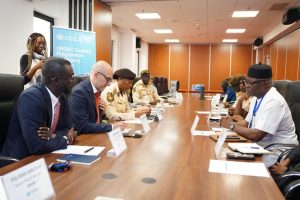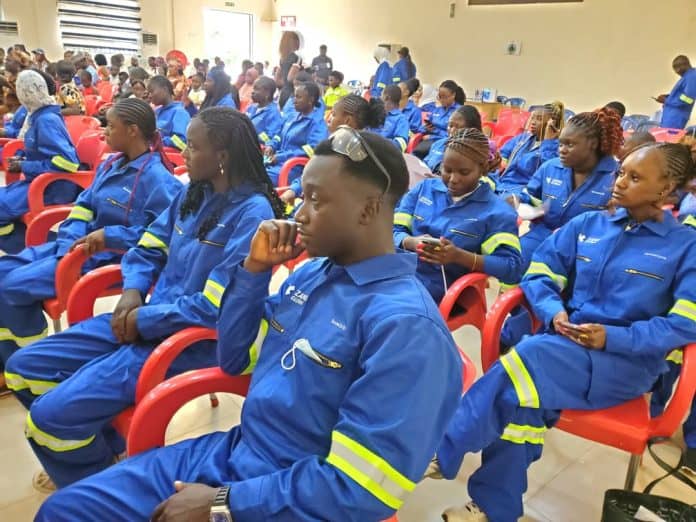
Zang Global has graduated 40 young people trained in renewable energy and electronic waste management under its RenewCycle Training Programme in Plateau State.
The first cohort, comprising 33 young women and seven young men drawn from different communities across the state, completed the three-month training programme at a graduation ceremony held at the Industrial Training Fund (ITF) along Bukuru Express Way, Jos, on Saturday.
Chief Executive Officer of Zang Global, Mr Zang Luka, said the programme was designed to equip young people, particularly those from marginalised communities, with practical skills that could provide sustainable livelihoods.
Luka said the initiative was introduced against the backdrop of limited employment opportunities for university graduates and the need to equip young people with skills that could enable them to become self-reliant.
“Because if you look at, there are tons of graduates that we have that are university graduates yearly and jobs is not there. So skills is the next big thing for young people,” he said.
He added that the organisation was particularly focused on empowering young women and people from underserved communities through renewable-energy and electronic-waste management skills.
According to him, 15 of the 40 graduates would be selected for further annual business development training to support them in establishing micro-enterprises.
Luka said the organisation was already preparing for the second cohort of the programme, with a broader vision to train more young people in renewable energy and electronic waste management.
He said the ultimate objective was to create livelihood and economic opportunities for young people, adding that meaningful engagement could also contribute to reducing crime in society.
Speaking at the ceremony, the programme coordinator, Alexander Pascal, said the training was intended to give the participants practical skills that could complement their formal education and help them become economically productive.
Pascal described the programme as part of a broader effort to equip young people, particularly those from underserved communities, with skills that could help them sustain themselves.
He said the 40 participants had also developed business ideas which they would pursue after the training, particularly in renewable energy and e-waste management.
One of the graduates, Fom Shedrach Ishaya, said his interest in renewable energy and the country’s unstable electricity supply motivated him to enrol in the programme.
Ishaya said he acquired practical skills including the use of personal protective equipment, soldering and testing continuity in electrical cables.
He said he planned to establish a business dealing in solar accessories and components while also providing installation services.
Another graduate, Ishaya Mafeng Dalyop, said solar installation was among the most important skills she acquired during the training.
Dalyop said she planned to establish her own shop, install solar systems and produce power banks with the skills gained from the programme.