The Independent National Electoral Commission (INEC) has secured the support of the National Universities Commission (NUC) for the nomination of credible academic personnel and adjustment of university calendars ahead of the 2027 general elections.
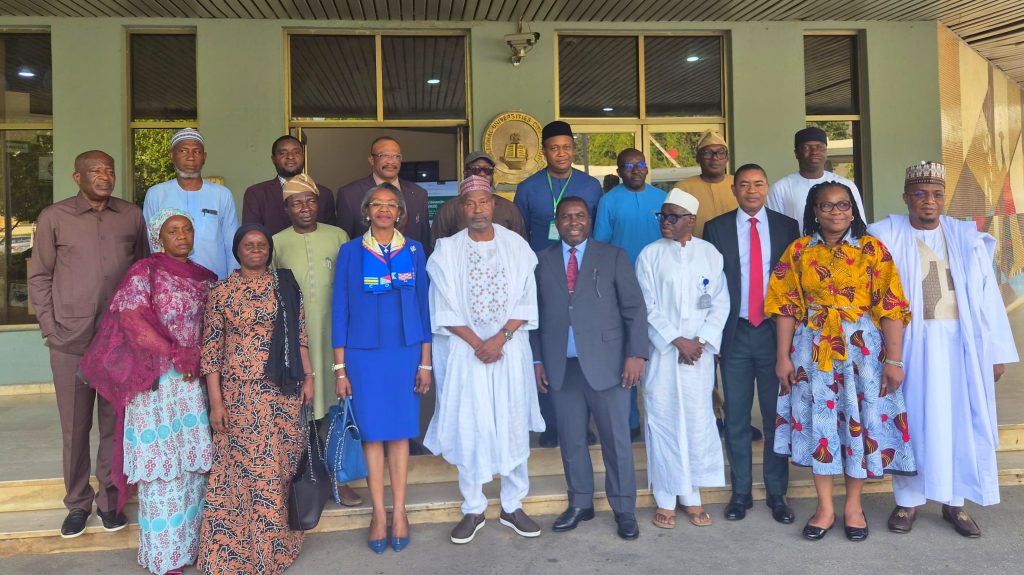
The NUC Executive Secretary, Prof. Abdullahi Ribadu, gave the assurance on Monday in Abuja when the INEC Chairman, Prof. Joash Amupitan, SAN, led a delegation of National Commissioners and senior officials on a courtesy visit.
Amupitan said the partnership was crucial to ensuring credible elections, noting that university academics had played significant roles in the electoral process over the years as collation and returning officers.
He requested the NUC’s support in securing the nomination of non-partisan academics, aligning university calendars with election dates, promoting voter education on campuses and improving the welfare of academics deployed for election duties.
The INEC chairman also highlighted measures introduced to strengthen electoral credibility and protect election officials, including the procurement of 57,000 additional Bimodal Voter Accreditation System (BVAS) machines and the introduction of automated arithmetic consistency and over-voting checks on polling unit results.
He announced that the Commission would conduct a nationwide mock accreditation and result transmission exercise on Saturday, November 28, across the 36 states and the Federal Capital Territory.
Responding, Ribadu pledged that the NUC would engage vice-chancellors on the nomination of suitable academic personnel and communicate the Commission’s request to universities through a formal circular.
He also proposed a three-to-four-week adjustment to university calendars to accommodate the election period without disrupting academic activities.
The NUC boss stressed the importance of neutrality among election officials, saying all ad hoc personnel should take an oath of neutrality.
He further proposed expanded collaboration between INEC and universities in electoral studies, student internships and research in emerging technologies, including artificial intelligence, robotics and data analytics.
Meanwhile, INEC has dismissed social media claims that Nigerians would be allowed to vote in the 2027 general elections without their Permanent Voter Cards (PVCs), warning that the misinformation could lead to voter disenfranchisement and election-day tension.
The National Commissioner and Chairman of the Information and Voter Education Committee, Mohammed Kudu Haruna, raised the concern at an INEC media forum on ethical and professional standards in election reporting ahead of the 2027 elections.
Represented by the Deputy Director, Information and Publicity, Mr Wilfred Ifogah, Haruna said claims that BVAS had made PVCs unnecessary were false, stressing that the card remained a mandatory requirement for voter accreditation under Section 47(1) of the Electoral Act 2026.
He explained that BVAS was designed to verify the PVC and the biometrics of its holder, not replace the card.
“No PVC, no accreditation; no accreditation, no ballot paper,” he warned, urging registered voters to collect their cards and disregard misleading information circulating online.
The commissioner also condemned the growing use of threatening political slogans, particularly “rig and die”, describing such rhetoric as dangerous and capable of inciting violence against voters and electoral officials.
He urged political actors and their supporters to embrace peaceful political engagement, noting that allegations of electoral malpractice should be addressed through established legal channels rather than threats or violence.
Haruna also called on journalists and social media analysts to uphold professional standards by verifying information before publication, avoiding hate speech, distinguishing facts from speculation and resisting the temptation to amplify unverified election-related claims.
He warned against the spread of fake accounts, manipulated images, cloned voices and artificial intelligence-generated content, urging media practitioners to collaborate with INEC in tackling misinformation and disinformation.
The commissioner further urged journalists to give adequate attention to voter education, PVC collection, vote buying and the participation of women, young people and persons with disabilities in the electoral process.
He disclosed that the November 28 mock exercise would take place in two polling units in each Registration Area, with accreditation scheduled for 8:30 a.m. to 2:30 p.m. The exercise, he explained, would test BVAS accreditation and the uploading of polling unit results to the INEC Result Viewing (IReV) portal.
Earlier, the Director of Voter Education and Publicity, Mrs Victoria Eta-Messi, represented by Ifogah, said the forum was designed to strengthen collaboration between INEC and the media, particularly in promoting accurate reporting and countering electoral misinformation.
The FCT Resident Electoral Commissioner, Dr Hale Gabriel Longpet, represented by the Administrative Secretary, Mrs Bimbo Oladunjoye, described the media as an indispensable partner in delivering credible and peaceful elections.
Similarly, the National Coordinator of the Nigerian Institute of Social Media Analysts (NISMA), Dr Christian Eze, urged social media users to take responsibility for the information they create, share and amplify ahead of the elections.
He warned that emotionally appealing but false information could spread rapidly on social media and undermine public confidence in the electoral process.
The Presidential and National Assembly elections are scheduled for January 16, 2027, while governorship and State Houses of Assembly elections will hold on February 6, 2027.
INEC advised citizens to verify election-related information through its Citizens Contact Centre on 0700-2255-4632, short code 4632, its official website and verified social media platforms.