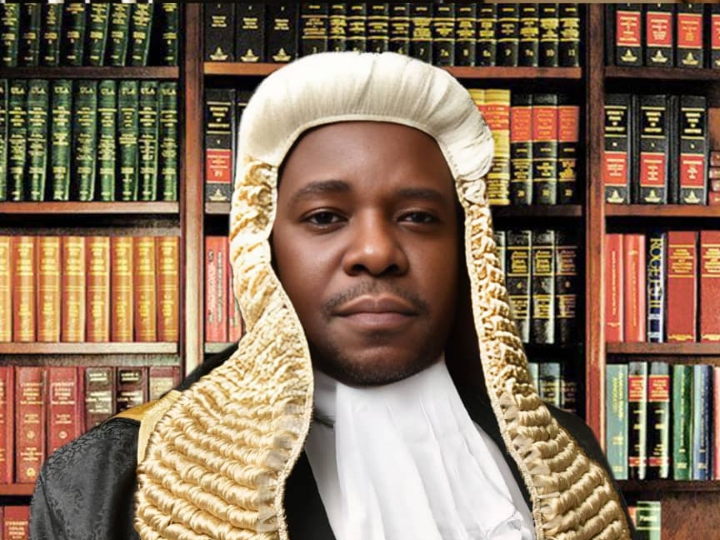
Imo State Attorney-General and Commissioner for
The Imo State Government has insisted that the appointment of a substantive Chief Judge must be conducted strictly in line with the Constitution, arguing that the National Judicial Council (NJC) cannot control the nomination process handled by the State Judicial Service Commission (JSC).
Attorney-General and Commissioner for Justice, Paul Obinatu, stated this while challenging what he described as the NJC’s directive to the Imo State JSC regarding the candidate to be submitted for consideration as substantive Chief Judge.
In a statement issued on November 6, Obinatu said Section 202 of the 1999 Constitution guarantees the independence of the State Judicial Service Commission and shields it from the direction or control of any authority while exercising its constitutional duties.
He argued that the Constitution clearly separates the responsibilities of the State JSC and the NJC in the appointment process.
According to him, the State JSC is empowered to identify and advise on suitable candidates, while the NJC is expected to recommend one of the submitted nominees to the governor, who then makes the appointment subject to confirmation by the State House of Assembly.
The Attorney-General maintained that interpreting the NJC’s recommendation powers as authority to determine whom the State JSC must submit would amount to transferring the commission’s constitutional powers to the council.
He further argued that the NJC’s procedural guidelines cannot confer powers beyond those granted by the Constitution or override the independence guaranteed to the State Judicial Service Commission.
Obinatu also relied on several judicial authorities, including Elelu-Habeeb v. Attorney-General of the Federation, Bamisile v. National Judicial Council, FRN v. Nganjiwa and Attorney-General of the Federation v. Attorney-General of Abia State, to support his position that constitutional institutions must remain within their legally defined powers.
He warned that any attempt to interfere with the independent nomination process could erode public confidence in the judiciary and weaken the constitutional safeguards governing judicial appointments.
The Attorney-General concluded that while the NJC has the constitutional responsibility to recommend a candidate to the governor, it lacks the authority to dictate to the Imo State Judicial Service Commission the candidate it must nominate for consideration.