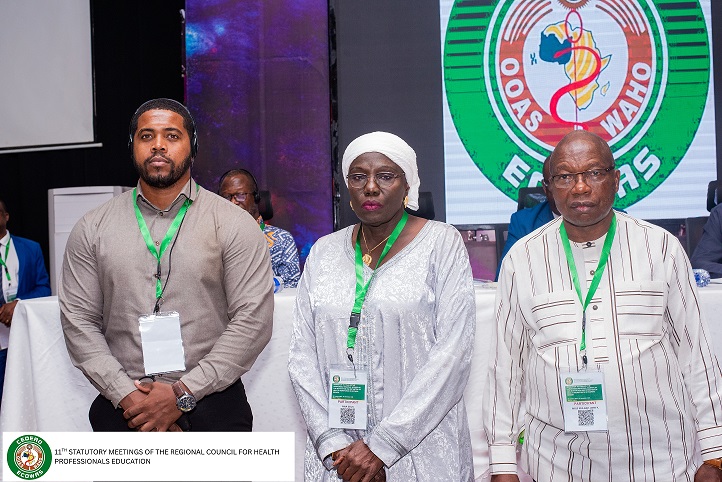
R-L: Prof John Mulbah (New President of RCHPE), Dr. Awa Seck (new Vice President of RCHPE), Dr. Mitchel Da Veiga (new RCHPE Secretary-General)
The 11th Statutory Meeting of the Regional Council for Health Professionals Education (RCHPE), ended in Abuja on Wednesday with the election of a new executive committee to run the affairs of the Council for the next two years.
In the results of the election announced during the closing ceremony of the three-day meeting, John K. Mulbah, a prominent Liberian Gynecologist and Professor of the Medical College of the University of Liberia, emerged as the new President of the RCHPE, replacing Professor Agnom Koffi Balogou, who tenure expires at the end of next month.
President of the West African College of Nursing & Midwifery, Dr. Joan Shepherd, who announced the results, said Dr. Awa Seck, an infectious disease specialist and former Minister of Health of Senegal, was elected Vice-President.
She said that the post of Secretary-General of the Council went to Dr. Mitchel Da Veiga of Cape Verde.
The election was witnessed by Nigeria’s Minister of Health and Social Welfare, Professor Muhammad Ali Pate (represented by Dr. John Ovuoraye), the Executive Director of the ECOWAS Regional Centre for Surveillance and Disease Control, Dr. Mamadou Diarrassouba and; a representative of the Chair of ECOWAS and President of Senegal, Bassirou Diomaye Faye.
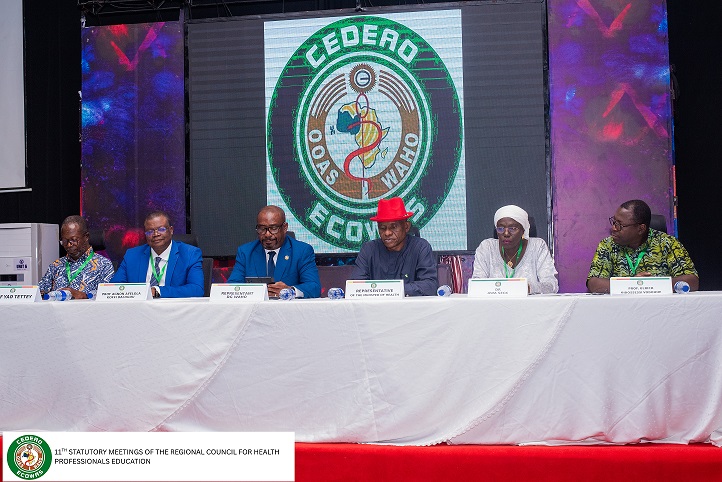
Speaking at the closing ceremony, the Minister stressed the need for full implementation of resolutions reached during the meeting, even as he commended the level of maturity displayed by participants in the conduct of the election of a new executive committee of the Council.
The 11th Stautoru Meeting of the Council, which began on November 2, 2026, brought together representatives of ECOWAS member states, including officials from Ministries of Health and Education, universities, professional colleges, regulatory bodies, CAMES and development partners.
Discussions at the opening session focused on the difficulty of translating regional agreements into action within individual countries. The technical sessions were devoted to finding ways to advance discussions on professional training, recognition of qualifications and the development of the regional health workforce.
A representative of the West African postgraduate professional colleges had said some documents developed through WAHO’s harmonisation initiative had already been incorporated into postgraduate curricula and accreditation criteria.
He however expressed concern that other documents requiring action at national level were not receiving adequate attention from relevant authorities.
He called for stronger engagement with governments to encourage their adoption, noting that common training standards could improve the movement and distribution of health professionals across the region and help retain skilled personnel.
The out-going President of the Regional Council for Health Professionals Education had said the priority should now be to determine whether the agreed standards were producing professionals with the skills required to deliver quality healthcare.
He said effective healthcare began with the quality of teaching, clinical training, professional ethics and assessment received by health workers.
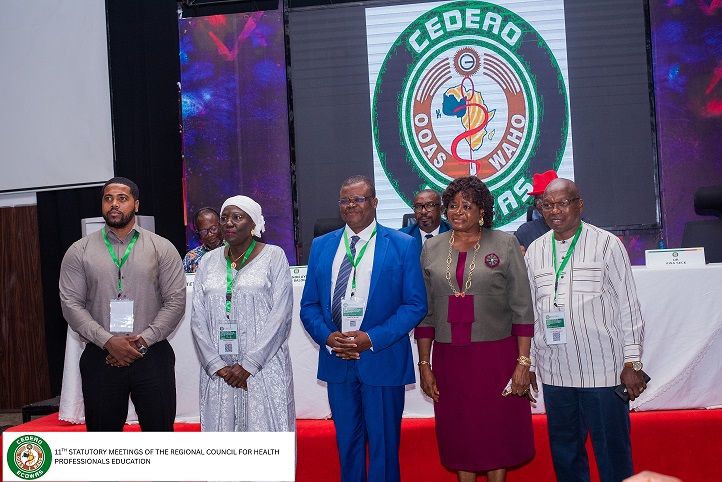
The Council President called for better clinical training facilities, qualified supervisors, comparable assessments and stronger quality assurance. He also urged participants to review previous decisions and attach clear responsibilities, deadlines and measurable targets to new recommendations.
He proposed the engagement of an independent consultant with accreditation expertise to support the monitoring of harmonised curricula and other Council decisions, stressing that regional resolutions needed consistent follow-up