Africa’s persistent energy crisis is not caused by a lack of natural resources but by weak financing, limited technological capacity and poor energy infrastructure, Regional Chair for Africa of the World Energy Council, Dr. Omar Farouk Ibrahim, has said.
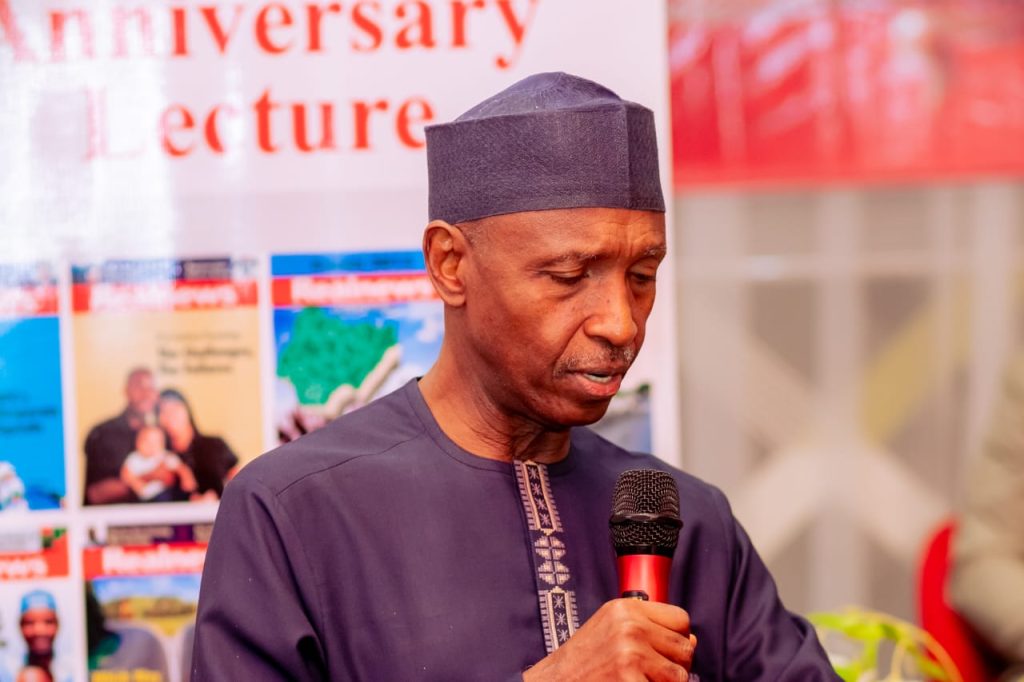
Speaking at the 14th Anniversary Lecture of Realnews Magazine in Lagos on Thursday, Ibrahim urged African leaders to take responsibility for the continent’s energy future by investing in local financing, indigenous technology and regional infrastructure instead of relying heavily on external support.
Delivering a lecture titled: _“Geopolitical Turbulence and Energy Security: Forging Strategic Opportunities for Africa,”_ Ibrahim said Africa possesses enormous oil and gas reserves, abundant solar, hydro, wind and geothermal resources, as well as critical minerals, yet remains the region with the world’s biggest energy access deficit.
According to him, the continent’s challenge is not the absence of energy resources but the inability to finance projects, develop local technology and build efficient markets capable of delivering reliable energy to millions of people.
He cited the 2026 Tracking SDG 7 Report, based on 2024 data, which showed that more than 560 million people in sub-Saharan Africa still lack access to electricity, while about 970 million people do not have access to clean cooking.
Ibrahim explained that geopolitical tensions, armed conflicts, supply chain disruptions and the global energy transition have transformed energy from an ordinary commodity into a strategic tool for national security, economic resilience and geopolitical influence.
He said recent developments, including the Russia-Ukraine war and the 2026 Middle East crisis, exposed the vulnerability of global energy markets, with disruptions affecting oil prices, transportation costs, insurance, trade and investment across the world.
While higher crude oil prices may temporarily increase export earnings for oil-producing African countries, Ibrahim warned that they also raise the cost of imported fuel, food, industrial equipment and transportation, especially for countries that still depend on imported refined petroleum products.
“Our energy transition must be a transition from energy poverty to energy prosperity, not from energy poverty to deeper deprivation,” he said.
The energy expert stressed that Africa should pursue a balanced energy transition by expanding renewable energy while responsibly utilising its oil and gas resources to generate electricity, produce fertiliser, develop petrochemicals and drive industrialisation.
He expressed concern that Africa is expected to receive only about $110 billion, representing just 3.3 per cent of the projected $3.4 trillion global energy investment in 2026, saying the funding gap continues to slow electricity generation, refinery development, pipeline construction and clean cooking projects.
Using Nigeria as an example, Ibrahim noted that an International Food Policy Research Institute analysis found diesel prices rose by about 86 per cent between January and June 2026, increasing transportation costs, food prices, industrial production expenses and the cost of electricity generation.
To address the continent’s challenges, he highlighted key initiatives developed during his tenure as Secretary-General of the African Petroleum Producers’ Organisation (APPO), including the Africa Energy Bank, the Central Africa Pipeline System and regional centres of excellence for oil and gas research and technology.
Ibrahim noted that the Africa Energy Bank has already secured its minimum $5 billion equity capital and was formally launched on October 31, 2026, with Nigeria hosting its headquarters.
However, he cautioned that the institution’s success would depend on transparency, sound governance and its ability to finance projects that create jobs and strengthen Africa’s energy independence.
He further called on African governments to strengthen petroleum reserves, improve domestic refining capacity, expand electricity grids, promote cross-border energy infrastructure and create predictable regulatory policies that encourage private sector investment.
According to him, Africa’s future energy security depends on moving beyond mere ownership of natural resources to developing the capacity to finance, process, transport and utilise those resources for sustainable economic growth.
“The future of Africa’s energy security must be shaped primarily by Africans themselves,” Ibrahim said.