Experts in reproductive health and population management have called on the federal and state governments to increase domestic funding for family planning, warning that rising population, declining donor support and inadequate access to contraceptives could undermine Nigeria’s development.
They also urged the media to intensify scrutiny of government budget allocations, releases and expenditure on family planning, stressing that policy commitments must translate into accessible services for women and girls.
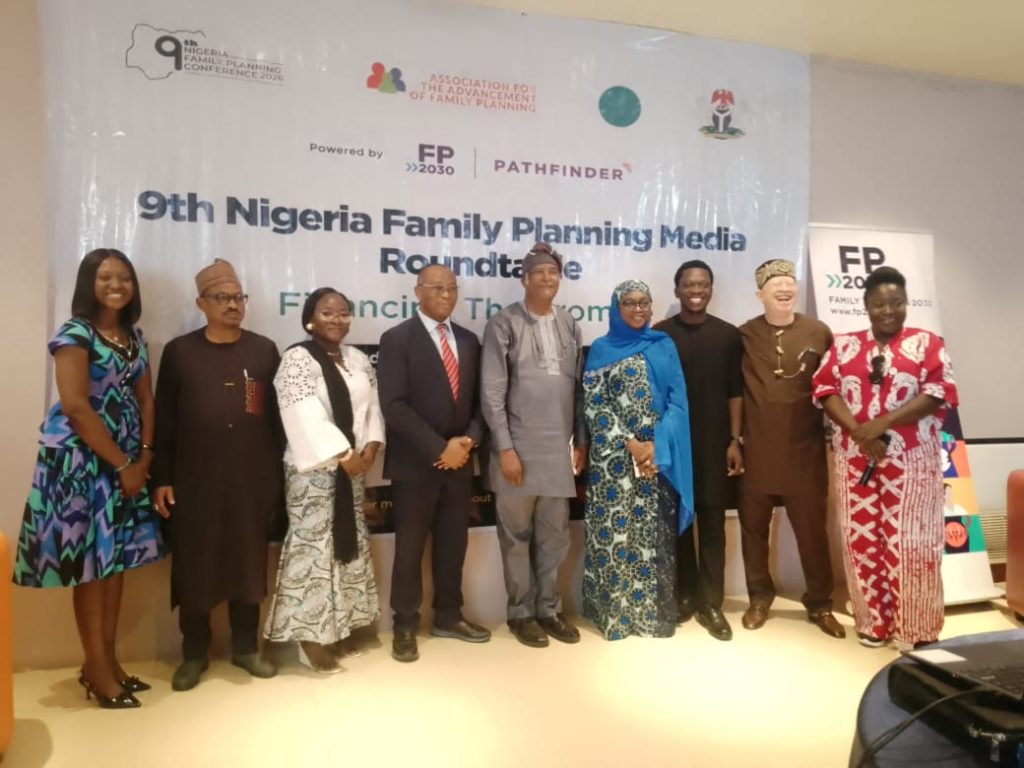
The experts made the call at the ninth Nigeria Family Planning Media Roundtable, organised ahead of the ninth Nigeria Family Planning Conference held at Bon Hotel Abuja on Thursday November 19.
Speaking at the event, Co-founder of the Association for Reproductive and Family Health, Prof. Oladipo Oladapo Alabi, said Nigeria’s modern contraceptive prevalence rate stood at about 18 per cent, while unmet need for modern contraception was approximately 22 per cent.
He warned that the country’s total fertility rate of 4.8 and annual population growth of about three per cent could push its population to 450 million within 25 years if urgent measures were not taken.
Alabi described the contraceptive prevalence rate as unacceptable, saying Nigeria had failed to sustain the progress recorded in reproductive health programmes in the late 1980s.
“By now we should be about 60 per cent modern contraceptive use if we had followed the trajectory and the momentum at that time,” he said.
He challenged journalists to give family planning greater prominence, warning that failure to meet the FP2030 target of 27 per cent modern contraceptive use would have serious consequences.
“If this country fails to meet FP2030 target of 27 per cent modern contraceptive use, you will be responsible,” he told journalists.
Alabi also proposed additional levies on international airline tickets and visa applications as alternative sources of funding for reproductive health programmes. He said the proceeds should be managed through a public-private arrangement and dedicated to the sector.
Similarly, the Regional Portfolio Director of Pathfinder International and Senior Country Director, Dr. Amina Aminu Dorayi, said Nigeria must move beyond policy commitments to ensure sustainable funding for family planning services.
“Commitments on paper do not automatically translate to progress. It also does not translate to having contraceptives available at health facilities, having trained providers present, and having women and girls being able to access these services that they need,” she said.
Dorayi described family planning as an investment in human capital, women’s economic empowerment and national development. She called for increased domestic resource mobilisation and stronger public-private partnerships as traditional development assistance becomes increasingly constrained.
She urged journalists to investigate government spending at all levels, asking: “We sometimes celebrate budget announcement and allocations, but the more important question is where is the money that is released? What has it been spent for?”
On disability inclusion, Chairman of Diversity, Equity and Inclusion and Chief Executive Officer of TAF Africa, Dr. Jake Epelle, said persons with disabilities were often excluded from family planning information and services because of inaccessible communication materials and facilities.
He called for sign language interpretation in news programmes, accessible information materials and greater opportunities for persons with disabilities to work as journalists and news anchors.
“We need to, as media practitioners, have strategic advocacy to the community of persons with disability because many of them are not aware of issues around the subject that affects their everyday life,” he said.
Chairman of the Youth Subcommittee of the Nigeria Family Planning Conference 2026, Philip Idoko, said more than 600 young people applied within two weeks to participate in the forthcoming conference, demonstrating their interest in shaping policies affecting their reproductive health.
He identified cost, stigma, misinformation, negative attitudes of healthcare providers and limited youth-friendly services as barriers to accessing reproductive health services.
Idoko urged journalists to tell the stories behind youth-related statistics rather than merely report figures.
“There’s a difference between reporting an adolescent pregnancy statistic and telling the story of a young person behind that statistic,” he said.
He also called for stronger scrutiny of family planning budgets to determine whether approved funds were released and translated into services at health facilities.
The Director of Population Management and Development at the National Population Commission, Dr. Kehinde Seun Addie, said reliable demographic data was essential for effective population management and development planning.
She said Nigeria could harness its youthful population through deliberate investments in health, education, skills acquisition, employment and governance, identifying family planning as a key component of efforts to achieve a demographic dividend.
Addie cited the 2024 Nigeria Demographic and Health Survey, which showed improvements in modern contraceptive prevalence, but warned that population momentum remained a challenge.
She urged journalists to use demographic data and adapt family planning messages to local languages and cultural realities, noting that some communities preferred the expression “child spacing”.
Also speaking, Chairman of the Technical Management Committee of the Association for the Advancement of Family Planning in Nigeria, Dr. Ejike Oji, called for greater domestic investment to reduce dependence on foreign donors.
He said the withdrawal and suspension of some foreign funding programmes had exposed the vulnerability of Nigeria’s reproductive health financing system.
“This is an inflection point in the history of the Global South, not just Nigeria. The Global South leaders must know there are no more free lunches. So you must look inwards and domestically resource your health system, especially family planning,” he said.
Oji urged journalists to support proposed legislation seeking to increase the Basic Health Care Provision Fund allocation from one to two per cent of the Consolidated Revenue Fund, as well as higher taxes on sugary beverages.
He said the Senate had passed the bills, which were awaiting concurrence by the House of Representatives, adding that increased funding for the Basic Health Care Provision Fund would strengthen support for family planning services.
In a virtual presentation, FP2030 Managing Director for the Northwest and Central Africa Hub, Elaine Damiba, called for diversified funding through government budgets, health insurance, private sector investment and domestic philanthropy.
He said dedicated budget lines, timely releases, transparent procurement and expenditure monitoring were necessary to ensure that government commitments produced tangible results.
“The real question is whether women and girls can see the results of those commitments in their community,” he said.
Damiba cited Burkina Faso, Senegal and Togo as countries that had institutionalised family planning budget lines, while Ghana had integrated family planning services into its national health insurance scheme.
He also advocated regional procurement arrangements to improve the availability and affordability of contraceptive commodities.
The Deputy Representative of the United Nations Population Fund in Nigeria, Dr. Koessan Kuawu, disclosed that UNFPA had supported the procurement of family planning commodities with more than $120 million since 2011.
However, he said Nigeria still faced an estimated $32 million funding gap.
Kuawu disclosed that states invested about $220,000 in family planning commodity procurement in 2026 under UNFPA’s matching fund arrangement, against an available funding basket of $4.5 million.
He explained that the arrangement provides an equivalent value of contraceptive commodities for every amount invested by participating states, urging more state governments to take advantage of the initiative.
He added that UNFPA was supporting commodity procurement, supply chain management and efforts to strengthen local manufacturing capacity, while stressing that family planning services must remain voluntary and rights-based.
Earlier, the Association for the Advancement of Family Planning (AAFP) and the 9th Nigeria Family Planning Conference Secretariat to said the roundtable was designed to strengthen media understanding and reporting of Nigeria’s family planning financing priorities in line with its FP2030 commitments.
They said discussions were aimed at focusing on domestic resource mobilisation, dedicated budget lines, health insurance, the Basic Health Care Provision Fund, private sector partnerships and accountability in government spending.
The organisers also urged journalists to sustain public attention on family planning financing before, during and after the 9th Nigeria Family Planning Conference.