The International Press Centre (IPC) has urged journalists to prioritise citizens’ concerns, strengthen fact-checking and hold political actors accountable ahead of the 2027 general elections.
The Centre said the media must move beyond reporting political campaigns, rallies and candidates to issue-based journalism that scrutinises governance, interrogates campaign promises and provides citizens with credible information to make informed electoral decisions.
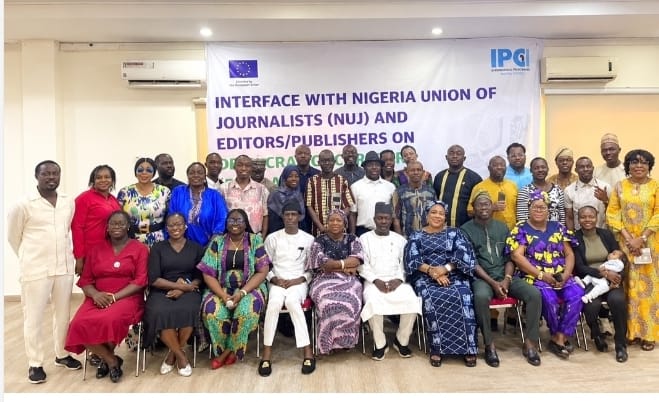
The call was made at an interface with the Nigeria Union of Journalists (NUJ), editors and publishers on Professional and Democratic Accountability Journalism ahead of the 2027 elections, organised by IPC in Abuja on Friday November 20.
Speaking at the event, IPC Executive Director, Dr. Lanre Arogundade, who was represented by the Programme Officer, Melody Akinjiyan said journalists had a responsibility to facilitate informed public discourse, scrutinise political promises and amplify citizens’ voices in the democratic process.
He warned that sensationalism, unverified claims, inflammatory rhetoric and misinformation could undermine public confidence, deepen divisions and weaken democratic institutions.
“This is why we must begin to look beyond event-driven electoral coverage towards more substantive, issue-based, and citizen-centred reporting,” he said.
Arogundade urged journalists to give greater attention to citizens’ concerns about the economy, education, healthcare, security, employment and infrastructure, while ensuring adequate representation of women, young people and persons with disabilities.
He also stressed that fact-checking must become an integral part of electoral reporting, rather than an optional addition, warning journalists against prioritising speed over accuracy.
In a presentation, 2027 General Election in the Context of Democratic and Accountability Reporting: Scanning the Electoral Environment and Reporting Citizens’ Priority, Dr. Sarah Gambo Nyikun of the University of Abuja urged journalists to scrutinise candidates, political parties, campaign finances, election officials and voting procedures.
She identified rising living costs, unemployment, insecurity, poor infrastructure, inadequate healthcare, corruption, vote buying and electoral transparency as major issues that should shape election reporting.
Nyikun also urged journalists to investigate the use of state resources during campaigns, political violence, voter intimidation and unequal access to the media.
She said citizens’ voting decisions were often influenced by candidates’ capacity to address their everyday challenges, urging journalists to provide platforms for ordinary Nigerians to express their concerns.
Similarly, researcher and information disorder analyst, Ahmad Aluko, called on media organisations to integrate fact-checking into their newsroom operations to combat misinformation and protect public trust.
In his presentation on Integrating Fact-Checking for Democratic and Accountability Reporting, Aluko identified misinformation, disinformation and malinformation as major forms of information disorder threatening credible electoral reporting.
He highlighted emerging manipulation tactics, including fabricated quotations, fake endorsements, doctored videos, recycled photographs, artificial intelligence-generated videos and coordinated social media campaigns.
Aluko warned that publishing unverified information could erode media credibility, heighten tensions around election results and turn rumours into news.
He introduced a six-step verification approach, Pause, Check, Confirm, urging journalists to investigate information sources, examine content, cross-check claims with credible outlets and confirm them through primary sources before publication.
He also identified Google Fact Check Explorer, Dubawa, the Centre for Democracy and Developmentg (CDD) Fact-Check, Africa Check, Google Lens and TinEye as useful verification resources.
The researcher cautioned, however, that automated artificial intelligence detection tools were not always reliable, stressing the importance of combining digital tools with human reasoning.
Participants had room to ask questions, share field experiences and profer solutions to challenges that hinder journalists from reporting on elections responsibly and holding government officials accountable.
The engagement was organised under Component Four (Support to Media) of the European Union Support to Democratic Governance in Nigeria (EU-SDGN III) Programme, with support from the European Union and the NUJ FCT Council.