Water production in Jos and Bukuru is expected to increase from below 30 per cent to at least 80 per cent of installed capacity following the rehabilitation of ageing water treatment facilities that have operated for nearly five decades without significant overhaul.
The intervention, being undertaken by the Plateau State Government in partnership with the French Development Agency (AFD), is expected to address persistent water shortages across the metropolis through the rehabilitation of treatment plants, replacement of pumping equipment and expansion of distribution pipelines.
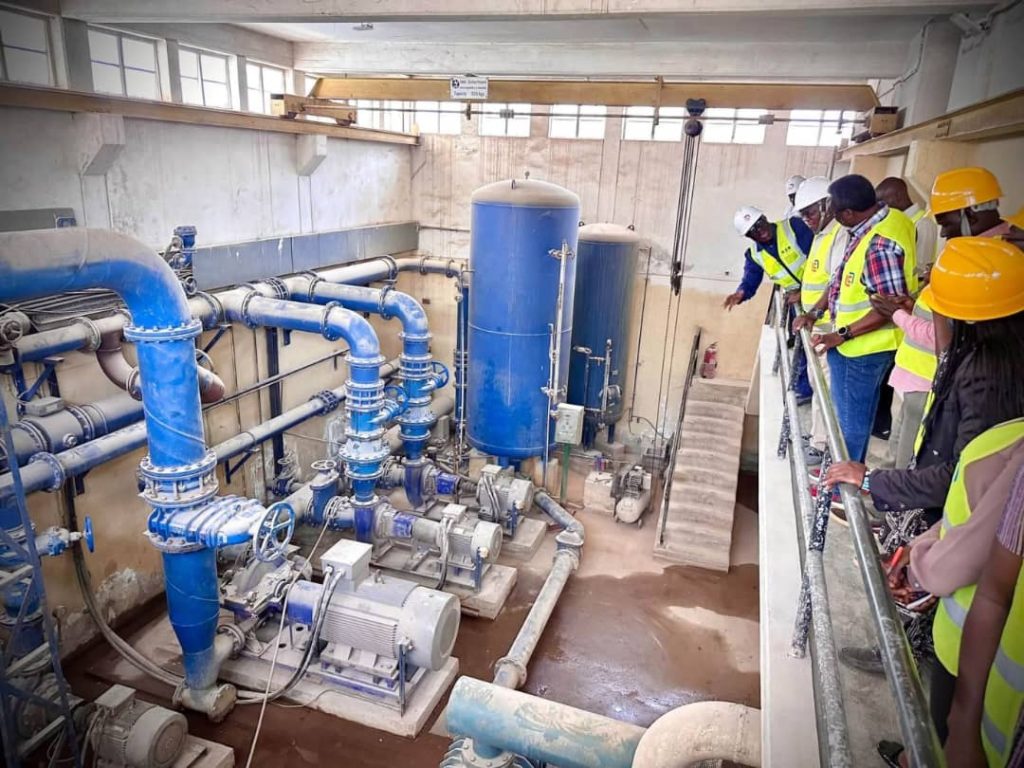
Managing Director of the Jos Water Services Corporation, Engr. Apollos Simon Samchi, disclosed this on Monday during an inspection tour of major water facilities, including the Yakubu Gowon Dam and Water Treatment Plant at Ratt, Lamingo Water Treatment Plant, Liberty Dam and British American Water Treatment Plant.
Samchi said an assessment of the facilities had revealed years of deterioration, with the Yakubu Gowon Water Treatment Plant, one of the major sources of water supply to Jos and Bukuru, operating for approximately 45 to 50 years without significant rehabilitation.
He explained that the condition of the infrastructure had substantially reduced its capacity to meet the water needs of the growing population.
The rehabilitation programme, valued at approximately €42 million, covers major treatment facilities, pumping equipment and pipeline networks, with an initial completion target of 18 months.
According to Samchi, civil engineering works at the Yakubu Gowon and Lamingo treatment plants have reached between 70 and 75 per cent completion, while pipeline extension works are approximately 40 per cent completed.
He, however, acknowledged that the ongoing rehabilitation had temporarily affected water production, contributing to the shortage currently experienced by residents.
To cushion the impact, he identified the Yelwa Water Treatment Plant in Bukuru and Nabor Water Treatment Plant around Nasarawa as among the functional facilities supporting water distribution in parts of the metropolis.
He also advised residents to take advantage of the Corporation’s water tanker supply arrangements while the rehabilitation continues.
The Resident Electro-Mechanical Engineering Specialist on the project, Engr. Abdulhakim Busari, attributed the reduced production at the Yakubu Gowon facility to deteriorating pumping equipment and the shutdown of one of its operational phases to allow rehabilitation.
Busari explained that the plant operates in two phases, but Phase Two had been shut down for rehabilitation, while Phase One was functioning with only one pump instead of the three required.
He disclosed that six new pumps had been ordered and were expected to be shipped to Nigeria, noting that the equipment had been designed to address the city’s population needs, water pressure requirements and elevation challenges across distribution points.
According to him, the rehabilitation of Phase Two is expected to restore about 50 per cent of the plant’s production capacity by the first quarter of 2027, after which work would shift to the complete rehabilitation of the other phase.
Busari added that a two-week monitoring programme had been introduced to track contractors’ activities, set short-term targets and ensure compliance with the agreed project schedule.
A foreign technical expert on the project, Engr. Zhengliang, also said some of the equipment had started arriving in Nigeria, adding that installation would commence once the materials reached the project site.
He assured that the equipment met the required technical specifications for the planned overhaul.
With water production expected to rise to at least 80 per cent of installed capacity after the rehabilitation, the success of the intervention will be critical to addressing the longstanding water supply challenges confronting residents of Jos and Bukuru.