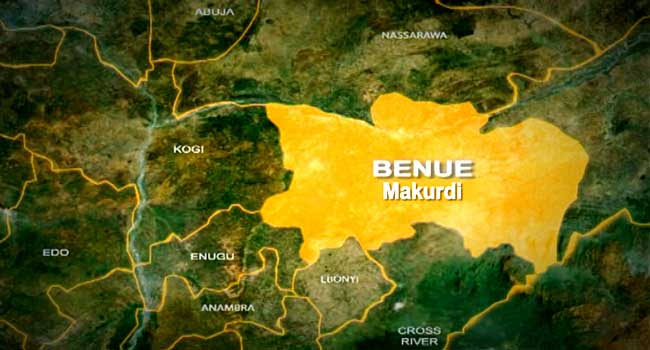
Benue State has been plagued by recurring violent attacks, kidnappings, and killings, often attributed to armed herdsmen, leaving residents in a state of fear and insecurity.
Nongu u Kristu u i Ser u sha Tar (NKST) Church has rejected the Federal Government’s proposed pilot ranching initiative in Benue State, insisting that the state should not be used to test a policy linked to a conflict that has devastated its communities for years.
The church said no fewer than 753 of its worship centres have been destroyed, while 5,987 of its members have been killed in attacks allegedly carried out by armed herders.
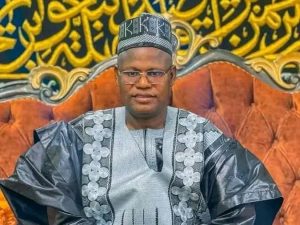
The position of the church was contained in a statement issued by the General Secretary of the NKST Synod Executive Committee, Rev. T.A. Targba, Ph.D, who described the proposed pilot ranching programme as unacceptable despite acknowledging the Federal Government’s intention to find a lasting solution to the recurring farmers-herders crisis.
Rather than introducing ranching, the church urged the government to prioritise the resettlement of thousands of Internally Displaced Persons (IDPs) who, according to the statement, have remained in camps for nearly two decades.
According to Rev. Targba, Benue’s land is central to the identity, economy and survival of its people and should not be subjected to policies that ignore the rights of those who own and cultivate it.
“Benue is not merely a geographical space available for government experimentation. The State is predominantly an agrarian society. Its land It is the ancestral inheritance, economic foundation and livelihood of millions of people. For generations, Benue communities have cultivated their land, built homes, established churches, schools, hospitals, markets and other institutions upon it. Therefore, any policy involving the allocation, acquisition, conversion or reconfiguration of land must recognize and respect the ancestral rights, livelihoods, property rights and constitutional interests of the people who occupy and cultivate that land.
“The NKST Church therefore asks: Why should a state whose people have suffered displacement and destruction because of violent conflict now be selected as a laboratory for a policy involving land allocation for the same livestock economy that has been at the center of these conflicts? The answer cannot be merely administrative. The people of Benue deserve to be heard.
“NKST Church is not speaking from a distance. We speak as a Church whose members and institutions have been directly and severely affected by the prolonged violence across Benue and neighboring states.”
The church maintained that any government seeking to establish a new agricultural system must first restore the one that has been destroyed by years of violence.
It argued that the restoration and resettlement of displaced communities should form the foundation of any intervention in the state before discussions on ranching or other agricultural reforms begin.
Rev. Targba also called on the Federal Government to guarantee adequate security that would enable displaced communities to return safely and voluntarily to their ancestral homes.
He further urged the government to rebuild destroyed homes, schools, healthcare facilities, markets, roads, water systems, churches and other critical infrastructure affected by the violence.
The NKST General Secretary insisted that no ranching programme should be established on lands from which indigenous communities were violently displaced, noting that the church had invested heavily in the development of rural communities across Benue.
He also called for a comprehensive inventory of all public and faith-based institutions destroyed during the prolonged attacks.
While stressing that the church is not opposed to peaceful livestock farming, Rev. Targba urged the Federal Government to suspend the proposed pilot ranching programme and instead concentrate on its constitutional responsibility of protecting lives and property.
He questioned the rationale behind pursuing policies aimed at supporting the livestock economy when thousands of victims of the conflict remain displaced and unrehabilitated.
The church reaffirmed its commitment to peace, reconciliation, justice and peaceful coexistence among Nigerians but insisted that genuine restoration must come before any new land-based policy.
Rev. Targba added that Benue must not become a testing ground for a policy while many of its citizens continue to live in IDP camps after suffering years of violence.
He assured that the NKST Church remains willing to collaborate with the Federal Government, the Benue State Government, traditional institutions, other churches, civil society organisations and all stakeholders committed to building a peaceful, just and prosperous Nigeria.