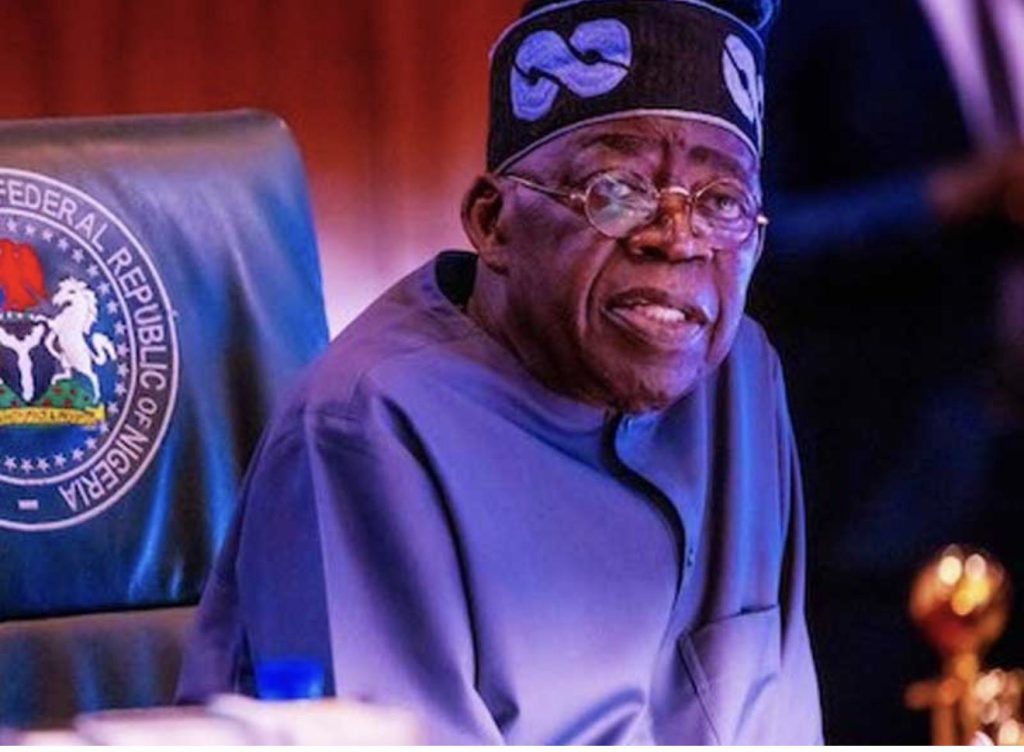
President Bola Tinubu
President Bola Ahmed Tinubu flagged off his re-election campaign on Saturday, the 25th of October, in Kaduna State, the political headquarters of the North. The flag-off also witnessed the inauguration of the 81-kilometre section of the Kaduna-Abuja highway. President Tinubu indicated his thinking by rightly describing Kaduna State as the political capital of the northern region.
If the President strategically chose the political headquarters of northern Nigeria for his second bid for the country’s topmost job, his arch-rival, Alhaji Atiku Abubakar of the African Democratic Congress (ADC), also deliberately launched his seventh attempt at the presidency in Sokoto, the seat of the Caliphate. With Atiku and Tinubu launching their campaigns in the north, it is clear both candidates understand that votes in the core north will likely determine who carries the day on January 16, 2027.
While President Tinubu’s supporters have commended him and the All Progressives Congress (APC) Presidential Campaign Council for boldly kick-starting the President’s re-election campaign on the opposite side of Nigeria’s political spectrum, many of Atiku’s critics have asked why he chose to launch his campaign in the region he comes from. The choice of Sokoto is particularly discomfiting for those who criticised the former Vice-President when he deleted a tweet on his X handle which had condemned the killing of Deborah Samuel (Yakubu) by a mob in May 2022, in the North-West state. He later stated it was published without his direct approval. Despite his critics’ misgivings, Atiku’s campaign launch drew a large crowd, just as President Tinubu’s campaign in Kaduna was massively attended. As stated earlier, it is obvious that the President, ADC’s Atiku Abubakar and Nigeria Democratic Congress (NDC’s) Peter Obi, by selecting a big northern name, Senator Musa Rabiu Kwankwaso as his running mate, all, recognise the importance of northern votes in the battle for Aso Rock. While analysts have written off Obi’s chances in the 19 states of the north, the majority of political analysts say that Tinubu and Atiku will contend for the votes in the region.
The North matters because of its voting strength. The North has 56,014,673 registered voters, representing approximately 54.16 per cent of the national register, while the South has 47,414,042, or 45.84 per cent. This is a difference of 8,600,631. President Tinubu will sweep his South-West base, which has 19,614,274 voters, while needing to improve his 2023 performance in the north and increase his tally in the South-South, while not trying to make inroads in the South-East, which is completely in support of their son, Peter Obi.
While President Tinubu recently commenced his campaign, certain surrogates went ahead of him months earlier. Top on the list is prominent Ijaw businessman, former militant commander, and influential figure in Nigeria’s Niger Delta region, Government Oweizide Ekpemupolo, better known as Tompolo. The former militant commander is the Grand Patron of the PBAT Door-to-Door Movement. The support group unveiled its campaign in Katsina State, and it has taken the message of the President’s re-election to eleven other northern states. So far, the Movement has donated about 396 campaign vehicles equipped with loudspeakers for grassroots campaigning across the states it has inaugurated its chapters.
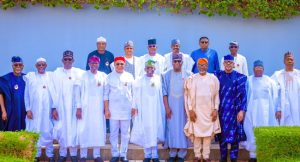
The rallies in northern states, especially those which this writer attended, exposed the disposition of northern governors and leaders toward the 2027 presidential election. It is obvious that these governors and leaders have chosen to strategically support Tinubu’s second term for the north to take its turn again in 2031. Individually, these governors see themselves as potential presidential candidates come 2031. Collectively, they have displayed a preference for the eventual emergence of a member of the Northern Governors Forum and, at worst, someone among the current crop of leaders to take over from President Tinubu, with the strong support of the South, hence their deliberate backing of President Tinubu. Northern governors, this writer heard, speak at PBAT Door-to-Door rallies, base their pledge of support for President Tinubu on ensuring equity, with the south completing their turn of two terms in office and the need to reward Tinubu for supporting two terms of the Buhari Administration.
Speaking at the Katsina rally of the PBAT Door-to-Door Movement held in September, Governor Dikko Umar Radda, said the President earned the support of his people. Radda also recalled Tinubu’s role in supporting the political journey of the late President Muhammadu Buhari, a son of Daura, to the Presidency in 2015. He said: “Katsina State is an APC state. Katsina State is a state where President Bola Ahmed Tinubu, Insha Allah, will have a landslide victory in Katsina State, God willing, in 2027”.
Still in the North-West, Gov. Abba Yusuf described Kano State as one hundred per cent in support of Tinubu’s second term when he hosted the PBAT Door-to-Door rally. According to him, Kano is a state of people with integrity, who keep to agreements. He said: “Let me reiterate that Nigeria’s unity is uncompromised. Nigerians have decided to come together as a people; Nigeria has decided that as with the initial agreement in the last two decades, that the north will be in control of the presidency for eight consecutive years and the north will hand over to the south for another eight consecutive years. I want to say that, in the last administration, a northerner was elected; our late president, Mohammed Buhari, stayed in government for eight years, and at the end of his tenure, power was handed over to the South; then Nigerians elected President Bola Ahmed Tinubu.
“President Bola Tinubu has served Nigeria for over three years, and we are now coming for another election, it is therefore our responsibility as Nigerians, as respected people, to agree that the President should be re-elected for another term of four years”.
From the North-East, Adamawa State Governor Ahmadu Fintiri declared that “Adamawa is Asiwaju state” at the PBAT Movement campaign launch, expressing support for President Bola Ahmed Tinubu.
How about the Christian north? From the North-Central state of Plateau, National Chairman of the All Progressives Congress (APC), Prof. Nentawe Yilwatda and Governor Caleb Muftwang rallied support for Tinubu during the inauguration of state and local government structures of the PBAT Door-to-Door Movement held last month. Aside from governors, northern Christian leaders led by Gen. T.Y. Danjuma (Retd) and the former Speaker of the House of Representatives, Hon. Yakubu Dogara, recently led others to pledge their support for the president.
Beyond Governors, President Tinubu also enjoys the backing of highly placed northern leaders such as the current Speaker, Hon. Abbas Tajudeen. In one instance, the Speaker stated his backing for Mr President came during a courtesy call by the PBAT Door-to-Door Movement leadership in August. The Speaker said: “I assure you we will continue to be part of the ambassadors that will continue to enlighten the people about the wisdom of continuity, because in a country where over 40 out of 60 years of existence were managed badly, no president or leader, no matter how good they are, will correct the wrongs of the past within four years.
“So, it will be a very terrible mistake for Nigerians to reverse the modest gains that we have recorded from 2023 to date. People have sacrificed because of the policies that have been brought on board to solve those historic, decadent policies. People have paid prices for it. So, for us to now pick somebody to discard, all those sacrifices and modest achievements will not be justice to ourselves.”
Looking beyond the groundswell of support from Northern leaders for Tinubu, what will these leaders be presenting to their people to get them to vote for the President, even as they have Atiku as the Presidential candidate of the ADC and Senator Musa Rabiu Kwankwaso , as the running mate under the NDC? According to the Federal Ministry of Works, over 52% of the administration’s major national projects are located in the North, with more than 1,400 km of major roads, valued at over ₦7.21 trillion, under construction or completed across the region. For rail, the situation has changed from stalled to moving. There is the Kaduna–Kano Standard Gauge Railway; the project was only 15% complete when Tinubu took office in 2023. Now at 80-85% complete, with finishing works underway and commissioning targeted for December 2026. There is also the controversial Kano–Maradi Rail Line (284km Kano–Daura–Katsina). The project was 5% complete in 2023, now at 61-75% complete, it will link Nigeria to Niger Republic for trade. Finally, there is the Kano and Kaduna Metro Rail / Light Rail, it has been approved and included in the new $21.7bn borrowing plan, with $10.6bn earmarked for transport, including the Kano-Kaduna metro rail.
For the key sectors of education and healthcare, Vice President Kashim Shettima, speaking at the APC flag-off in Kaduna, listed: Federal University of Applied Sciences, Kachia— newly established, the Federal University of Education, Zaria, vocational institutes in Rigachikun, Soba and Samaru Kataf — over 4,000 graduates produced. Speaking further, Shettima highlighted the NELFUND student loans benefiting hundreds of thousands of Northern students. For healthcare, the Vice-President listed, among other interventions, the Misau General Hospital upgraded to a Federal Medical Centre (Bauchi) and Reference Hospital Kaduna, which has been upgraded.
Agriculture remains one of the most important sectors through which the Tinubu administration hopes to stimulate economic growth in Northern Nigeria. Recognising the region’s enormous agricultural potential, the Federal Government has introduced interventions aimed at improving farming, supporting rural communities, strengthening food production and creating employment. A major initiative is the $158.15 million Value Chain Programme in Northern Nigeria, launched in May 2025 in partnership with the International Fund for Agricultural Development (IFAD) and the French Development Agency (AFD). The eight-year programme covers nine northern states and is expected to create more than 30,000 jobs and entrepreneurial opportunities for young people, women and vulnerable groups. It also includes plans to construct more than 229 kilometers of roads to improve farmers’ access to markets. The administration has also introduced agricultural mechanisation interventions, including the deployment of tractors and modern farming equipment, to improve productivity and reduce dependence on traditional farming methods.
The North-East, which has suffered years of insurgency, displacement and destruction of infrastructure, has received attention through the Federal Government’s reconstruction and development initiatives. In July 2026, President Tinubu flagged off the rehabilitation of the Bama-Banki and Dikwa-Gamboru Ngala roads in Borno State. The projects are designed to restore important road connections, improve security, facilitate trade with Cameroon and Chad, and support economic recovery in communities affected by insurgency. The administration has also embarked on the rehabilitation of the Bauchi-Gombe Road, an important transport corridor linking Bauchi, Gombe, Adamawa and Taraba states.The 35-kilometre section of the road was awarded in 2024 at a contract sum of approximately N40 billion. The intervention is expected to improve transportation, reduce accidents, facilitate commercial activities and strengthen connectivity among communities in the North-East. The Federal Government’s infrastructure programme also includes the Akwanga-Jos-Bauchi-Gombe highway corridor, which is expected to improve connectivity across parts of North-Central and North-East Nigeria.
Security remains one of the biggest challenges confronting Northern Nigeria, particularly in the North-East and parts of the North-West. The Tinubu administration has continued to rely on military operations, intelligence gathering and collaboration with state governments to combat terrorism, banditry and kidnapping. The government has also recognised that infrastructure development and economic opportunities are important components of long-term security. The rehabilitation of roads in insurgency-affected communities, particularly in Borno State, is intended to support the return of economic activities and improve access to essential services.
In a nutshell, President Tinubu has earned the support of northern leaders, and time will tell at what level they will deliver.
-Kemi Yesufu, who is the publisher of Frontline News Online, wrote in from Abuja via: yesufukemi@gmail.com