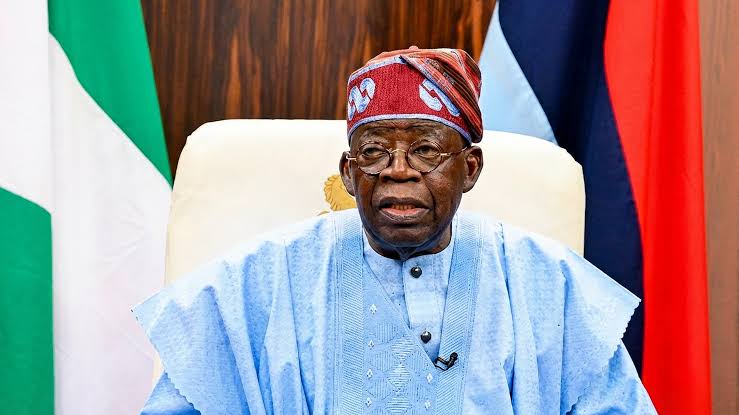
President Bola Tinubu
Reforms, especially stringent ones are initiated and implemented by sovereign states around the world, to address systemic, structural issues that might have blocked their development. However, decisive and fearless leadership is needed for reforms to be undertaken successfully, as some reforms may come with pain, as they upset the business-as-usual culture, even though necessary for a state’s survival and sustainable socio-economic development. Seers (1969) argued that three fundamental questions should always be asked, when it comes to defining development. These questions are:
(a) What is happening to poverty?
(b) What is happening to unemployment?
(c) What is happening to inequality?
He went on to argue further that when these development issues are increasing or worsening in a given state or country, then that state or country is not developing or developed. However, if they are decreasing or even absent in a state or country, then that state or country is developing or developed. The Nordic countries of Norway, Sweden, Denmark, Finland and Iceland have been able to address these development problems. Similarly, the “Four Asian Tigers” of Hong Kong, Singapore, South Korea and Taiwan have also been able to address these development issues through economic reforms, export-oriented policies, massive, sustained investment in human capital and strategic government-led industrial planning, thus transforming themselves from developing states or low-income economies into global economic powerhouses, with unprecedented, rapid industrialisation and sustained average growth rates, surpassing 7% annually (Day, 2021).
It is, therefore, important to note that the four Asian Tigers had audacious, visionary and transformational leaders who had relative tenure security. For instance, the late founding father and first Prime Minister of Singapore, Lee Kuan Yew was in office for 31 years (1959-1990). This continuity and tenure security afforded him and his party, the People’s Action Party (PAP), the opportunity to consolidate his earlier, foundational development strides up to the time he became satisfied that Singapore is now a global economic powerhouse, surpassing many countries in Europe and the Americas, in terms of Human Development Index (HDI).
Nigeria, as a sovereign state, was at a serious socio-economic crossroads, when His Excellency, Bola Ahmed Tinubu, GCFR, President and Commander-in-Chief of the Armed Forces, Federal Republic of Nigeria, took over on the 29th of May, 2023. The imperative to act was so urgent, and that the President had to hit the ground, with the swift implementation of his Renewed Hope Agenda, which is a reform agenda that has the potential to transform Nigeria into a world-class economy, if it is continued and sustained. This is because; the Renewed Hope Agenda seeks to address Nigeria’s structural issues that have for long held it back, hence resulting in blocked development and underdevelopment.
The Renewed Hope Agenda is conceptualized as a strategically important policy framework of the Federal Government under the able, visionary and transformational leadership of His Excellency, Bola Ahmed Tinubu, GCFR, President and Commander-in-Chief of the Armed Forces, Federal Republic of Nigeria, aimed at revitalizing the Nigeria’s economy and enhancing the livelihoods of its citizens. The Renewed Hope Agenda, which serves as the blueprint of the Tinubu Administration encompasses eight (8) cardinal priority areas, designed to spark sustainable national development. These are:
- Economic Reform: Revamping fiscal and structural policies to deliver sustained, inclusive growth.
- National Security: Strengthening the capabilities of security forces to ensure safety and stability nationwide.
- Agriculture: Modernizing farming practices and financing to guarantee food security and self-sufficiency.
- Energy and Natural Resources: Unlocking the country’s petroleum and renewable energy potential.
- Infrastructure: Upgrading transportation, power, and digital connectivity networks.
- Human Capital Development: Revamping education, healthcare, and targeted social investment programs.
- Industrialization and Innovation: Accelerating economic diversification through digitization, manufacturing, and the creative arts.
- Governance: Improving institutional transparency, accountability, and the effectiveness of public service delivery.
The President, through a circular, entitled: “Redefining of the Presidential Priorities Areas of President Bola Ahmed Tinubu Administration,” issued by the Secretary to the Government of the Federation, Sen. George Akume, fnim, CON, on 15th January, 2024, redefined the key priority areas of his Administration, and all Ministries, Departments and Agencies (MDAs) were directed to ensure that their policies, programmes and projects align with his priority areas in line with the Renewed Hope Agenda. The redefined eight priority areas are as follows:
- Reform the economy to deliver sustained inclusive growth.
- Strengthen national security for peace and prosperity.
- Boost agriculture to achieve food security
- Unlock energy and natural resources for sustainable development.
- Enhance infrastructure and transportation as enablers of growth.
- Focus on education, health and social investment as essential pillars of development.
- Accelerate diversification through industrialization, digitization, creative arts, manufacturing and innovation.
- Improve governance for effective service delivery.
The foregoing redefinition further underscores the President’s commitment to laying a solid and sustainable foundation for Nigeria’s development take-off, as the above redefined priority areas of the Renewed Hope Agenda are being fully implemented, with tangible results and positive impact being seen and felt by all Nigerians and legal residents in Nigeria. According to Rostow (2016), in his classic 1960 work, entitled “Stages of Economic Growth,” argued that all countries progress through five linear phases of development, evolving from an agricultural subsistence economy to a highly industrialized and consumer-driven society. The progressive stages include, Traditional Society Stage, Preconditions for Take-off Stage, Take-off Stage, Drive to Maturity Stage, and Age of High Mass Consumption Stage.
The Traditional Society Stage is characterized by a subsistent, agricultural-based economy with intensive labour, low levels of trading, and a population that does not have a scientific perspective on the world and technology. The Preconditions to Take-off Stage is where a society or country begins to develop manufacturing and a more national and international outlook, as opposed to regional outlook. The Take-off Stage is a short period of intensive growth, in which industrialization begins to occur, and workers and institutions become concentrated around a new industry. Drive to Maturity Stage takes place over a long period of time, as standards of living rise, the use of technology increases, and the national economy grows and diversifies. Age of High Mass Consumption Stage is where a country’s economy flourishes in a capitalist, liberal system that is characterized by mass production and consumerism. Rostow (2016) believed that Western states, particularly the United States of America occupied this last ‘developed stage.’
Passing through the above five critical stages or phases of economic growth and development, requires bold, visionary and fearless leadership, and President Bola Ahmed Tinubu, GCFR, took the bull by the horns in putting Nigeria on this path of sustainable economic growth and development, despite the initial resistance and frustration from some quarters. This is underpinned by Rostow’s three principal propositions. First, he insists that the problem of growth is a historical one, which must be considered within a framework of a historical periodization. Second, he emphasizes and this is perhaps his most notable point that economic growth is not a continuous and smooth, but a discontinuous and dialectical process, which pivots on a sudden revolutionary transformation, that is the “take-off into self-sustained growth.” Third, he stresses a particular aspect of this discontinuity of economic growth: that it proceeds not by a balanced development of all sectors of the economy, but successive leaps forward of the economy’s “leading sectors.”
The fact is incontrovertible that His Excellency President Bola Ahmed Tinubu, GCFR, is the only elixir or solution that Nigeria needs now and going forward, and this is evident in the achievements of his Administration thus far, through the vigorous pursuit and full implementation of the redefined eight priority areas of the Renewed Hope Agenda, methodically designed to reform Nigeria’s economy and social landscape.
President Bola Ahmed Tinubu’s Renewed Hope Agenda has achieved key milestones across its eight priority areas and it has become a catalyst for Nigeria’s sustainable socio-economic development. What remains now is the urgent need to mobilize Nigerians, especially at the grassroots for the re-election of the President because he richly deserves it. I have these parting words; Nigeria stands a chance of securing a greater future of full economic prosperity and wealth, provided that the Renewed Hope Agenda is sustained. However, this is only possible if His Excellency President Bola Ahmed Tinubu, GCFR, gets re-elected come 16th January, 2027.
- Basiru Musa Makarfi, PhD, FIMC – basirumusa01@gmail.com