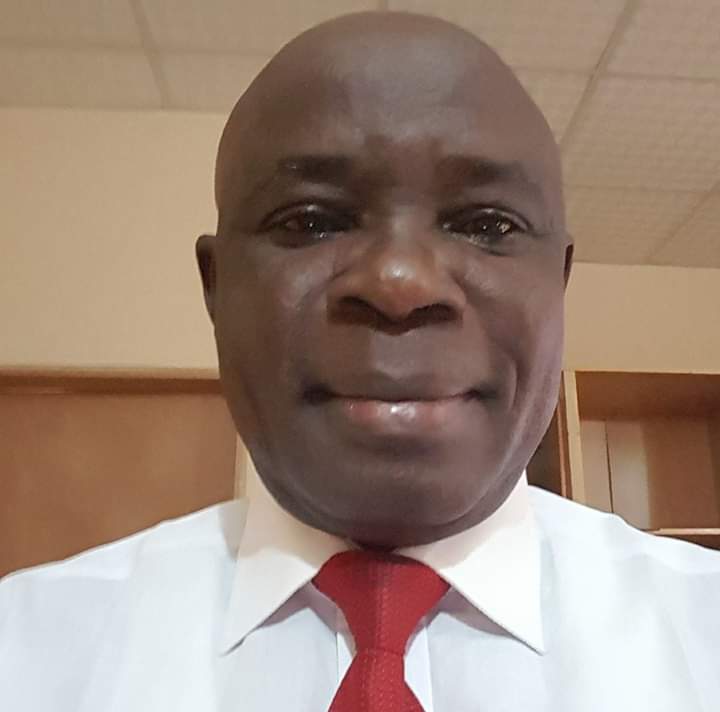
Prof Moti
The Federal Government’s announcement that the Nigerian National Petroleum Company (NNPC) Retail will temporarily forgo its petrol retail profit margin and sell fuel at cost has reopened one of Nigeria’s most contentious economic and political debates: Is petrol subsidy gradually returning?
The government has been categorical that it is not restoring the fuel subsidy removed on May 29, 2023. Finance Minister and Coordinating Minister of the Economy, Taiwo Oyedele, has explained that NNPC Retail will temporarily sacrifice its retail margin to cushion Nigerians from the effects of the current rise in global crude oil and petrol prices. The government has also proposed a ₦1,350-per-litre ceiling on the ex-gantry or landing cost of petrol, with refiners and importers expected to absorb temporary increases and recover the costs when market conditions improve.
On the surface, this is different from the old subsidy regime. But beneath the terminology lies a more important economic question: who ultimately bears the cost when the market price of petrol rises above the price Nigerians are allowed to pay? That is where the real meaning of the new policy lies.
Selling Petrol at Cost
Under the new arrangement, NNPC Retail will forgo its normal retail profit margin for an initial period of 30 days. If, for example, NNPC’s landing cost is ₦1,300 per litre, it could sell the product at ₦1,300 rather than adding a retail margin. Technically, this is not the same as the old petrol subsidy. NNPC would not necessarily be receiving a government payment to cover the difference. It would simply be sacrificing part of its commercial margin. There is an important question that Nigerians should ask: Who ultimately bears the financial cost?
If NNPC genuinely absorbs the loss as a commercial decision, then it is a discount or temporary margin sacrifice. But if government eventually compensates NNPC, or if the sacrifice reduces what NNPC would otherwise remit to the Federation, then the economic burden eventually falls on the public. At that point, the distinction between a discount and a subsidy becomes much less clear.
The ₦1,350 Ceiling Is the More Significant Development
The proposed ₦1,350 ceiling on petrol’s ex-gantry or landing cost is perhaps the most significant part of the announcement. The government says that where the actual cost rises above ₦1,350, refiners and importers will initially absorb the difference and recover it later when market conditions improve. Consider a simple example. If the actual cost of petrol rises to ₦1,500 per litre but the applicable ceiling remains ₦1,350, there is a ₦150 difference.
Under the old subsidy arrangement, government would typically have borne that difference. Under the new proposal, the refiner or importer carries the difference temporarily and is expected to recover it later. This is why government describes the arrangement as price smoothing rather than subsidy. There appears to be a legitimate economic distinction. However, from the consumer’s perspective, the immediate effect is similar: the consumer is protected from the full impact of the prevailing market price. The critical difference is who carries the cost and whether that cost is eventually recovered. The government is not clear on this.
The Real Test Is Who Eventually Pays
This is the central issue Nigerians should focus on. If the international price shock is temporary, the system could work as intended. Refiners and importers absorb the additional cost for a limited period and recover it when prices fall. But what happens if crude oil prices remain high for several months? The deferred losses could become substantial. Eventually, the private operators may not be willing or able to continue carrying those losses. Government could then face pressure to compensate them, extend the arrangement, permit higher pump prices, or otherwise intervene.
If government eventually assumes those losses, then what began as a price-smoothing mechanism could effectively become a form of implicit or quasi-subsidy. Therefore, the question is not simply what government calls the policy. The more important question is: Who ultimately pays when the market price rises above the protected price? That answer will determine the true economic character of the policy.
Why Is This Happening Now?
The timing of the announcement is particularly interesting because petrol subsidy has once again become an important issue in Nigeria’s political debate towards 2027. o The African Democratic Congress (ADC) and its presidential candidate, Atiku Abubakar, have argued for a reconsideration of aspects of the current petrol-pricing regime, including proposals involving subsidy or production support. Peter Obi and the political movement associated with the Nigeria Democratic Congress (NDC) have also criticised the way the benefits of subsidy removal have been managed and, more recently, reports have indicated support for restoring subsidy under certain circumstances.
These positions have intensified the national debate about whether Nigerians should continue to bear the full burden of market-driven petrol prices. Against this background, the Federal Government has introduced a package that offers relief to consumers while insisting that it is not returning to blanket petrol subsidy. Can this be interpreted as a response to the opposition’s position?
There is no publicly established evidence that the government designed the policy specifically because ADC or NDC adopted particular positions on subsidy. The immediate economic explanation is that global crude oil and petrol prices have risen sharply, creating pressure on Nigerian households, transport operators and businesses. However, the political context cannot simply be ignored. Fuel prices affect almost every Nigerian household. They influence transport fares, food distribution, logistics, production costs and ultimately inflation. That is the lived experience of many Nigerians today.
Any government facing a rising cost-of-living crisis towards an election date would naturally be concerned about the political and social consequences of another significant petrol-price increase. It is therefore reasonable to see the new policy as both an economic response to market volatility and a policy response to growing public pressure over the consequences of high fuel prices. Whether it was specifically motivated by the opposition’s position is a question that the government is not willing to definitively answer.
The Government Is Attempting to Occupy the Middle Ground
What appears to be emerging is neither the old subsidy system nor a completely unrestricted petrol market. It is a hybrid arrangement involving: deregulation, temporary price smoothing, NNPC margin sacrifice, targeted social protection, strategic fuel reserves and accelerated CNG deployment. This allows government to maintain that the 2023 subsidy reform has not been reversed while simultaneously protecting Nigerians from the most severe consequences of petrol-price volatility. In effect, the government appears to be saying: we will not return to the old subsidy system, but neither will we leave Nigerians completely exposed to every international oil-price shock. That is an important policy shift.
The 30-Day Question
Another important issue is the government’s decision to make the NNPC retail-margin sacrifice an initial 30-day arrangement. The obvious question is: what happens after 30 days? If global prices fall, the intervention may naturally come to an end. But if prices remain high, government will have to decide whether to extend the arrangement, allow pump prices to rise, increase targeted assistance or develop a more permanent price-smoothing mechanism. This is why the next 30 days will be more revealing than the announcement itself. The sustainability of the policy will ultimately determine whether it is genuinely a temporary shock absorber or the beginning of a new form of government intervention in petrol pricing.
Targeted Support May Be More Sustainable Than Blanket Subsidy
One of the more significant aspects of the government’s package is the proposed increase in cash transfers, subsidised credit and transport support for vulnerable Nigerians. This represents a fundamentally different approach from subsidising every litre of petrol consumed in the country. A blanket petrol subsidy benefits everyone who buys petrol, including those who can afford to pay the market price. Targeted assistance, on the other hand, can concentrate government resources on households and groups most affected by high energy and transport costs. If properly implemented and transparently managed, this approach could provide social protection without recreating the enormous fiscal burden associated with a universal petrol subsidy. But does government have the data to implement targeted assistance? For instance, it will be difficult to prevent the well to do from benefiting from the assistance. Perhaps, only the long queues envisaged at NNPC filling stations may discourage the well to do citizens from taking advantage of the targeted assistance.
CNG Could Provide a Longer-Term Answer
The government’s accelerated CNG programme is potentially more important in the long run than temporary petrol-price interventions. If Nigerians can move from an expensive petrol-dependent transport system to a cheaper and reliable CNG-based system, the economy becomes less vulnerable to international petrol-price shocks. However, the savings must reach the consumer. If transport operators save substantially on fuel but continue charging the same fares, the objective of the programme will not be fully achieved. The government will therefore need to ensure that lower energy costs translate into lower transport and logistics costs.
The Strategic Fuel Reserve
The proposed National Strategic Fuel Reserve could also become an important instrument for managing future energy shocks, not immeadiately. Strategic reserves are not inherently subsidies. They are designed to ensure that countries have access to essential energy supplies during periods of international disruption or domestic shortages. If Nigeria buys refined products when prices are favourable and releases them during supply disruptions, the reserve could help reduce volatility and discourage artificial scarcity. But transparency will be essential. Nigerians should be able to know when the reserve is being used, how much product is released, at what price, under what conditions and how the reserve is replenished. Without transparency, a strategic reserve could become another avenue for market distortion.
Has Subsidy Returned?
The most accurate answer is: The old blanket petrol subsidy has not formally returned. However, government has introduced a series of measures that provide some of the protective effects traditionally associated with subsidy. NNPC is sacrificing its margin. A ceiling is being proposed for landing costs. Refiners and importers may temporarily absorb higher costs. Government is increasing targeted support. Strategic reserves are being developed. CNG is being promoted as an alternative to petrol. Taken together, these measures represent a move towards managed deregulation rather than pure market exposure. Whether this eventually becomes a subsidy in another form will depend largely on the financial consequences. If private operators genuinely carry temporary losses and subsequently recover them from improved market conditions, the policy can reasonably be described as price smoothing. If government eventually compensates the operators or absorbs the accumulated losses, then it begins to resemble a subsidy, regardless of the terminology used.
The Political Question Cannot Be Ignored
There is therefore an important political dimension to the policy. The opposition has increasingly challenged the social consequences of subsidy removal and has placed the affordability of petrol and the cost of living at the centre of its economic arguments. The Federal Government has responded by offering relief while maintaining that it will not reverse the fundamental reform of subsidy removal. This creates an interesting policy convergence. The disagreement is no longer simply about whether Nigerians need relief. It is increasingly about how that relief should be provided, who should receive it, who should pay for it and whether it is fiscally sustainable.
Nigerians Should Look Beyond the Terminology
The public debate should therefore move beyond the simplistic question: has subsidy returned? The more important questions are: Who pays? Who benefits? How much will it cost? How long will the arrangement last? How will deferred costs be recovered? What happens if crude prices remain high? Will the poor receive targeted protection? Will CNG actually reduce transport fares? Will NNPC’s foregone margin eventually become a public liability? And, perhaps most importantly: What happens after the 30-day intervention? These questions will reveal much more about the policy than the language used to describe it.
Conclusion
Nigeria is clearly entering a new phase of the petrol subsidy debate. The Federal Government has not formally restored the old blanket subsidy. At the same time, it has recognised that completely exposing Nigerian households and businesses to international petrol-price volatility has serious economic, social and electoral consequences. The emerging approach is therefore a form of managed deregulation, maintaining the principle of market-based pricing while introducing temporary mechanisms to cushion extreme shocks and pull through the electioneering campaigns.
Whether this represents a sensible evolution of the 2023 reform or the beginning of a gradual return to subsidy will depend on how the policy is implemented and, above all, who ultimately bears the cost. The political context is equally important. The measures come at a time when ADC and NDC have placed the consequences of petrol-price liberalisation firmly within the national political conversation. It would be premature to conclude that the government’s policy is a direct response to those opposition positions. But it is reasonable to observe that the government is now responding to the same public concern at the heart of that debate: how can Nigeria protect its citizens from the consequences of high energy prices without returning to the fiscal and market distortions associated with the old subsidy regime?
That is the real question Nigeria should be debating. The government says subsidy has not returned. The opposition says, in different ways, that Nigerians need greater protection from the consequences of subsidy removal. Between these positions lies the critical issue that Nigerians must continue to interrogate: Is Nigeria creating a sustainable new model of energy-price protection, or are we gradually recreating subsidy under a different name?
Ultimately, the money, not the terminology, will tell the story.
- Professor Ukertor Gabriel Moti is the acting Vice Chancellor of Philomath University, Abuja