By TOM CHIAHEMEN, Abuja –
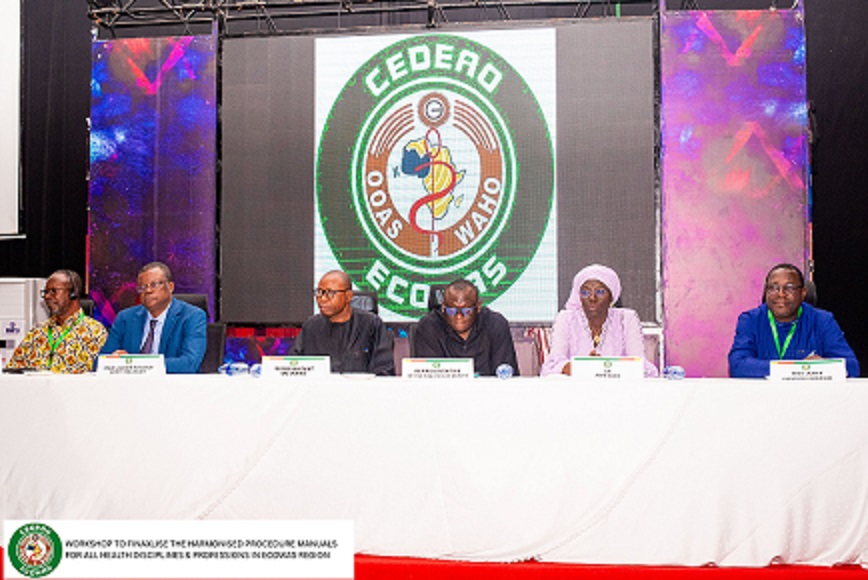
After three days of serious brain-storming sessions in Abuja, the West African Health Organization (WAHO), has successfully developed harmonised procedure manuals for all Health Disciplines and Profession in the ECOWAS region.
The manuals, described by an official of the heath body as one of the most technical documents ever produced by WAHO , provide clear, standardised guidance on Professional conduct and ethics — the values that must govern our practice; Clinical and operational procedures — how we deliver safe, evidence-based care and; Licensing, registration, and discipline — how we assure competence and accountability.
Other areas covered by the manuals include continuing professional development — how we keep our workforce current and relevant and; Cross-border practice and mutual recognition — how we enable our professionals to serve where they are most needed, without compromising standards.
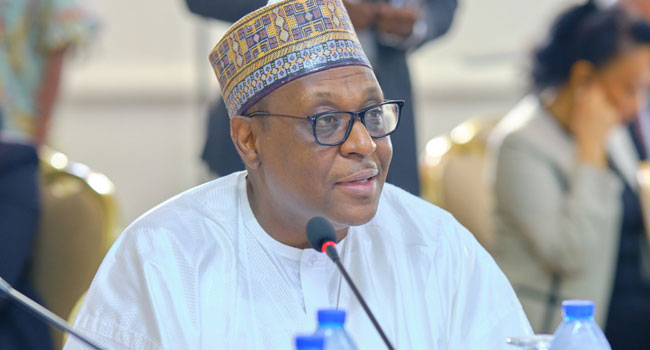
Speaking at the closing of the workshop on Saturday, Nigeria’s Coordinating Minister of Health and Social Welfare, Professor Muhammad Ali Pate, described the development of the manuals as a landmark achievement that has now moved the ECOWAS Region from aspiration to action.
“Over the past days, you have worked tirelessly to address a long-standing challenge in our sub-region: the fragmentation of standards, procedures, and expectations that guide our health professionals,” the minister told the participants, made up of representatives of Professional Regulatory Bodies, Heads of Health Training Institutions, Development Partners and other resource persons.
The minister, who was represented by the WAHO Liaison Officer for Nigeria, Dr. Dakum Longji Benji, further said, “When a nurse trained in Ghana, a doctor trained in Senegal, a pharmacist trained in Nigeria, or a laboratory scientist trained in Sierra Leone steps into a facility anywhere in our region, our people can now be assured of the same quality, the same safety, and the same professionalism.”
Recalling the words of Nelson Mandela: “Health cannot be a question of income; it is a fundamental human right,” the minister declared: “Today, I can say with pride that you have given practical meaning to those words.
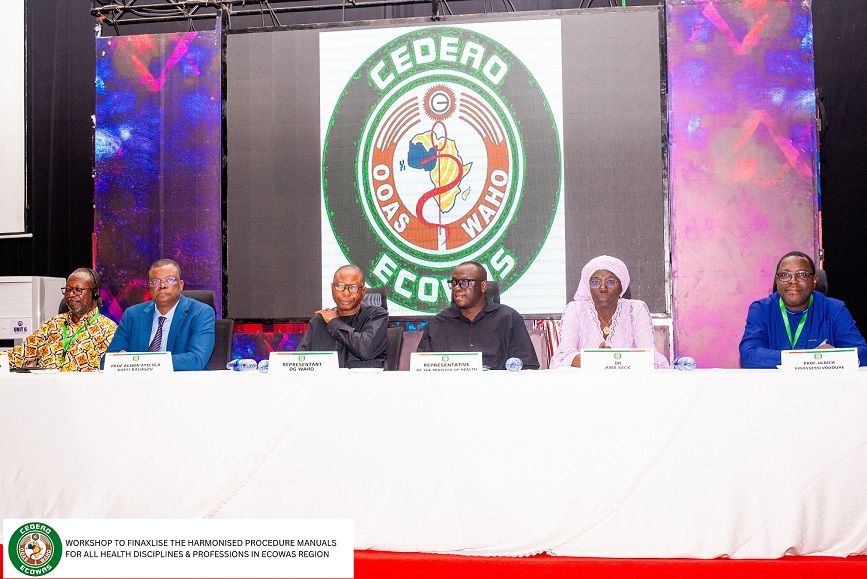
He noted that the strength of any health system lies not in its buildings or equipment, but in its people — in the competence, professionalism, and integrity of its health workforce, adding that the manuals developed during the workshop complement the great strides WAHO has already made in harmonising training curricula across the region.
“ You have now translated those curricula into daily practice — from the classroom to the clinic, from the laboratory to the community,” he stated.
He charged the participants to first, return to their respective countries as champions of these manuals, and work with their regulatory councils, training institutions, and ministries of health to domesticate, adopt, and enforce them.
“Second, let us ensure these manuals are living documents — regularly reviewed, updated with new evidence, and responsive to emerging health threats and technologies.
“Third, let us hold ourselves accountable. The true test of this workshop will not be in this hall, but in our hospitals, health centres, and communities, where a mother, a child, or an elderly patient encounters a health professional they can trust,” he said.
He commended WAHO under the leadership of the Director-General for its vision and leadership, just as he thanked all the experts, rapporteurs, facilitators, and development partners who contributed their knowledge, time, and resources to this success.
In his remarks, the Representative of the Deans of Faculties, Professor Vodouhe Ulrich, said WAHO should ensure the wide dissemination of the harmonised procedure manuals developed during the workshop, making them accessible to health training institutions and professionals throughout the ECOWAS region.
On his part, the representative of the West African Colleges, Professor Yao Tettey, recalled that at the opening ceremony, he had described the document that were about to be finalised as the foundation of all our professional documents, noting that following the three-day deliberations, “I am even more convinced of its importance.
“Over the past three days, we have engaged in extensive discussions, exchanged ideas, expressed differing opinions and ultimately reached a consensus on important technical issues. Together, we have produced a document of considerable technical and practical value. It is not simply another procedural manual. It is a comprehensive reference that reflects our collective professional experience and addresses practical needs that are not adequately covered in conventional textbooks.”
He therefore appeal to everyone responsible for the remaining stages of the process to ensure that the document is properly finalised, thoroughly reviewed and submitted to the West African Health Organisation. He also appealed to WAHO to ensure that the finalised manuals are widely disseminated and made accessible to health professionals, training institutions and students across the region.
“These manuals should serve not only as procedural references but also as practical training resources for current and future generations of health professionals. Their value will ultimately depend on how effectively they are used to strengthen professional practice and improve the quality of healthcare delivery in our Member States,” he said.
Professor Awa Seck, who spoke on behalf of the ECOWAS Chairmanship, commended WAHO for its leadership in bringing us together and providing the institutional framework necessary to advance this important regional initiative.
“The quality of our deliberations demonstrates that we are moving in the right direction towards more consistent and harmonised professional practices across the ECOWAS region. I also extend our sincere appreciation to the Government of the Federal Republic of Nigeria for its hospitality and the excellent arrangements made for this workshop,” she remarked.
According to Prof Seck, the principal objective of this meeting was to finalise harmonised procedure manuals for health professionals, thereby providing our countries with practical tools to improve the quality of healthcare delivered to our populations
“The progress achieved represents an important milestone in the development of common professional standards and harmonised procedures across the region,” she noted.
The President of the Regional Council, Professor Koffi Balogou, thanked everyone participant for the dedication demonstrated throughout the workshop, as he expressed confidence that the remaining tasks would be completed and that the final documents would be of considerable value to health professionals across our region.
In his closing remarks, the Director-General of WAHO, Professor Palokinam T. PITCHE, noted that the documents developed during the three-day workshop “represent some of the most technically demanding work undertaken within our regional efforts to harmonise health professional training and practice,” stressing that at WAHO, “we place considerable importance on technical rigour, professional competence, transparency and the quality of our work.”
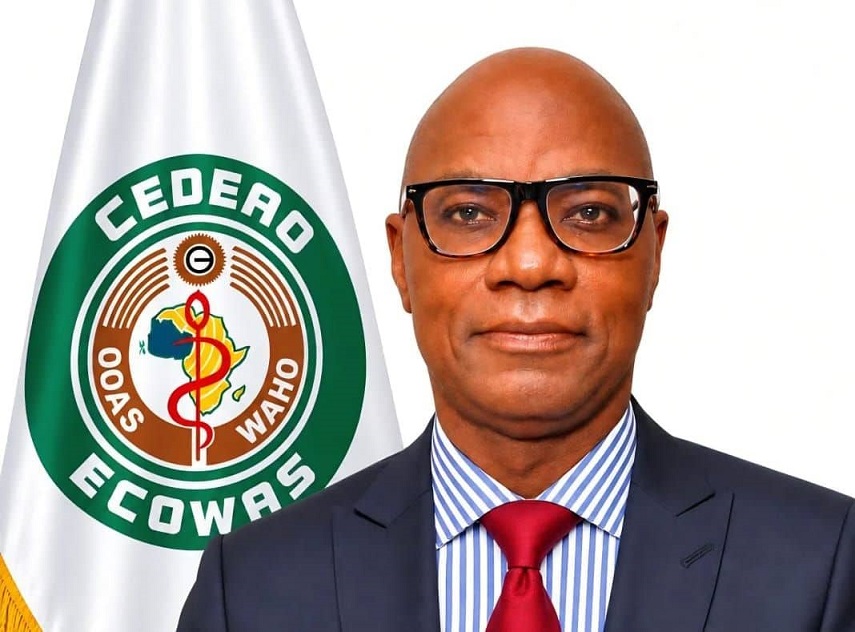
Prof PITCE, who was represented by Professor Joseph OLORUNDA, explained that it was in furtherance of this commitment that WAHO brought together experienced professionals and recognised experts who understand the realities of health training, regulation and service delivery in the ECOWAS Member States.
According to him, “the development of these manuals builds on the substantial work already undertaken to harmonise health professional training curricula across the ECOWAS region. Those harmonised curricula have attracted interest beyond West Africa, demonstrating the technical value of the region’s collective efforts.”
He said: “Our objective is not simply to produce documents, but to establish comprehensive and practical reference materials that can guide professional training and practice. The expertise assembled here has enabled us to develop resources that reflect the particular needs of our region while remaining relevant to wider professional standards. The significance of this work extends beyond the documents themselves. We are laying the foundations for greater professional mobility, mutual recognition of qualifications and improved consistency in healthcare delivery across ECOWAS Member States.
“Our ambition is to create an environment in which appropriately qualified health professionals can practise across national borders within a harmonised framework of professional standards. A health professional trained in one Member State should be able to contribute effectively to healthcare delivery in another, subject to the applicable regulatory requirements. This is an essential dimension of regional integration
“The work being undertaken today will also benefit future generations of health professionals, who will inherit clearer professional guidance and more consistent standards.”
The Director-General further reminded participants that the work was not yet complete, pointing out that the documents must be carefully reviewed, edited and finalised to ensure that they meet the required technical and professional standards.
“Once finalised, WAHO intends to facilitate access to these materials through its institutional platforms, including its website. The aim is to make the manuals available to health professionals, training institutions, regulatory authorities and other relevant stakeholders. Their use and reproduction will be subject to the applicable copyright and intellectual property arrangements. Where necessary, WAHO will also facilitate technical support to institutions seeking guidance on the practical application of the manuals. The ultimate objective is to ensure that these documents are not merely published but effectively used to strengthen healthcare delivery,” he said.