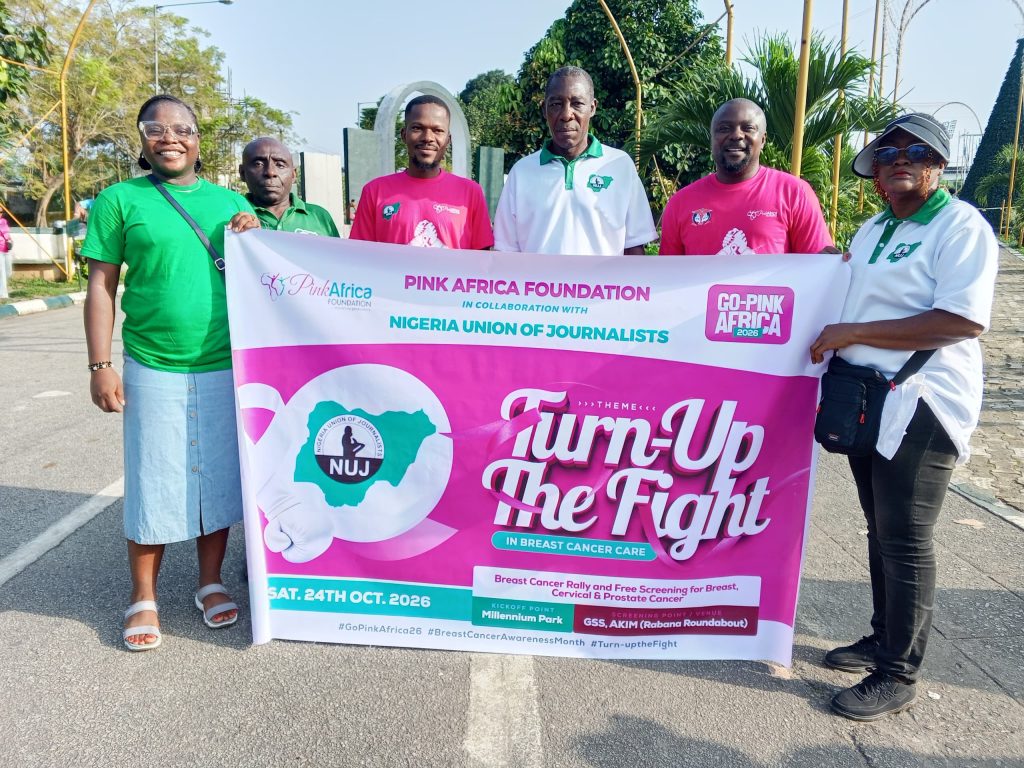
Health experts have raised concern over the growing burden of breast cancer in Nigeria, warning that one in every 11 women is at risk of developing the disease, while most patients still seek treatment only after it has reached an advanced stage.
The warning came during the Go Pink Day 2026 global awareness campaign organised by the Pink Africa Foundation in Calabar, Cross River State. The event featured free screening for breast, cervical and prostate cancers, eye checks, blood donation and first aid services for hundreds of residents.
Speaking at the event, Executive Director of Pink Africa Foundation, Glory Enoh Egria, said this year’s theme, “Turn Up the Fight in Breast Cancer Care,” was aimed at closing major gaps in cancer care, especially for women living in underserved communities.
“We are not just creating awareness. We are backing it up with action,” she said.
Egria blamed poor awareness and late presentation for the high number of breast cancer deaths in Nigeria. She urged women to examine their breasts every month and report any lump to a hospital immediately, stressing that not every lump is cancer.
According to her, the foundation has sponsored several mastectomies and chemotherapy treatments, helping many patients survive because their cancers were detected early.
“Early detection saves lives. Over 50 cases have been reported at our center since January, but many patients cannot afford even transport or basic investigations,” she said.
She also appealed to government to make cancer treatment more affordable by subsidising care, providing more radiotherapy machines and deploying more cancer specialists across the country.
“We need government to come in and support us. A woman is caught between buying food for her children and paying for treatment. Women in rural areas like Ikom don’t have access,” she appealed.
Also speaking, Executive Director of Asi Ukpo Hospitals and Asi Ukpo Comprehensive Cancer Centre, Calabar, Dr. Yegwa Ukpo, said Nigeria records about 144,000 new cancer cases every year, with breast cancer ranking as the most common cancer among women.
“The burden is quite heavy. About 60 percent of patients that come to our hospital are breast cancer patients. 70 to 80 percent present late,” Ukpo said.
He noted that breast cancer is not limited to women, explaining that men can also develop the disease. He advised Nigerians to embrace regular medical screening, warning that many cancers show no symptoms until they become advanced.
“The best thing is regular checkups. There are cancers with no symptoms until it is too late. Testing does not invite cancer,” he warned.
Ukpo added that discussions were ongoing with the National Health Insurance Authority to include cancer care under health insurance in order to reduce the financial burden on patients.
The Director-General of the Cross River State Primary Health Care Development Agency, Dr. Vivian Mesembe Otu, described breast cancer as the leading cancer affecting women in Nigeria and across Africa. She urged women not to ignore warning signs or allow fear and misinformation to delay treatment.
“Many women present very late due to ignorance, poor awareness and beliefs, when it is already too late,” she said.
Otu explained that while breast cancer can be hereditary, other risk factors include obesity, smoking and a sedentary lifestyle. She encouraged women to carry out monthly self-breast examinations and seek medical attention whenever they notice unusual changes.
“If we pick this lump early at fibroadenoma stage and remove it, the woman is free,” she said.
She disclosed that the Medical Women Association of Nigeria (MWAN), Cross River Chapter, provides free breast and cervical cancer screening every second Wednesday of the month in Calabar. She added that the state government is promoting enrolment in health insurance schemes, while Pink Africa Foundation supports free mastectomy for confirmed patients at the University of Calabar Teaching Hospital.
President of MWAN, Cross River Branch, Dr. Funke Ebughe, said one in every 11 women is at risk of breast cancer, while men account for between 0.5 and one per cent of reported cases.
“If you walk through streets and pass 100 people, at least 10 have risk factors. This is really scary,” she said.
Ebughe identified major warning signs as breast lumps, skin changes that resemble orange peel and unusual nipple discharge in women who are not breastfeeding. She also listed family history, advancing age, obesity, alcohol consumption, tobacco use and excessive radiation exposure among the major risk factors.
“If not, by 2040, we will not be able to prevent 2.5 billion women from having breast cancer. Fighting it is not the job of health workers alone. Spread the right information and discard myths,” Ebughe urged.
Breast cancer remains one of the leading causes of cancer-related deaths among women worldwide. Health experts say regular screening, early diagnosis and prompt treatment remain the most effective ways to improve survival rates and reduce deaths in Nigeria.