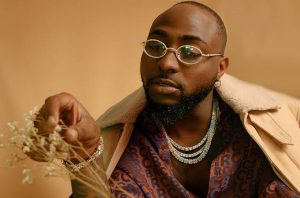
Innocent Idibia, popularly known as “2Baba”
Some artists have hit songs. Some have great albums. A few manage to become part of the soundtrack of an entire generation.
Innocent Ujah Idibia, better known as 2Baba, belongs in the last category.
At 51, the singer has spent more than two decades building a career that stretches from the days of Plantashun Boiz to the global rise of Nigerian music.
Long before Afrobeats became a global industry, 2Baba was already showing what Nigerian pop could become.
As a member of Plantashun Boiz alongside Blackface and Faze, he found his voice in a group that blended R&B, reggae, hip-hop and emerging Nigerian pop sounds. When the group eventually split, 2Baba took that sound into a solo career and, in 2004, released Face 2 Face.
Then came African Queen. The song was bigger than another hit.
It became the record that introduced a wider international audience to a different side of Nigerian pop music. Its appeal crossed borders, eventually landing on the soundtrack of the Hollywood film Phat Girlz. The song also earned major continental recognition, including awards at the Channel O Music Video Awards.
By 2005, 2Baba had become the first winner of the MTV Europe Music Award for Best African Act, placing a Nigerian pop star on one of the biggest international music stages of the period.
But African Queen was only the beginning. Albums such as Grass 2 Grace, The Unstoppable and Away & Beyond kept the hits coming, while songs including True Love, Implication, If Love Is a Crime, Only Me, Oyi, Amaka and Nfana Ibaga became familiar sounds across different generations.
His trophy cabinet grew with them. There was the MTV Africa Music Award for Artist of the Year, the BET Award for Best International Act: Africa in 2011, a MOBO Award, multiple Channel O and Headies honours, and other continental and international recognitions.
But perhaps the more important part of the 2Baba story is not the number of awards.
It is the longevity. He arrived when Nigerian pop music was still fighting for international attention. He remained when the industry changed around him, when new sounds emerged and when a new generation of stars began taking Nigerian music to audiences far beyond Africa.
He also built beyond himself, establishing Hypertek and contributing to the careers and development of other artists.
That is why 2Baba’s place in Nigerian music cannot be measured only by African Queen, even though that song remains perhaps his most enduring international calling card.
His career tells a larger story about Nigerian music itself.
He was there before the global Afrobeats boom. He was there when Nigerian artists were still trying to establish themselves on international award stages. And he remains part of the conversation more than two decades after his first major breakthrough.
His national recognition also came in 2022, when he was conferred with the Member of the Order of the Niger (MON) honour by the Federal Government.
At 51, 2Baba’s biggest achievement may therefore be simpler than any trophy.
He lasted.
And in an industry where sounds change quickly, artists come and go, and yesterday’s biggest song can disappear from the conversation almost overnight, staying relevant for more than two decades is an achievement of its own.
Happy 51st birthday to a man whose voice became part of Nigeria’s musical memory.