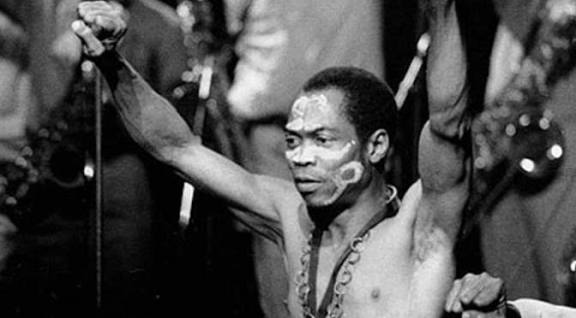
Afrobeat icon Fela Anikulapo-Kuti
Fela Anikulapo-Kuti would have turned 88 today, but many of the problems he challenged through his music remain part of everyday life in Nigeria.
Born on October 15, 1938, in Abeokuta, Fela died in Lagos on August 2, 1997. Yet, his voice has refused to fade, with his songs still finding their way into conversations about corruption, bad governance, police brutality and the struggle for freedom.
Fela was more than the man who gave the world Afrobeat. He used his music to confront those in power, question injustice and speak about the frustrations of ordinary Nigerians.
He did not mince words. His songs took aim at military rulers, corrupt officials and a society he believed had grown too comfortable with inequality and abuse of power. He also challenged Africans to think for themselves and question the systems inherited from colonial rule.
His outspokenness came at a heavy price.
In 1977, soldiers raided his Kalakuta Republic compound in Lagos. The attack left his mother, Funmilayo Ransome-Kuti, fatally injured after she was thrown from a window. Fela was also beaten, while the compound was destroyed.
The incident became one of the defining moments in his troubled relationship with the Nigerian authorities. But even after arrests, imprisonment and repeated confrontations with the state, he refused to abandon the issues that drove his music.
That stubbornness was part of who he was. Fela was not interested in making everybody comfortable. He wanted people to listen, question and, where necessary, challenge those who held power over them.
Nearly three decades after his death, younger Nigerians continue to discover his music. His songs still feature in discussions about political leadership, economic hardship and the treatment of citizens by those in authority.
His influence has also travelled beyond Nigeria, with musicians around the world drawing inspiration from his sound and the fearlessness with which he expressed his views.
But Fela’s enduring appeal goes beyond nostalgia for a musical legend. His songs remind listeners of a time when one musician turned his frustrations with the country into music that the powerful could not easily ignore.
On what would have been his 88th birthday, his legacy leaves Nigeria with an uncomfortable question: how much has changed since the days when Fela sang about the country’s problems?
He may be gone, but the issues he confronted have not all gone with him. That is why, decades later, Nigerians still return to his music, finding in his words echoes of the country they live in today.