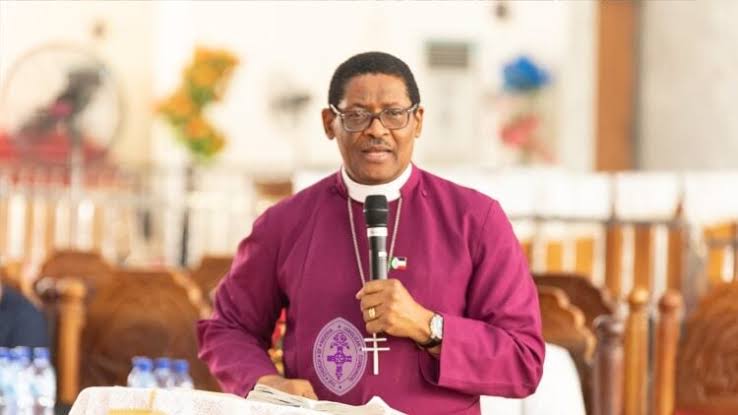
Primate, Most Rev'd Henry Ndukuba
Accountability, the Demand for Transparency, and the Awka Diocese Controversy
There is something profoundly troubling about the attempt by sympathisers of Archbishop Ibezim to portray the Primate of the Church of Nigeria (Anglican Communion), the Most Reverend Henry Ndukuba, as the principal villain in a controversy whose fundamental issues concern the administration of Awka Diocese, public demands for transparent and accountable stewardship of church property, financial accountability and the enforcement of institutional responsibility.
Having read Motunrayo J. Adetola’s article, “Nigerian Anglicans, We Have a Problem. The Problem Is the Primate,” I am compelled to ask a simple but fundamental question: How, precisely, did Primate Ndukuba become the problem? How did a controversy demanding answers about diocesan governance become a campaign against the very person expected to safeguard the integrity of the wider Church? Is Primate Ndukuba the diocesan bishop of Awka, or is he the head of the wider Communion being drawn into a controversy over affairs he does not personally administer?
The article is long on accusations against the Primate but remarkably short on a convincing justification for its central conclusion. What, precisely, should he have done differently in the circumstances? Given the reported concerns and calls for intervention, was he expected to remain passive, look away and allow the controversy to continue without the wider Church exercising its legitimate responsibilities?
Let us be clear from the outset: defending Primate Ndukuba does not mean declaring him infallible. No church leader is beyond scrutiny. But fairness demands that we distinguish legitimate criticism from unsubstantiated conclusions, and a genuine assessment of leadership from a determined attempt to make one individual the explanation for every controversy within a complex ecclesiastical institution. The article appears to have settled on its verdict before adequately examining the substantive questions. Its approach risks giving the impression that the objective is not simply to question the Primate’s decisions, but to discredit him personally. That is unfortunate, and it does little to advance the cause of truth.
For the avoidance of doubt, Primate Henry Ndukuba leads the Church of Nigeria as a national ecclesiastical institution; he does not personally administer Awka Diocese. The controversy, as presented, concerns allegations of financial impropriety, questions surrounding the sale of church lands, the management of diocesan resources and demands for accountability. These are serious matters requiring thorough investigation, careful examination of records and appropriate institutional action.
Where allegations concern the administration of a diocese, responsibility must first be examined in relation to those who exercise authority over its affairs. The Primate was not the diocesan bishop charged with the day-to-day administration of Awka Diocese, nor has the article established that he personally managed the transactions now under scrutiny. Why, then, should the person whose intervention is being questioned become the principal target of condemnation, while the substantive issues that occasioned the controversy risk being pushed into the background?
The first responsibility in any controversy is to identify the actual issues, establish the facts and determine who bears responsibility for the decisions under examination. It is not to find a convenient villain. If questions have arisen about church property, the proper response is to establish what happened, examine the relevant records, determine who authorised the transactions and ensure that any valid investigative findings are implemented in accordance with the Church’s governing rules.
The Primate’s personality does not answer these questions. Neither does an alleged sharp exchange during a bishops’ consecration service. To make his temperament the centrepiece of a controversy concerning diocesan governance and accountability is to risk diverting attention from the substantive issues that demand resolution.
Must the Primate look away to be considered a good leader? This is perhaps the most troubling implication of the criticism directed at him. If credible concerns arise about the stewardship of church assets, should the head of the Communion simply look away to preserve cordial relationships with a fellow bishop? Should institutional harmony be purchased at the expense of accountability? Is a Primate expected to remain passive whenever questions arise about the administration of a diocese? Certainly not.
The office of the Primate carries responsibilities to the wider Church, including the protection of its integrity, credibility, reputation and institutional interests. Those responsibilities do not confer unlimited personal power, but neither do they permit indifference to legitimate concerns. A Church that demands transparency from public officials, challenges corruption in society and preaches faithful stewardship cannot credibly insist that questions about its own assets should be ignored in the name of episcopal solidarity.
A leader who insists on accountability should not be condemned merely because accountability becomes uncomfortable. If the Primate has acted to address legitimate institutional concerns, the merits of that intervention deserve consideration rather than automatic suspicion. The proper test is whether the intervention was justified, whether he acted within his authority and whether the prescribed procedures were followed. If those conditions were satisfied, he deserves support for discharging his responsibilities. If a procedural defect is established, it should be corrected through the proper channels. But the mere existence of a procedural dispute does not establish that the Primate is the problem, still less that he should abandon his office.
An archbishop is not a Church unto himself. A diocesan bishop exercises authority within an organised Communion governed by a Constitution, Canons and established ecclesiastical structures. A diocese is not a private institution operating independently of the wider Church, and episcopal office does not place its holder beyond legitimate institutional oversight.
Does this mean that the Primate can do whatever he wishes? Absolutely not. His authority must be exercised within the Church’s governing instruments, and disciplinary action must comply with applicable procedures. But the reverse is equally true: Archbishop Ibezim, like every other diocesan bishop, cannot claim the protection of the Church’s Constitution while treating the legitimate authority of the wider Communion as optional.
The constitutional and canonical provisions cited in connection with the reported six-month leave must be examined carefully. If mandatory procedures were not followed, the defect should be addressed. If the governing instruments authorise intervention under specified circumstances, those provisions must equally be respected. The proper course is to examine the complete facts and the applicable rules, not to presume that the Primate is wrong simply because a bishop has challenged him in court.
A lawsuit is not a judgment. An allegation of procedural illegality is not proof of illegality. And episcopal rank is not immunity from accountability. The same Constitution that protects a bishop’s rights must also be understood in the context of the responsibilities and lawful authority of the wider Church.
The article’s emphasis on the Primate’s alleged temperament is equally unconvincing as a basis for its sweeping conclusion. Christian leaders should demonstrate gentleness, patience and self-control. But gentleness is not passivity, just as firmness is not automatically arrogance. Leadership sometimes requires difficult conversations, uncomfortable questions and decisive action.
Even if the consecration incident occurred exactly as described, it does not establish whether the Primate’s subsequent actions concerning Awka Diocese were lawful or justified. One alleged exchange cannot reasonably carry the weight of an argument demanding the removal of the head of a national Communion. If his manner on a particular occasion was inappropriate, it can be criticised on its merits. That is different from using it to discredit his entire leadership.
Primate Ndukuba must be judged by the totality of his stewardship, the decisions he has taken, the responsibilities he has discharged and his adherence to the Church’s governing principles. He should neither be worshipped as an infallible leader nor caricatured as an inherently unsuitable one. His office demands both pastoral sensitivity and institutional courage, and these qualities should be assessed fairly. Equally, his willingness to confront difficult questions should not be recast as a leadership defect merely because some of those questions concern powerful ecclesiastical officeholders.
The article also assembles disputes involving other bishops, North American dioceses, preaching invitations and litigation to portray the Primate’s tenure as a succession of failures. Each matter deserves to be assessed on its own facts. Who made the decisions? What constitutional provisions applied? Which actions were collective, and which were personally attributable to the Primate? What did the competent church authorities or courts actually determine?
Without these distinctions, a catalogue of controversies can create an impression of guilt without establishing the evidence necessary to sustain it. Institutional disputes may arise from competing interpretations of authority, conflicting interests or difficult decisions. Their existence alone does not determine who is right. If a decision was unlawful, let the evidence establish it. If an authority acted beyond its powers, let the appropriate institution determine the remedy. Unresolved disagreements should not be converted into a ready-made verdict against one individual.
Let nobody misrepresent this argument as a defence of absolute power. Primate Ndukuba is not above the Constitution, the Canons or legitimate scrutiny. But neither should the office be weakened by a narrative that treats every exercise of authority as evidence of intolerance and every challenge to that authority as proof that the challenger must be right. The Church must preserve both accountability and the capacity to govern. Authority without checks can become oppressive; independence without accountability can become institutional disorder.
The question remains: how is the Primate the problem? If the concern is the administration of Awka Diocese, let the relevant records and evidence be examined. If the concern is the stewardship of church property, let the facts be established. If the concern is compliance with the Constitution and Canons, let those instruments guide the resolution. And if the Primate’s actions are challenged, let them be judged by the same objective standards applied to every other officeholder.
Do not make the Primate responsible for every controversy merely because he occupies the highest leadership office. Do not confuse an allegation with a finding, a lawsuit with a judgment, or a demand for accountability with proof of persecution. Above all, do not demand that the Primate protect the Church’s integrity and then condemn him simply because the exercise of that responsibility produces resistance.
The Church of Nigeria needs accountability, but accountability must be universal. It needs unity, but unity must not become a shield against scrutiny. And it needs leadership that is both compassionate and courageous. Against this background, the demand that Primate Ndukuba should leave office appears ill-conceived, mischievous and in poor taste. It is a sweeping conclusion unsupported by the arguments advanced and risks diverting public attention from the substantive questions of transparency, stewardship and institutional responsibility at the heart of the Awka Diocese controversy.
If the Primate deserves no commendation for demanding accountability in the Awka Diocese controversy, he certainly deserves no condemnation merely for intervening. His actions must be assessed on their merits, not through insinuations about his temperament or a selective compilation of institutional disputes. If he acted lawfully and in discharge of his responsibilities, he deserves support, not vilification. If a specific breach is established, it should be addressed through the appropriate process. That is the fair, principled and Christian position.
Those who insist that the Primate is the problem, as the article so emphatically asserts, must answer the questions they appear to have deliberately overlooked. What precisely did he do wrong? Was he expected to look the other way when concerns arose about the stewardship of church assets? Which applicable constitutional or canonical provisions did he violate? What evidence establishes that violation? And why should the head of the Communion be condemned for insisting on transparency and accountability among those entrusted with the administration of Awka Diocese?
At this critical moment in our society, the Church, especially the Church of Nigeria (Anglican Communion), must stand firmly for truth, justice, accountability and lawful authority, whoever happens to be under scrutiny. Defending those principles requires not the scapegoating of the Primate, but the courage to confront the substantive issues, establish the facts and apply the same standards of accountability to everyone.
Adams a member of the Church of Nigeria Anglican Communion, social commentator wrote from Jos