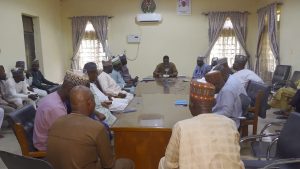
The Arewa Consultative Forum (ACF) has called on the Federal Government to make public the details of the reported minerals agreement signed with the United States on September 23, 2026, in New York, warning that secrecy surrounding the deal could undermine Nigeria’s national interests and the welfare of mineral-producing communities.
In a statement signed by its National Publicity Secretary, Prof. Tukur Muhammad-Baba, the forum expressed concern over what it described as the opacity surrounding the agreement, particularly the absence of publicly available information on its terms, scope, financial commitments and implementation framework.
The ACF acknowledged the potential benefits of responsible foreign investment and technical cooperation but insisted that transparency, accountability, national sovereignty and economic justice must remain central to any agreement involving Nigeria’s strategic mineral resources.
The forum noted that Northern Nigeria is endowed with commercially valuable minerals, including gold, lithium and lead-zinc, which, if responsibly developed, could generate employment, boost industrialisation, increase government revenue and diversify the regional economy.
It, however, stressed that the key consideration should not merely be attracting foreign investors but ensuring that the exploitation of the resources delivers measurable benefits to Nigerians, particularly host communities. Such benefits, it said, should include local employment, skills development, Nigerian participation, mineral processing, infrastructure, environmental protection and fair compensation for affected communities.
The ACF expressed particular concern that persistent insecurity across parts of Northern Nigeria could expose mineral-producing communities to illegal exploitation, displacement, environmental degradation and the loss of legitimate economic opportunities.
It urged the Federal Government and relevant security and regulatory agencies to explain the safeguards being put in place to protect mining sites, host communities and the proceeds of lawful mineral development.
The forum also called for thorough investigations into any allegations of illegal mineral exploitation or the involvement of foreign interests in criminal activities, stressing that such claims must be addressed by competent authorities on the basis of credible evidence.
Clarifying its position, the ACF said its concern was not opposition to cooperation with the United States but the need to ensure that Nigeria and its mineral-producing communities receive a fair, transparent and enforceable share of the benefits. It maintained that foreign investment should not come without transparency, while mineral extraction must be accompanied by value addition and sustainable economic opportunities.
The forum anchored its demand for disclosure on Sections 14(2)(b) and 16(1)(a) and (b) of the 1999 Constitution, as amended, which address the welfare of citizens and the management of national resources, while acknowledging the limitations on judicial enforcement of Chapter II provisions under Section 6(6)(c). It also cited the Freedom of Information Act, 2011, as a legal framework through which citizens can seek access to public records, subject to applicable limitations.
Among the questions the ACF wants the Federal Government to answer are the exact terms and legal status of the agreement, the financial and investment commitments of the United States, the identities and obligations of participating companies, and whether any preferential access or exclusive purchasing rights have been granted.
It also demanded clarification on safeguards for Nigeria’s regulatory powers, ownership and control of geological data, and any financial liabilities arising from the arrangement.
The forum further sought enforceable guarantees on local processing, technology transfer, Nigerian ownership and participation, environmental restoration, compensation for affected communities and measures to prevent water contamination, land degradation, unsafe mining and conflicts over mineral-bearing land.
It also questioned the roles of state governments, traditional institutions, local communities, artisanal miners and Nigerian businesses in decisions concerning the development of the resources.
The ACF urged the Federal Government, the National Assembly and relevant regulatory institutions to publish the agreement and associated documents to the extent permitted by law, clarify its legal and financial implications, identify participating companies and disclose any preferential rights granted to them.
It also called for appropriate legislative scrutiny, transparent implementation monitoring, consultation with state governments and affected communities, and clear reporting on local participation, environmental safeguards and community benefits.
The forum called on state governors, legislators, traditional rulers, civil society organisations, mining associations and community representatives to demand an equitable framework for mineral development, warning that Nigeria, particularly the North, could not afford an arrangement in which its resources were extracted while its people remained poor, unemployed and vulnerable to environmental damage.
It insisted that the country’s mineral wealth must drive industrialisation, productive employment, local enterprise and sustainable prosperity, declaring that “nothing short of full disclosure will suffice.”