A civil society organisation, Safe House for Justice and Human Empowerment Centre (SHJHEC), has warned that continued insecurity and restricted access to farmlands could worsen food insecurity in Plateau State and Nigeria.
The organisation said many households had been cut off from their farmlands and income-generating opportunities, leaving displaced persons and host communities increasingly vulnerable.
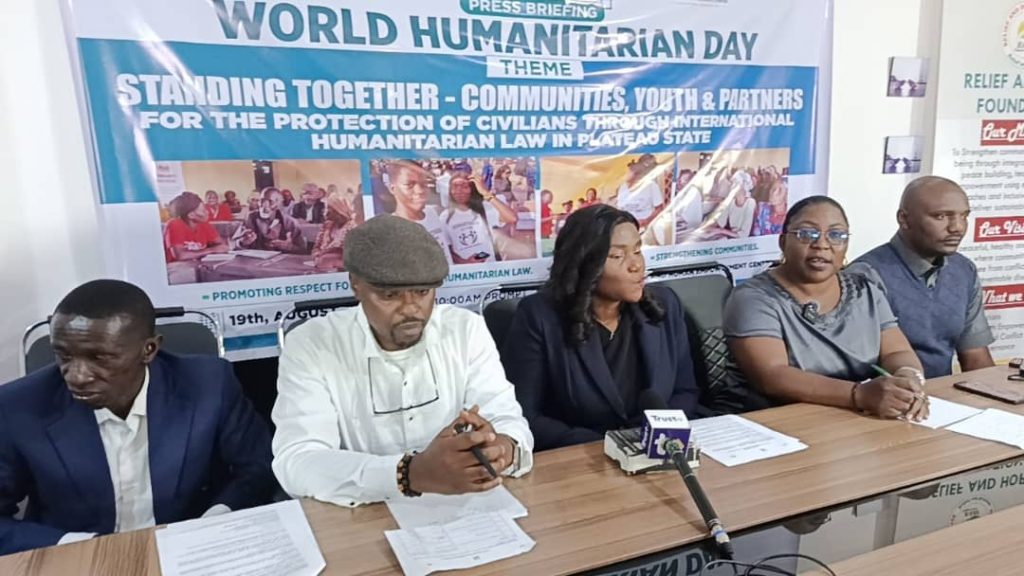
Executive Director of SHJHEC, Mrs Edit Gamut, gave the warning on Wednesday in Jos at a news conference commemorating the 2026 World Humanitarian Day with the theme: “ _Act for Humanity.”_
Gamut, a legal practitioner, said the event was organised in collaboration with the Ascend Community Wellness Centre and Relief and Hope Foundation (RAHF).
She decried the prolonged humanitarian crisis caused by insecurity in Plateau and called on governments at all levels to intensify efforts to protect vulnerable communities.
Gamut said failure to secure farming communities could further undermine food production and worsen food insecurity in the state and the country.
“Recent findings have revealed that many households are unable to access farmlands and income-generating opportunities, leaving both displaced persons and host communities increasingly vulnerable.
“For farming communities in particular, insecurity has cut off many families from their farmlands and income-generating opportunities.
“The resulting loss of productive assets has deepened food insecurity, poverty and vulnerability while placing additional pressure on host communities.
“So, we are calling on both the federal and state governments to protect civilians, not just territories; strengthen early warning and rapid response systems, secure farming communities and support safe access to farmlands,” she said.
Also speaking, the Executive Director of RAHF, Mr Nanmak Bali, expressed concern over the humanitarian challenges arising from increased displacement of residents in the state.
Bali also decried inadequate access to healthcare, quality education, safe water, sanitation and other basic facilities in vulnerable communities.
He called on the government to scale up support for food security, protection, shelter, mental health, livelihoods and psychosocial support, particularly for women, children and persons with disabilities in displaced communities.