Nigeria has taken another major step towards its ambition of hosting the 2034 Commonwealth Games following a high-level meeting between officials of the National Sports Commission (NSC), the Nigeria Olympic Committee (NOC) and a delegation from Commonwealth Sport in Abuja.
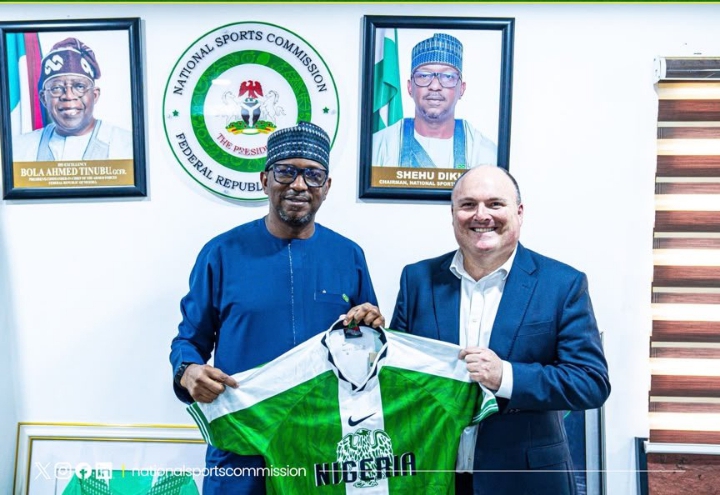
The meeting, held at the National Sports Commission headquarters, brought together NSC Chairman Shehu Dikko, Director General Bukola Olopade, Nigeria Olympic Committee President Engr. Habu Gumel, Commonwealth Sport President Donal Rukare and the organisation’s Director of Sport, Darren Hall.
The engagement followed earlier discussions held in Glasgow during the 2026 Commonwealth Games and gave both sides the opportunity to review Nigeria’s proposal to host the Games.
During the meeting, Commonwealth Sport officials presented a detailed assessment of Nigeria’s bid, focusing on the country’s long-term plan and how its preparations could provide a solid foundation for a stronger bid to host the 2034 edition of the Games.
The review highlighted several strengths in Nigeria’s proposal, including strong support from the Federal Government, political commitment, an ambitious legacy plan, existing sports facilities in Abuja and Lagos, ongoing sports infrastructure upgrades, Nigeria’s experience in hosting major international events, a proposed co-hosting model, the country’s sports reform agenda and its strategic position in Africa.
The assessment also acknowledged improvements made by Nigeria through additional submissions. However, it identified areas requiring further work, including venue alignment, Games scheduling, budgeting, optional sports strategy and other technical aspects that could strengthen the country’s 2034 bid.
The latest engagement forms part of Nigeria’s continued campaign to bring the Commonwealth Games to Africa for the first time in decades. It also builds on discussions held during the Commonwealth Sports Ministers’ Meeting in Glasgow in July 2026, where ministers adopted a resolution supporting the hosting of the 2034 Commonwealth Games in Africa, with Nigeria regarded as a leading contender because of its strong 2030 bid.
If successful, hosting the Games would mark another milestone for Nigerian sports, boost investment in sports infrastructure, create jobs, promote tourism and further position the country as a major destination for international sporting events. It would also reinforce ongoing efforts by the National Sports Commission to reset and transform the nation’s sports sector while leaving a lasting legacy for future generations.