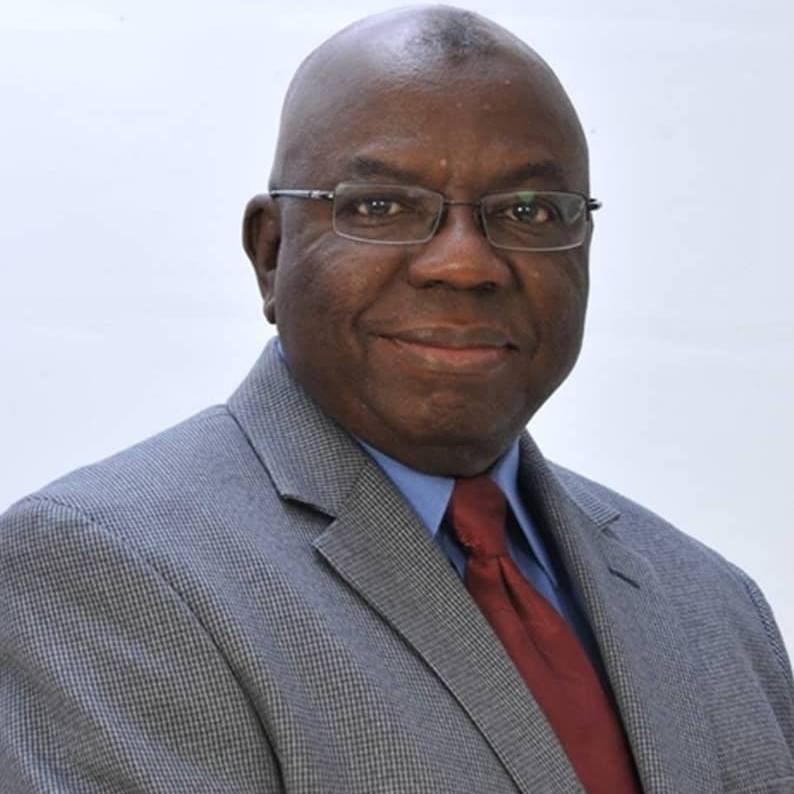
HAGHER
I am honoured to chair this important gathering devoted to ethics and integrity.
I commend Verbatim Magazine and its partners for doing something that Nigeria urgently needs: making integrity visible and making honour answerable to character.
For too long, our national conversation on corruption has concentrated almost entirely on laws, investigations, prosecutions and institutions.
These are necessary.
But corruption is not merely a legal problem.
It is a moral problem.
And because it is a moral problem, the defeat of corruption requires more than punishment.
It requires the reconstruction of the Nigerian conscience.
In my reflections on love and public life, I have argued that love must not be reduced to romance, sentiment or private affection. Love is a public moral principle. It is the disciplined recognition of the humanity of another person, expressed through truth, justice, responsibility, restraint, service and protection of dignity.
Once we understand love this way, corruption takes on a deeper meaning.
The corrupt official does not merely steal money.
He stops seeing the human beings behind the money.
He sees figures.
Allocations.
Contracts.
Budgets.
Opportunities.
But public money is never merely money.
When money meant for healthcare is stolen, somebody may die because medicine is unavailable.
When money meant for education is stolen, a child may study without books, teachers or a safe classroom.
When money meant for roads disappears, somebody may die on a road that should have been repaired.
When security funds are diverted, communities may be left undefended.
When pensions disappear, men and women who have given their productive lives to their country may spend old age in humiliation.
This is why corruption is so loveless.
It is irresponsibility organized through power.
It is not simply the taking of money. It is the refusal to recognize the human consequences of taking that money.
Corruption is, in a profound sense, violence committed through paperwork.
The corrupt person may never meet the woman who dies because a clinic has no equipment.
He may never see the student whose future collapses because a school has failed.
He may never hear the cry of the traveller on the dangerous road that was never repaired.
But his actions enter their lives as suffering.
If Nigeria is serious about defeating corruption, therefore, we must teach something deeper than fear of punishment.
We must teach responsibility for one another.
And this is why love must be cultivated.
Love does not grow automatically.
It must be taught in our homes, schools, religious communities, public institutions, political culture and national memory.
It must be practised in small things before it can be trusted in large things.
A child who is taught to mock difference may become an adult who votes hatred into office.
A student who learns to cheat without shame may become a public officer who steals without trembling.
A believer who is taught that outsiders are enemies may become a citizen incapable of sharing a nation with people who worship differently.
And a young person who continually sees stolen wealth celebrated may learn that success means possession without conscience.
Ladies and gentlemen:
Societies reproduce what they honour.
That statement must become central to Nigeria’s anti-corruption struggle.
If a society honours money without asking how it was made, it should not be surprised when corruption multiplies.
If it honours power without asking whom that power serves, it should not be surprised when abuse of power increases.
If it honours loud religion without asking whether mercy, truth and justice follow, it should not be surprised when hypocrisy grows.
If it honours ethnic champions more than truthful servants, it should not be surprised when nationhood weakens.
If it honours victory more than justice, it should not be surprised when democracy becomes warfare.
Therefore, love must reshape honour.
We must learn again whom a moral society should admire.
We must honour those who serve quietly.
Those who protect public trust.
Those who heal.
Those who teach.
Those who build fairly.
Those who speak truth when falsehood is profitable.
Those who restrain power when they could abuse it.
Those who defend the vulnerable.
Those who refuse corruption even when corruption would enrich them.
We must teach our children to admire not merely the rich, but the righteous;
not merely the powerful, but the responsible;
not merely the famous, but the faithful.
This reshaping of honour is essential because culture often decides what law alone cannot.
A country may have anti-corruption laws, but if society praises thieves, the law struggles.
A country may have constitutional promises, but if citizens despise one another, the constitution weakens.
A country may have schools, but if education is pursued only for status and wealth, wisdom declines.
A country may have religious institutions, but if religion becomes competition for influence, mercy disappears.
A country may have elections, but if voters reward division, democracy decays.
Love must become the culture beneath the law.
This, I believe, is one of the profound tasks before Nigeria.
Nigeria is not a country without love.
Our people demonstrate extraordinary love every day.
Families sacrifice enormously for one another.
Communities raise money for school fees, medical emergencies, funerals and communal development.
Relatives support one another across cities and continents.
Religious communities feed the hungry.
Friends carry one another through hardship.
Yet there is a contradiction.
Too often, the love that thrives inside the family disappears when we enter public institutions.
Love exists in the family but fails in the budget.
Love exists in the prayer meeting but fails in the public office.
Love exists in the funeral contribution but fails in the hospital system.
Love exists in the ethnic association but fails in the national covenant.
Love exists in private generosity but fails in public accountability.
Our challenge is therefore not simply to create love.
Our challenge is to enlarge it.
To move love from family into citizenship.
From charity into justice.
From religious profession into public morality.
From private kindness into institutional responsibility.
This also means that Nigeria must confront one of our most dangerous moral confusions: the celebration of unexplained wealth.
A man may steal from society and later return a fraction of what was stolen as philanthropy.
He gives scholarships.
He makes donations.
He sponsors ceremonies.
He distributes food.
And gradually society forgets to ask where the wealth came from.
But true love does not steal from the many in order to impress the few.
Generosity cannot cleanse injustice.
A society that allows stolen wealth to purchase honour teaches its young people the wrong lesson: acquire wealth by whatever means you can, and afterwards buy respect.
This is how corruption becomes cultural.
And this is why the occasion we are gathered for today is important.
Awards for ethics and integrity are not mere ceremonies.
They are instruments of moral education.
They tell society: these are the people and institutions we should notice.
They tell the young public servant that honesty is not foolishness.
They tell the officer who refuses a bribe that Nigeria still has a place for conscience.
They tell institutions that protect public trust that integrity can also receive applause.
Nigeria must become deliberate about this.
We must teach integrity in our homes.
Teach it in primary schools.
Teach it in secondary schools.
Teach it in universities.
Teach it in churches and mosques.
Teach it in political parties.
Teach it in the civil service.
Teach it in professional bodies.
But above all, leaders must teach it through example.
A thousand lectures on integrity cannot overcome a political culture that rewards corruption.
Young people do not learn only from what we tell them.
They learn from what they see us celebrate.
Therefore the battle against corruption is also a battle over the Nigerian imagination.
What kind of person do we call successful?
What kind of wealth commands our respect?
What kind of leader do we honour?
What do our children believe power is for?
What do they see happen to the honest person?
What do they see happen to the thief?
These questions are as important as statutes and institutions.
Law can punish corruption after it occurs.
Culture can make corruption shameful before it occurs.
Conscience can stop the hand before the crime is committed.
But let me also be clear:
Love is not an excuse for impunity.
Love that protects a thief because he belongs to my tribe is not love.
Love that excuses wrongdoing because the offender belongs to my political party is not love.
Love that silences victims in order to protect powerful people is not love.
If corruption is wrong when committed by my opponent, it must remain wrong when committed by my friend.
If injustice is wrong when my community suffers, it must remain wrong when my community benefits.
Love requires moral consistency.
That is why love and justice must never be separated.
Love without justice becomes sentimentality.
Love without truth becomes denial.
Mercy without accountability becomes permission for abuse.
A loving nation must therefore make law stronger than status.
Ladies and gentlemen,
Nigeria will not defeat corruption merely because it establishes more agencies.
Nigeria will begin to defeat corruption when integrity becomes honourable and corruption becomes culturally shameful.
When public office is understood as service rather than opportunity.
When wealth can no longer silence conscience.
When citizens stop asking only, “What can I get?” and begin asking, “Who will suffer because of what I do?”
When love enters the budget.
When love enters procurement.
When love enters the classroom.
When love enters the courtroom.
When love enters the police station.
When love enters parliament.
When love enters the civil service.
When love enters business.
When love enters the ballot box.
And when love finally enters the Nigerian conscience.
The future of Nigeria will not depend only on the power we acquire.
It will depend on the moral purpose to which that power is put.
Power without love wounds.
But power disciplined by love, justice, truth, responsibility and service can renew a nation.
Let us therefore build a Nigeria where integrity is not merely demanded by law but sustained by culture.
Where public service becomes an act of responsibility.
Where leadership protects dignity.
Where honest service receives honour.
And where every Nigerian understands one fundamental truth:
Societies reproduce what they honour.
Let us therefore honour integrity.
Let us honour responsibility.
Let us honour service.
Let us honour truth.
And let love become the culture beneath our laws.
- Amb Hagher’s remarks as Chairman at the Verbatim Magazine Ethics and Integrity Awards ceremony in Abuja