Kaduna State Governor Uba Sani
Kaduna State Governor, Uba Sani, has approved a total of N810 million as financial support for 4,050 graduates of the Kaduna State Institute of Vocational Training and Skills Development to enable them transition from training to productive employment and entrepreneurship.
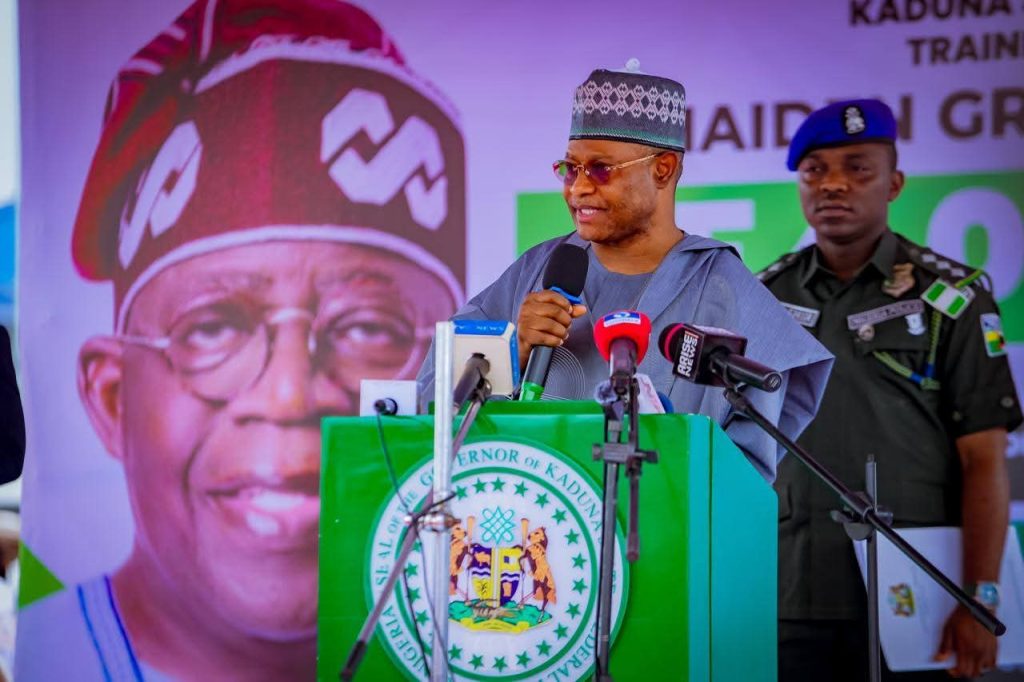
The governor announced the intervention on Thursday at the maiden graduation ceremony of the institute, held at the Abdulkadir Balarabe Musa Campus in Rigachikun, Kaduna State, saying each graduate would receive N200,000.
He said the fund would be administered through the Kaduna State Enterprise Development Agency (KADENDA) and would enable beneficiaries to purchase essential tools, obtain professional registration, secure initial working capital or meet transportation expenses while seeking employment opportunities.
According to him, the state government is also engaging companies and industries to create opportunities for direct employment, apprenticeships, internships, mentorship, subcontracting and other structured engagements for the graduates.
Sani disclosed that the government was developing a digital platform that would connect graduates with potential employers and track their employment outcomes, stressing that the success of the skills development programme would not be measured merely by enrolment and graduation figures.
“Our measure of success will ultimately go beyond enrolment and graduation figures; it will be the number of graduates employed, enterprises created, incomes improved, contracts secured and communities transformed,” he said.
The governor said the graduates, having qualified for the National Skills Qualification Level II, represented a new generation of skilled citizens equipped to create value for themselves, their families, communities and the wider economy.
He explained that the institute was established to build an ecosystem where young people could become self-reliant, women could transform acquired skills into sustainable enterprises, persons living with disabilities could participate fully in the economy, and artisans could move from informal subsistence to globally competitive craftsmanship.
Sani said the institute operates three campuses located at Rigachikun, Soba and Samaru Kataf, where training is offered tuition-free, with special attention given to women, persons with disabilities and young people from underserved communities.
He said the graduates were trained in 14 trade areas, including electrical installation, welding and fabrication, aluminium fabrication, computer hardware repairs, catering and hospitality, masonry, refrigeration and air conditioning, fashion design, carpentry and joinery, painting, tiling, plumbing, solar installation and automotive mechatronics.
The governor said the institute’s partnership with the National Board for Technical Education (NBTE) had enabled it to deliver training in line with National Occupational Standards and award the National Skills Qualification under the Nigerian Skills Qualifications Framework.
He further disclosed that Kaduna State had established an institutional framework to sustain skills acquisition and development through the Kaduna State Council on Skills, which he chairs. He added that Vice President Kashim Shettima and the National Council on Skills had recognised the state’s approach as a model for grassroots, bottom-up skills acquisition.
Sani also highlighted the performance of Kaduna trainees at national competitions, noting that Ibrahim Abubakar Jikamshi emerged first in welding and was named Overall Best Artisan of the Year at the 6th National Construction Artisans Award held in Abuja in February 2026.
The governor commended President Bola Ahmed Tinubu for his support to the programme, recalling that the President commissioned the institutes in June 2025, describing the gesture as a demonstration of his belief in Kaduna youths and the determination of the state government to transform their potential into productive power.