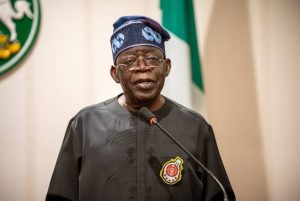
Minister of Finance and Coordinating Minister of the Economy, Taiwo Oyedele
Minister of Finance and Coordinating Minister of the Economy, Taiwo Oyedele, declared that Nigeria’s economy has stabilised following the implementation of major reforms by the Federal Government.
Oyedele stated this on Thursday August 27 while briefing journalists after the 160th meeting of the National Economic Council (NEC), saying the government would now focus on translating the gains recorded into improved living standards and shared prosperity.
The minister pointed to improvements in economic growth, inflation, foreign exchange stability, external reserves, government revenues and debt servicing as evidence of the progress made under the administration of President Bola Tinubu.
According to him, real Gross Domestic Product (GDP) growth stood at 3.89 per cent in the first quarter of 2026, compared with 3.13 per cent recorded a year earlier. He said GDP growth for the full year was projected to exceed four per cent.
“Headline inflation is down to 15.43 per cent at the end of July, from 24.94 per cent a year ago,” Oyedele said, adding that food inflation also declined to 20.31 per cent from 26.2 per cent over the same period.
He also added that the country’s external reserves had risen to $51.96 billion, the highest level since January 2009, representing a 38 per cent increase year-on-year.
Oyedele also said the naira had appreciated by 13.5 per cent year-on-year by the end of the first half of 2026, with the exchange rate now below N1,400 to the dollar.
The minister disclosed that Federation Account net revenues increased by 44 per cent, from N15.2 trillion in 2024 to N21.9 trillion in 2025, with the government projecting a further increase of at least 50 per cent in 2026.
He added that Nigeria’s trade surplus almost doubled from N17.7 trillion in 2025 to N34.7 trillion in the first quarter of 2026.
On public debt, Oyedele said the country’s total debt remained below 37 per cent of GDP, standing at N150.8 trillion, while debt servicing as a proportion of revenue had fallen from almost 100 per cent in 2022 to below 60 per cent in 2025.
The minister also cited improved assessments by international rating agencies as evidence of increased confidence in the Nigerian economy.
He said Fitch, Moody’s and S&P had all upgraded or aligned Nigeria’s sovereign credit ratings between April 2025 and May 2026, describing it as the first coordinated alignment by the three agencies in more than a decade.
Oyedele further said Nigeria’s exit from the Financial Action Task Force (FATF) grey list in October 2025 and the European Union’s anti-money laundering and counter-terrorism financing deficiency list in January 2026 had helped reduce the cost and friction associated with cross-border capital flows.
According to him, the spread between United States Treasury bonds and Nigeria’s Eurobonds has narrowed to a historic low of less than 200 basis points, while the Nigerian capital market has become one of the best-performing markets globally, with market capitalisation nearly doubling in the past year.
He also disclosed that FTSE Russell, a global provider of financial market indices and data, had reclassified Nigeria as a frontier market.
Oyedele said the development presented new opportunities for the country, particularly in attracting investment, accelerating economic growth and reducing poverty.
Oyedele also disclosed that the the NEC had resolved to accelerate growth in agriculture, energy, manufacturing, mining and the digital economy.
However, the minister warned against abandoning the reforms that had contributed to the recent economic gains, describing the risk of policy reversal as “reform fatigue.”
He said the council was concerned about high interest rates, particularly the burden on businesses, and had directed that fiscal and monetary policy measures be considered to moderate borrowing costs.
Oyedele said the government at the federal, state and local levels had agreed on the need to maintain fiscal discipline as political activities ahead of the 2027 elections intensify.
He warned that reversing reforms or allowing election-related pressures to weaken fiscal discipline could undermine the gains achieved over the past three years.
The latest figures presented by Finance Minister Taiwo Oyedele seem positive; inflation has fallen, GDP growth has improved, external reserves have strengthened, the naira has been relatively stable, and debt servicing has declined as a share of revenue.
However, for many Nigerians, the real test is whether these improvements translate into lower food prices, cheaper borrowing, more jobs, higher purchasing power and better living standards. Oyedele himself acknowledged that the next challenge is to turn economic stability into jobs, productivity and shared prosperity.