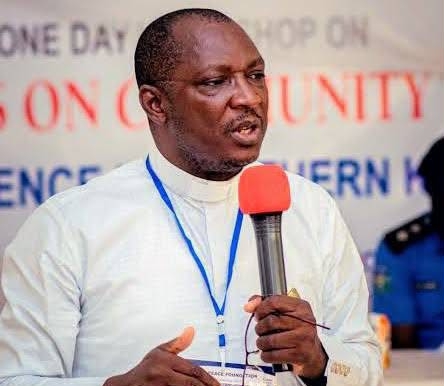
Chairman, Northern Christians Association, Rev. Joseph John Hayab,
BY
The Chairman of the Northern Christian Association (NCA), Rev. Joseph John Hayab, has attributed Nigeria’s slow pace of development to weak institutions, insecurity, poor democratic participation and persistent ethnic, religious and regional divisions.
Hayab, who spoke in a statement marking Nigeria’s 66th Independence Anniversary, said the country had failed to maximise its enormous human and material resources because of institutional weaknesses and what he described as poor followership.
He said Nigeria, which gained independence in 1960, should have recorded greater development by now, particularly when compared with countries such as Singapore and Malaysia, which he described as contemporaries of Nigeria.
According to him, the solution to the country’s challenges lies in strengthening institutions responsible for security, education, economic opportunities, democratic accountability and the provision of essential public services.
Hayab said the divisions among Nigerians had also contributed significantly to the country’s slow development, stressing that national progress would remain difficult if citizens continued to place ethnic, religious and regional interests above national interests.
“When you really put Nigerians together, you will see the division that exists among us is the reason why, at 66 years, we are still crawling.
“But we can jump fast within a few years if we close ranks and start seeing ourselves as Nigerians, treating this country as our country, as our nation,” he said.
The NCA chairman also expressed concern over the low level of citizens’ participation in elections, saying voter apathy weakens democracy and creates opportunities for manipulation of the electoral process.
He noted that although Nigeria has a large population and millions of registered voters, only a fraction of eligible voters usually participate in choosing political leaders.
According to official figures from the Independent National Electoral Commission (INEC), 93,469,008 voters were registered for the 2023 general elections, while turnout in the presidential election was 26.7 per cent.
Hayab said increased participation in elections was necessary if Nigerians wanted to influence the quality of leadership and hold elected officials accountable.
“Just begin to have credible elections. All we need today to change Nigeria is when we have good elections that give us the people we chose,” he said.
On insecurity, the NCA chairman said the inability of government institutions to effectively protect lives and property had continued to undermine agriculture, education, transportation, commerce and investment across the country.
“Government must sit up and not allow non-state actors to dictate how our peace should be,” he said, urging the government to strengthen its response to criminal activities threatening communities.
Hayab further said public institutions must ensure that government resources were translated into tangible services and infrastructure, stressing that roads, schools, hospitals and other public facilities should be regarded as citizens’ rights rather than favours.
He cited the development experiences of Singapore and Malaysia as examples of what could be achieved through strong institutions, disciplined governance, investment and consistent long-term planning.
The NCA chairman urged Nigerians to become more economically active by investing in legitimate businesses and opportunities, saying ethnic and religious considerations should not prevent citizens from pursuing activities capable of improving their livelihoods.
He said rebuilding Nigeria required a collective effort, with government strengthening institutions, providing security and essential services, while citizens actively participated in democratic and economic processes.
Hayab therefore called for renewed commitment to national unity, credible elections, institutional accountability and active citizenship, saying Nigeria could overcome it’s developmental challenges if Nigerians collectively took ownership of the Nigerian project.