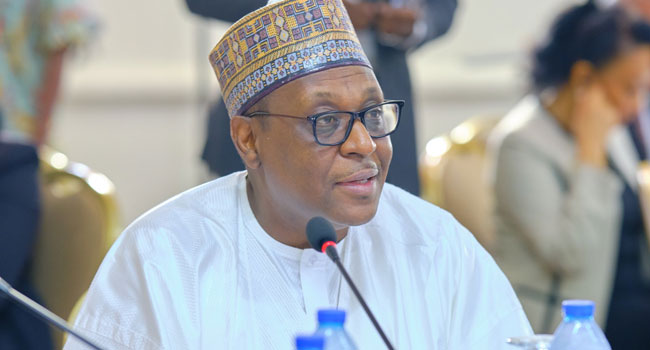
Minister of Health, Dr. Ali Pate
The Federal Government of Nigeria has expressed alarm over the nation’s escalating “triple burden” of malnutrition, which includes undernutrition, overnutrition, and micronutrient deficiencies, often referred to as “hidden hunger.”
At a Nigeria Health Watch Roundtable in Abuja themed “ _Fortifying Nigeria’s Future: Strengthening Nutrition through Local Solutions_ ,” Ms. Daju Kachollom, Permanent Secretary of the Ministry of Health and Social Welfare, represented by Mrs. Ladidi Bako-Aiyegbusi, Director of Nutrition, highlighted the severe impacts of micronutrient deficiencies.
“These deficiencies hinder cognitive development, reduce productivity, and elevate maternal and child mortality rates,” she stated.
The 2024 Nigeria Demographic and Health Survey (NDHS) reveals that 40% of children aged 6–59 months suffer from stunting, 8% experience wasting, and 27% are underweight. Additionally, the 2021 National Food Consumption and Micronutrient Survey indicates that 79% of Nigerians face food insecurity, with one in three children deficient in vitamin A, over one-third lacking sufficient zinc, and more than 20% suffering from iron deficiency. Adolescent girls and pregnant women are also at high risk of vitamin A and iron deficiencies, posing significant threats to maternal and newborn health.
Kachollom attributed worsening food insecurity to “high inflation, recurring floods, and persistent conflict,” which disrupt agriculture and livelihoods. She emphasized Large-Scale Food Fortification (LSFF) as a critical strategy to address micronutrient deficiencies, noting Nigeria’s progress with 95% salt iodization and advancements in fortifying wheat flour, sugar, and vegetable oil.
However, she pointed out challenges, particularly among Micro, Small, and Medium Enterprises (MSMEs), where “inconsistent compliance stems from weak enforcement, low awareness, and limited access to affordable premixes.”
Despite local premix blending facilities, reliance on imported raw materials increases costs and vulnerability to currency fluctuations. In a presentation titled “ _Addressing the Fortification Gap: Strengthening Local Systems to Scale Impact and Save Lives,”_ Mrs. Ummulkhaire Bobboi, representing NAFDAC, stressed that fortification improves public health, reduces healthcare costs, and enhances productivity. Yet, Nigeria faces a “significant gap” between its nutrition goals and actual outcomes.
Kachollom advocated for a collaborative approach, urging the government to strengthen regulations, support local premix production, and leverage technologies like the Digital Fortification Quality Traceability Plus platform to ensure compliance.
She also called on the private sector to invest in local production and on civil society and development partners to provide technical support and advocacy.
Managing Director of Nigeria Health Watch, Mrs. Vivianne Ihekweazu, represented by Mrs. Safiya Isa, Deputy Director of Advocacy, echoed these concerns, noting that MSMEs face challenges with “access to affordable premixes, financing, and reliable quality control systems,” resulting in substandard fortified products.
She emphasized the need for robust local solutions, including scaling up domestic premix production and stricter enforcement.
“This roundtable fosters collaboration among government, private sector, civil society, and development partners to build a sustainable nutrition ecosystem and save lives,” Isa added.
NAN