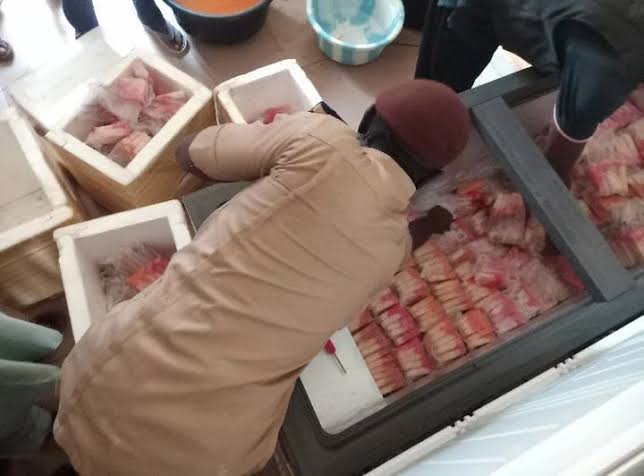
The Bida Local Government Area of Niger State has shut down several ice cream production facilities after inspectors uncovered what officials described as serious hygiene violations, including flies in production mixtures, lack of product labels, and the absence of operating licences and the National Agency for Food and Drug Administration and Control (NAFDAC) registration numbers.
The development was disclosed in a statement issued on Thursday by the Chief Press Secretary to the Bida Local Government Chairman, Aliyu B. Umar, following an inspection carried out by environmental health officials.
According to the statement, the inspection team discovered disturbing sanitary conditions at the affected facilities, raising concerns about the safety of the products being sold to residents.
“During the operation, the inspection team discovered serious hygiene concerns, including flies in the mixture used for ice cream production. The products were also found to be without labels, making it difficult to identify their contents and trace their source.
“The substances used in production were subsequently subjected to laboratory analysis, which reportedly revealed a lack of nutritional value and the presence of substances considered dangerous to human health,” the statement read.
The council said production was immediately halted after the factory managers admitted they did not have the required operating licences or registration numbers from the National Agency for Food and Drug Administration and Control (NAFDAC).
It added that equipment and other materials used for producing the ice cream were confiscated during the enforcement exercise.
According to the council, the operation followed complaints from residents over an ice cream production site located around the Federal Polytechnic Bida area.
“Numerous vendors reportedly gathered at the facility every morning to purchase the ice cream for distribution and sale across Bida, potentially exposing residents to health risks,” the statement added.
The council said the action was taken to protect public health and prevent the circulation of products that could pose a danger to consumers.
Food safety experts have repeatedly advised manufacturers to comply with hygiene standards, proper product labelling and regulatory requirements to ensure that food products sold to the public are safe for consumption. NAFDAC also requires food producers to register their products before they are distributed or sold in Nigeria.