Federal Government has announced plans to convene the National Youth Confab 2026 in October, with one youth delegate expected from each of Nigeria’s 360 federal constituencies to participate in discussions aimed at shaping the country’s future.
The conference will also feature six representatives of Nigerians in the diaspora alongside other key stakeholders, creating a broad platform for young people to contribute to national development.
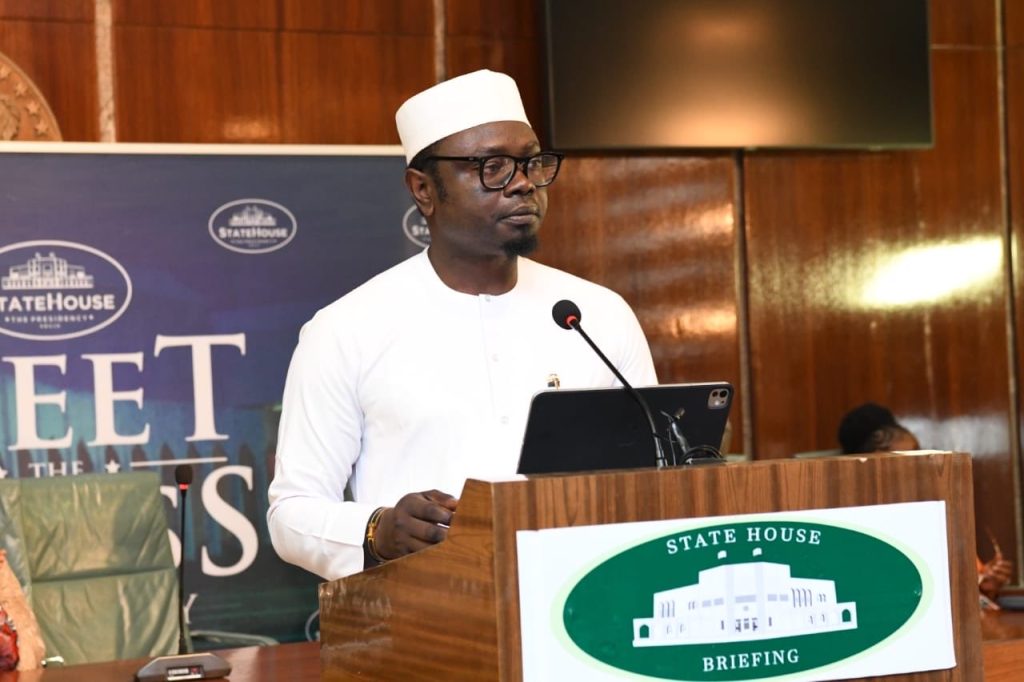
Minister of Youth Development, Ayodele Olawande, disclosed the plans on Thursday during a press conference at the Presidential Villa in Abuja to unveil activities ahead of the national gathering.
The two-week programme, themed: _“Next Gen Nigeria: Crafting Solutions, Owning the Future,”_ will begin with nationwide virtual consultations before participants converge in Abuja for the physical conference.
According to the minister, the initiative is designed to give Nigerians between the ages of 18 and 35 the opportunity to present their concerns, recommend policy ideas and offer practical solutions to the country’s pressing challenges.
“Young Nigerians are not merely leaders of tomorrow; they are partners in nation-building today. Their ideas, experiences and participation are essential to the progress of our country,” he said.
Olawande said discussions during the conference would cover governance and leadership, economic transformation and job creation, education and skills development, technology and innovation, climate change and energy transition, as well as social harmony and security.
He stressed that the conference is intended to produce practical outcomes rather than end with discussions alone.
“This is an opportunity to listen, engage, cooperate and move from conversation to concrete action.”
The minister also announced that the government would establish a Multi-Stakeholder Youth Confab Taskforce, a Youth Confab Impact Index and a youth-led monitoring and accountability framework to ensure that decisions reached at the conference are implemented.
He urged young Nigerians across the 36 states, the Federal Capital Territory and those living abroad to participate actively by submitting ideas, proposals and experiences.
“The Federal Ministry of Youth Development is ready to listen, and the Federal Government is ready to engage. We are calling on young Nigerians to step forward and join us in shaping the Nigeria of today and the Nigeria of tomorrow,” Olawande said.
In her remarks, the Permanent Secretary of the Federal Ministry of Youth Development and Chairman of the National Youth Confab Committee, Dr. Maryam Ismaila Keshinro, described the conference as a major opportunity to strengthen youth participation in governance and national development.
She encouraged young Nigerians and other stakeholders to embrace the process and contribute meaningfully to achieving the objectives of the conference.
Also speaking, the Senior Special Assistant to the President on Digital Media, Otega Ogra, commended President Bola Ahmed Tinubu for initiating the conference and praised members of the planning committee for working to translate the President’s vision into a national engagement for young people.
According to him, the Tinubu administration has continued to create opportunities for youths to occupy strategic positions and contribute to national development.
“The present government is betting on young Nigerians to move the country forward. We want you to bring your ideas to the Confab. The door is open for Nigerians to tell us how they want the country to be,” he said.
He urged young Nigerians to take advantage of the conference by presenting innovative ideas and practical solutions that would support Nigeria’s sustainable development.
The National Youth Confab is one of the Federal Government’s initiatives to expand youth participation in governance and policy formulation. By drawing delegates from all 360 federal constituencies and the Nigerian diaspora, the conference is expected to generate recommendations on employment, education, innovation, security, climate action and leadership that could shape future government policies targeting the country’s youthful population.