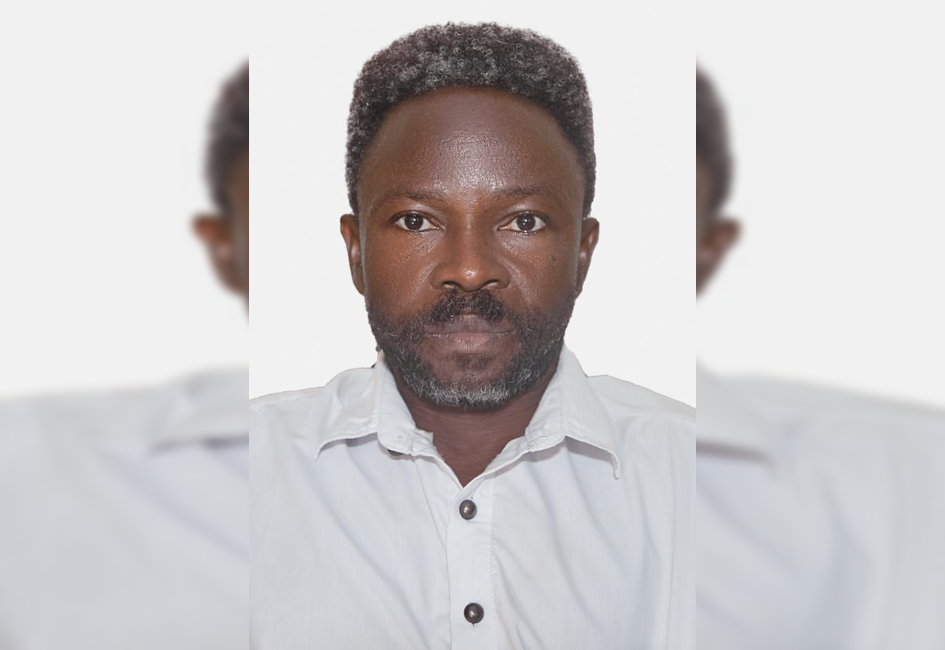
Emmanuel M. Akpabio is a Professor in the Department of Geography & Natural Resources Management, University of Uyo, Nigeria
As Nigeria grapples with the challenge of insecurity and worsened by the threat of an attack by the United States, a University Don, Emmanuel Akpabio has suggested that good governance, accountability and institutional reforms are the sure ways for the country to reclaim its credibility.
Akpabio, a Professor of Human Geography and Director of International Programmes, University of Uyo stated that unless the “country reclaims legitimacy through effective governance, it may soon find itself deeply entangled in a new geopolitical contest for Africa’s soul.”
In a lengthy post on his verified social media handle, Akpabio, a renowned scholar said the classification of Nigeria as “deeply concerning” by the U.S. under Donald Trump’s administration over the country’s internal insecurity was “more than mere diplomatic expression.”
Making the post against the background of the Trump’s threat to attack Nigeria over claims that Christians facing genocide, which has been denied by President Bola Tinubu, he said the use of the phrase “deeply concerning” carries strategic undertones, and “signals growing surveillance, international posturing and geopolitical re-calibration.”
According to him, the response by Nigerians which he described as mixed emotion reflected deep frustration and despair that ordinary citizens feel under a political class widely perceived as detached, corrupt and incapable of delivering basic governance.
“ In the context of rising insecurity, collapsing public infrastructure, pervasive corruption and erosion of justice, some Nigerians even express nostalgia for the so-called “discipline” of military rule or more worryingly, for recolonisation, a dangerous yearning that underscores the extent of disillusionment with democratic governance.
“As students of geopolitics know, the language of superpowers is rarely innocent. History provides vivid examples. When President George W. Bush branded Iraq, Iran and North Korea as the “axis of evil,” the phrase was not just rhetorical. It prepared the ideological ground for the “War on Terror,” which reshaped the global power relations and justified military interventions.
“Similarly, the recent term “deeply concerning” may not be mere diplomatic concern, it could be an early signal of a strategic repositioning towards Nigeria and by extension, other African states.
“Such framing typically precedes increased monitoring, political pressure and the deployment of soft or hard power mechanisms, from targeted sanctions and intelligence operations to expanded military partnerships under the guise of counter terrorism.
“Nigeria may soon find itself under intensified western surveillance as global powers reposition themselves in Africa’s increasingly crowded geopolitical space.
He argued that Africa has become a new theatre of influence with the United States, China and Russia re-imagining their influence on the continent.
“China’s growing economic penetration through infrastructure loans, mining concessions and Belt and Road investments has often been labelled “neocolonial,” while Russia’s expanding military partnerships and mercenary networks signal a strategic pivot towards Africa.”
According to him, Nigeria with a population of over 200 million ,vast energy reserves and regional influence is far too significant to be left unattended.
“The Western powers, particularly the United States, may perceive Nigeria as the keystone state in balancing China’s economic diplomacy and Russia’s military outreach in Africa.
‘This designation as “deeply concerning” can serve as justification for strategic engagement or pre-emptive containment. What appears as a concern for Nigeria’s insecurity could therefore evolve into a proxy struggle where global powers compete for influence under the banners of humanitarian aid and counter terrorism or democracy promotion,’’ he stated.