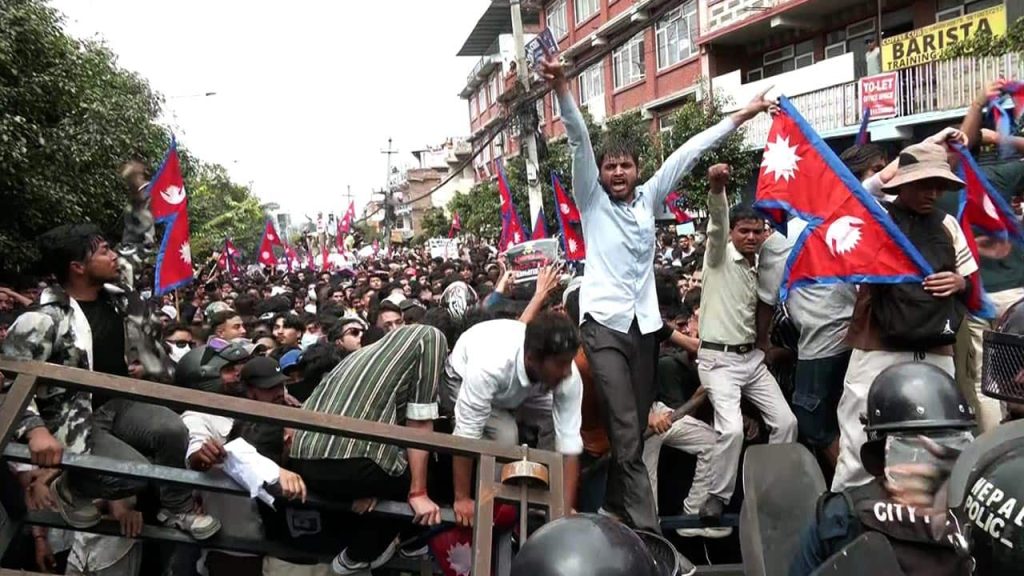
Protesters in Nepal
In Nepal, a wave of youth-led protests, sparked by a controversial social media ban, has plunged the nation into turmoil, exposing deep-rooted frustrations with governance and economic challenges.
The unrest, driven largely by Generation Z, has led to widespread arson, looting, and deadly clashes, destabilizing the Himalayan nation’s fragile political and detention systems.
On Friday, police reported that the death toll from these protests has risen to 51, with authorities uncovering previously unreported bodies.
“The death toll has reached 51 so far, including three police personnel,” said Deputy Inspector General Binod Ghimire, noting that an Indian woman was among the casualties in Kathmandu Valley and other districts.
The unrest also triggered prison riots, resulting in the deaths of nine inmates and the escape of approximately 13,000 prisoners, further straining Nepal’s already vulnerable detention infrastructure.
The protests, which began with a single day claiming 21 lives, forced Prime Minister KP Sharma Oli to resign on Tuesday after his short-lived social media ban ignited public outrage. In the aftermath, protesters have rallied behind former Chief Justice Sushila Karki as a potential interim prime minister.
“If endorsed, Karki would make history as Nepal’s first woman prime minister, leading the country until new elections,” a police spokesperson noted, reflecting the public’s demand for change.
President Ram Chandra Paudel is engaging with political parties, legal experts, and civil society leaders to navigate the crisis and chart a path forward. By Friday afternoon, signs of recovery emerged as the Nepal Army lifted a curfew imposed since Tuesday night.
In Kathmandu, soldiers, police, and local residents worked together to clear debris and extinguish fires at damaged government buildings, including parliament, the president’s office, and the prime minister’s residence, signaling a cautious return to normalcy. (dpa/NAN)