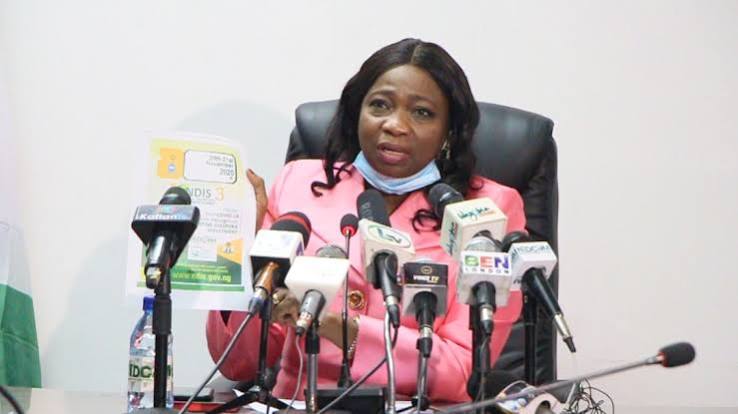
NiDCOM Chairman and Chief Executive Officer, Abike Dabiri-Erewa
Nigerians in Diaspora Commission (NiDCOM) has raised concern over a directive by the Central Bank of The Gambia ordering banks to replace non-Gambian workers with qualified citizens by December 31, 2026, warning that the move could cost 57 Nigerian professionals their jobs.
NiDCOM Chairman and Chief Executive Officer, Abike Dabiri-Erewa, said although Nigeria respects The Gambia’s right to promote local employment, such policies should not ignore existing employment agreements, valid work permits and the spirit of African cooperation.
In a statement issued in Abuja by the commission’s Head of Media, Public Relations and Protocols, Abdur-Rahman Balogun, Dabiri-Erewa said the directive, reportedly issued on September 16, 2026, has generated serious concern because it directly affects Nigerian professionals working in four Nigerian-owned banks in The Gambia.
She noted that available information shows the affected workers hold valid residency and work permits and have contributed significantly to the growth of The Gambian banking sector.
According to NiDCOM, the four Nigerian-origin banks account for about 37.2 per cent of total banking deposits in The Gambia, valued at 35.3 billion Gambian dalasis.
The commission added that the banks also control 32.6 per cent of industry loans worth about 7.67 billion dalasis and hold 37 per cent of total banking assets estimated at 44.78 billion dalasis.
It further stated that the institutions account for about 34.5 per cent of investments in Central Bank bonds and provide nearly 90 per cent of the funding supporting the operations of the National Water and Electricity Company (NAWEC).
Dabiri-Erewa warned that policies capable of forcing qualified African professionals out of their jobs run against efforts to strengthen African investment, regional economic cooperation and the free movement of labour across the continent.
She stressed that employment policies should support, rather than weaken, the broader goal of regional integration at a time African countries are encouraging cross-border investment and stronger economic partnerships.
NiDCOM therefore called on the Central Bank of The Gambia to reconsider and withdraw the blanket replacement directive.
The commission also urged the Gambian authorities to engage the Nigerian High Commission in Banjul, the affected banks and other stakeholders to find a fair and mutually beneficial solution.
It further appealed to The Gambia to uphold the principles of the ECOWAS integration framework and protect the long-standing relationship between both countries.
The commission said continued diplomatic engagement would help resolve the matter peacefully while preserving the valuable professional and economic contributions Nigerians have made to The Gambian banking industry.