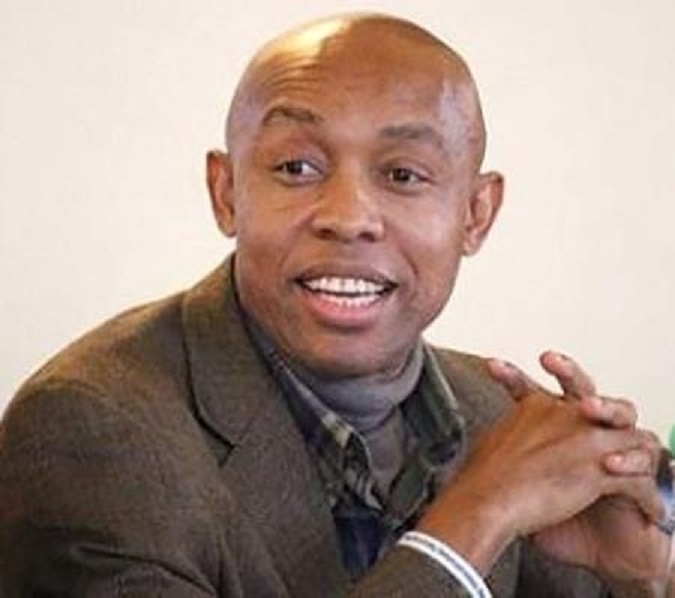
Prof Odinkalu
Nearly 20 years ago, while stumping for his party, the Peoples’ Democratic Party, out-going president, Olusegun Obasanjo, decided to confront head-on morbid rumours about the health of his hand-picked successor. Umaru Musa Yar’Adua, then governor of Katsina State and the president’s man for the job, was said to be stricken in a hospital in Germany. From the podium, Obasanjo dialled before bellowing, “Umoru, are you dead?!” It was obviously not a question for a dead man.
Yar’Adua was mercifully alive. He returned in time to be announced winner of a presidential election in 2007 widely described as “a charade”. His tenure was dogged by concerns about ill-health until his death in May 2010.
Presidential infirmity was not unknown to Nigeria.
Ibrahim Babangida was only 46 when he was flown out of the country for medical attention in 1986. The cause, Nigerians were informed, was “Radiculopathy”, a multi-syllabic tongue-twister that sent many newsrooms consulting diagnostic standard manuals.
In November 2009, President Yar’Adua required overseas hospitalization for “Acute Pericarditis.”
In the first 46 months of his first term as civilian president from 2015 to 2019, Muhammadu Buhari spent 407 days outside Nigeria, with about 242 days or nearly 60% of that devoted to health tourism overseas. He was 72 when he was inaugurated as civilian president, an age at which infirmity is not unknown in the ordinary course of human events.
Four things emerge from these instances. First, the wellbeing of a president is a legitimate matter of public and civic concern.
Second, like all human beings, Presidents can and do from time to time take ill. Babangida and Yar’Adua were much younger than President Tinubu is today, whatever his age may be.
Third, there was a time when presidential handlers believed they owed the country the benefit of some disclosure about the wellbeing of the President or lack of it. That, it seems, is history.
Fourth, irrespective of the health status of the president, the country must always avoid a leadership vacuum.
The twin crises of power and succession that accompanied the final months of the Umaru Musa Yar’Adua presidency brought this last point home with urgency.
In response, the National Assembly enacted a constitutional amendment designed to keep the country running when a president needs to take time off for running repairs. All it requires is for the president to temporarily transfer power to his Vice and notify the National Assembly appropriately.
On-going concerns about the health status of the incumbent suggest a presidency deeply enamoured of déjà vu or, as the Punch newspaper says, invested in treating constitutional provisions as an “ornamental” inconvenience.
In office for 41 months so far, President Bola Ahmed Tinubu has spent over 270 days (about 22%) outside the country, including over 100 days spent on 13 different trips of varying descriptions to France alone. The reason for the frequency of his visits to France is credibly suspected to be medical.
Rather than a temporary transfer of power as the constitution allows, it seems he may prefer instead to outsource it. To whom is not clear, but examples from other places could help.
In a study published in 1999, Herbert Abrams, writing about the United States, recounts that “Presidential infirmity, accompanied by a failure to fully inform the public, has been stamped indelibly on our history during the past two hundred years. Fourteen of the eighteen American presidents in the twentieth century had significant illnesses while in office….that were either concealed from the American people or underreported.”
Take for instance the case of Dr. Woodrow Wilson, the Nobel Prize-winning 28th president, who took the United States through the First World War and inspired the League of Nations. Returning home from Europe in July 1919 from signing the Treaty of Versailles which ended World War 1, Wilson preoccupied himself with the ultimately futile effort to persuade his country into the League.
In the middle of this effort, on October 2, 1919, President Wilson suffered a stroke. According to medical records released only in 1991, the stroke was so massive that it would have been “impossible for him ever to achieve more than a minimal state of recovery.”
Yet, as narrated by Christopher Andrew in his 1995 history of U.S. secret intelligence, For the President’s Eyes Only, Wilson’s second wife (the first died in 1914), Edith Galt, helped to “suppress accurate information about his health and to ensure that he continued as president for the remainder of his second term” until 1921.
On the other side of the Atlantic, the health of President Wilson’s contemporary and ideological adversary, Vladimir Ilich Lenin, was the subject of equally intense scheming between a shrewd wife and ruthless usurper. In 1922, Lenin elevated Josef Stalin to the position of General Secretary of the Central Committee of the Communist Party with sweeping powers over party matters. Shortly thereafter, Stalin drew Lenin’s ire when he (and another senior Central Committee member also from Georgia, Sergo Ordzonikidze) annexed Georgia.
Ill-health stayed the hand of an angry Lenin who was struck down by a massive stroke in December 1922. To preserve the life of the Party’s greatest asset, the Politburo under Stalin’s influence restricted Lenin to working for a mere 10 minutes daily. Upon learning that Lenin was doing more, Stalin accosted Lenin’s wife, Nadezhda Krupskaya, warning her rather darkly, as recounted by Stalin’s biographer, Simon Sebag Montefiore, that if she did not ensure compliance “the Central Committee would appoint someone else as Lenin’s wife.”
In France, President Georges Pompidou repeatedly denied that he had anything less worrisome than a common cold until his death in office of cancer in 1974.
In 1981, Pompidou’s successor, Valéry Gisgard d’Estaing, lost in a close election to the inscrutable Francois Mitterrand. In the same year, President Mitterrand learnt that he had prostate cancer that had metastasized to the bones. Mitterrand promptly declared this a State Secret. Hiding it even from his wife, he ran for and won a second seven-year term in 1988, promising France that he was in robust health. In his debate with Jacques Chirac in 1988, Mitterrand infamously faced a more formidable challenge from an overwrought bladder in desperate need of relief.
As the Washington Post reported in January 1996, “Mitterrand’s cancer reached such a critical state in late 1994 that he was no longer able to carry out his duties and spent most of his time resting in bed.” The week after Mitterrand’s death in January 1996, his doctor, Claude Gubler, published a book, Le Grand Secret, detailing this grand deception. French authorities promptly banned the book because it allegedly breached medical confidentiality.
Closer home, Tunisia’s founding president for 32 years, Habib Bourgiba, chose to stay in office after being diagnosed with arteriosclerosis in 1983. In November 1987, Bourgiba, already enfeebled by dementia, gave his shocked compatriots a prime-time disquisition on the state of his testicles. His once-loyal prime-minister, General Zine Abdine Ben-Ali mercifully moved to confine Bourgiba under medical detention in the appropriately-named Monastir, where he died in 2000.
When he went on trial in 1994, shortly after his overthrow at the end of 31 years as Malawi’s leader, the court ruled Dr. Hastings Banda physically and mentally unfit to attend his own trial. He had in fact been “senile for years”. Yet, for 31 years until his ouster earlier in the same year, Dr. Banda held Malawians in thrall as the all-knowing Ngwazi. Real power had been outsourced to his “Official Hostess”, Mama Cecilia Kadzamira and her uncle, John Tembo.
In Malawi also, a dead president was wilfully mis-represented as merely unwell. After he died on 5 April 2012, Malawi’s presidency contrived to export the dead remains of President Bingu wa Mutharika to South Africa to enable them buy time for an unconstitutional succession by his brother and then foreign minister, Peter Mutharika. They mis-led Malawians with the announcement that the president “had…taken ill and had been flown to South Africa for specialist treatment.”
Whatever the medical dictionaries may say, the lesson of history is quite clear: infirmity can outsource the presidency under cover of “a bodyguard of lies.” Nigeria was supposed to have made this history in 2010, but the lessons do not seem to have been learnt.
- A lawyer and a teacher, Odinkalu can be reached at chidi.odinkalu@tufts.edu