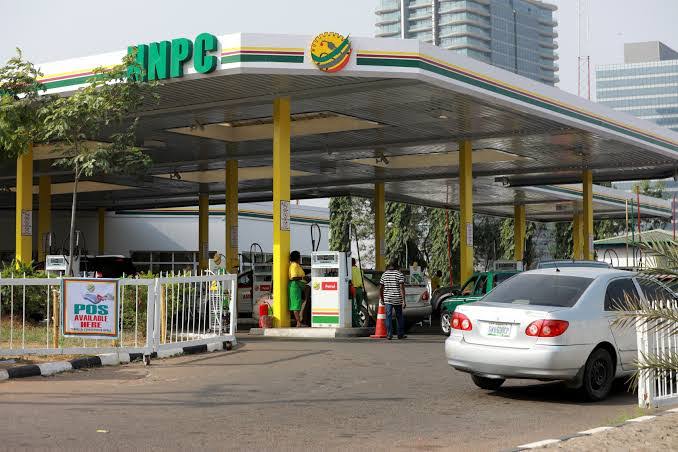
Nigerians have raised questions about the economic benefits of NNPC Retail’s 30-day petrol price discount, expressing concerns over whether the intervention will translate into lower transportation costs and meaningful relief for households already struggling with high living expenses.
The concerns come amid a debate over whether the Nigerian National Petroleum Company Limited’s retail subsidiary is offering a sustainable form of relief or a temporary price reduction with limited benefits for consumers.
Director of the Abuja School of Social and Political Thoughts, Dr. Sam Amadi has questioned the likely impact of the intervention, predicting that transport fares may remain unchanged despite the reduction in petrol prices.
Speaking on Arise Television on Friday, October 9, 2026, Amadi argued that the initiative might offer limited economic benefits to ordinary Nigerians while providing political advantages to the Federal Government.
According to him, the arrangement could cost the government less than a comprehensive fuel subsidy programme while allowing it to demonstrate that it is responding to public concerns over the high cost of fuel.
“State governors who don’t want it back because the fiscal buoyancy they claim, they will lose. So what the government is doing will cost the government less,” he said.
Amadi added that the intervention could enable the government to maintain its opposition to a full fuel subsidy regime while creating the impression that some form of subsidy had returned.
“So it’s less fiscal loss, more political game,” he said.
However, the central question for consumers is whether the price reduction will produce a corresponding decline in the cost of transportation, food and other essential goods and services.
Many commuters at motor parks as well as
motorist who were contacted by our correspondents said they were not sure if transport fares will reduce from tomorrow.
Mr. Jude a commuter from Garki Area One park expressed doubts about reduction in transport fare as a result of the scheme.
“there is nothing in this country that once its price goes up, it comes down. Forget about the NNPC story, it is all politics. If you like come to the park tomorrow and see for your self.”
Another commuter, Salematu said she doesn’t trust the motorist enough to reduce the cost of transport. She sees the scheme as an avenue for taxi drivers to make more money.
” For me I don’t trust these our taxi drivers, even if they reduce prices of petrol, our drivers will maintain the fares and rather cash out from us passengers. Nothing will change.
A taxi driver Mr. Ken who plies the Lugbe-Garki road said he is waiting to see what happens at filling stations, that some times they have to spend money to get cheaper fuel at the mega stations even if the prices have reduced.
“My brother, lets wait and see what happens at the fuel stations, you know that at the mega filling stations sometimes we que up for a whole day to get fuel or pay those guys to get quick access, so even if fuel is cheaper, the time and other small small expenses make it expensive. It’s not easy, so I don’t think there would be any difference. Nigeria is hard to change.”
Amadi also expressed doubts that transport operators would adjust their fares in response to the intervention, warning that the discount might not be substantial enough to influence their pricing decisions.
“The other thing, watch out tomorrow, whether the transport costs will change. For me, I will predict that there will be no change,” he said.
The concerns highlight a major challenge facing fuel price interventions in Nigeria: reductions in petrol prices do not automatically translate into lower transport fares or cheaper goods, particularly when operators face other expenses, including vehicle maintenance, spare parts, road-related costs and financing.
For households, the economic value of the discount will therefore depend not only on the amount deducted from the pump price but also on whether transport operators and other businesses pass the savings on to consumers.
The temporary nature of the initiative also raises questions about its sustainability and the extent to which it can ease the pressure of high living costs beyond the 30-day period.
While a reduction in petrol prices could offer immediate savings to motorists and businesses that purchase fuel from participating outlets, its broader impact will depend on the scale of the discount, the availability of petrol at the reduced price and the response of transport operators and other businesses.
The debate has consequently shifted beyond the price reduction itself to whether the intervention can deliver measurable economic relief or remain a short-term measure whose benefits are not fully felt by ordinary Nigerians.