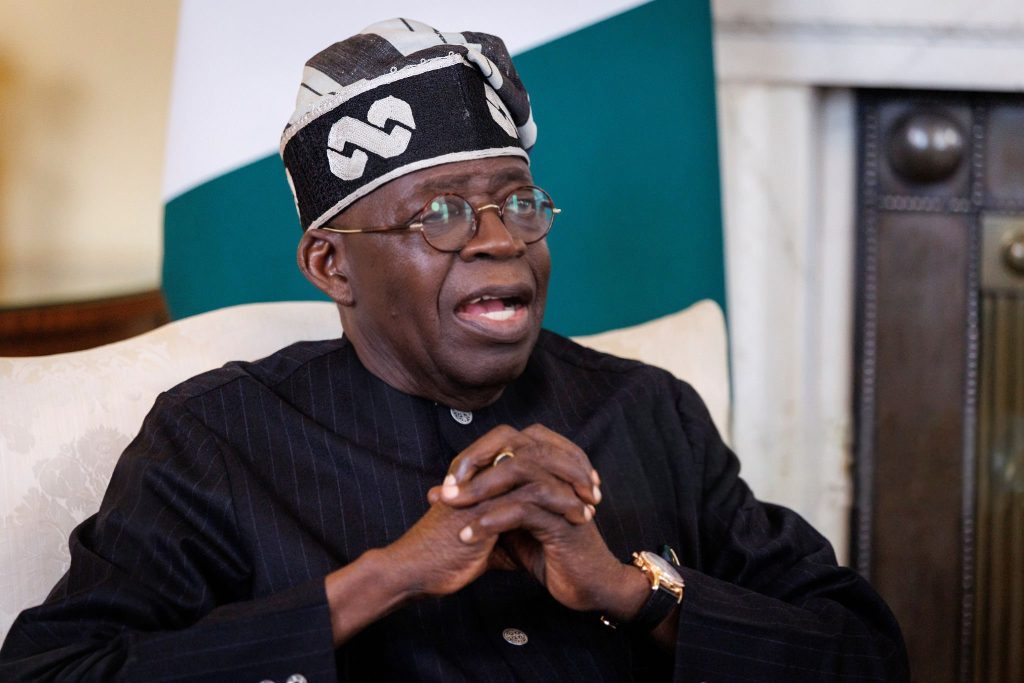
President Bola Tinubu
President Bola Ahmed Tinubu has welcomed the Final Investment Decision (FID) on the $800 million Ima Gas Project, describing it as another major step in Nigeria’s drive to unlock its vast gas resources for economic growth, job creation and industrial development.
The project, developed by Nigerian energy company AMNI International in partnership with TotalEnergies, is expected to produce about 300 million standard cubic feet of gas per day at its peak.
The Ima gas field, located offshore in Oil Mining Leases (OMLs) 112 and 117, was discovered in 1973 but remained undeveloped for more than five decades despite its huge commercial potential. The latest investment decision is expected to bring the long-abandoned resource into production.
The Presidency said the Ima project is the fourth major gas project to reach Final Investment Decision since President Tinubu assumed office, following the Iseni, Ubeta and HI gas projects. The development is seen as a sign of renewed investor confidence in Nigeria’s oil and gas sector.
President Tinubu said the project shows that government reforms are beginning to attract investments into the country’s energy industry.
“For more than fifty years, the gas beneath Ima remained a resource with enormous potential, but potential alone does not create jobs, finance businesses or improve the lives of our people. Our responsibility has been to create the conditions that turn Nigeria’s natural resources into productive investments and economic opportunities.”
He added: “The Final Investment Decision on Ima demonstrates what is possible when we provide investors with a competitive, predictable and enabling environment. We are determined to unlock more of Nigeria’s gas resources to power our industries, expand our exports, create jobs and build lasting prosperity for our people.”
The President noted that since taking office, his administration has introduced reforms aimed at reversing years of underinvestment in Nigeria’s oil and gas sector.
Although the Petroleum Industry Act (PIA) of 2021 provided a legal framework for the industry, several projects remained stalled because of fiscal and commercial challenges. To address this, the administration introduced presidential directives in 2024 to improve investment conditions, reduce project costs and speed up approvals.
Special Adviser to the President on Energy, Ms Olu Arowolo Verheijen, said the Ima project reflects the impact of the government’s reforms.
“The story of Ima is ultimately the story of what our reforms are designed to achieve. Nigeria has never lacked resources. The challenge has been creating the commercial and investment conditions required to move those resources from beneath the ground into projects that employ Nigerians, create opportunities for Nigerian businesses, generate revenues and support economic growth.”
She added: “A gas discovery made in 1973 can only contribute to prosperity when somebody invests the capital to develop it, banks finance it, contractors build it, Nigerians work on it, and the gas is ultimately put to productive use. That is the transition we are seeing today.”
The Presidency also highlighted the strong participation of Nigerian companies in the project. AMNI International, an indigenous exploration and production company, holds the majority stake, while Nigerian financial institutions are providing 77 per cent of the project’s financing.
The government said about 60 per cent of the workforce will come from host communities, including Bonny, Finima and Andoni in Rivers State, creating employment and boosting local economic activities.
Nigeria has one of Africa’s largest natural gas reserves, but much of it has remained untapped for decades. The Federal Government says its gas development strategy is aimed at increasing LNG exports, improving electricity supply, supporting industries such as fertiliser and petrochemicals, earning more foreign exchange and creating jobs for Nigerians.
Reaffirming the administration’s commitment, President Tinubu said:
“Natural resources have value only when they are converted into opportunities for our people. Our goal is to ensure that Nigeria’s gas powers Nigerian prosperity.”