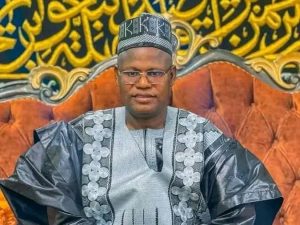
Kaduna State Governor, Senator Uba Sani, has warned that misinformation and disinformation pose serious threats to Nigeria’s security and democracy, calling for credible communication, public trust and stronger collaboration among security agencies to address emerging challenges.
The governor, represented by the Commissioner for Information and Culture, Alhaji Ahmed Maiyaki, spoke on Tuesday at the Second National Symposium on Crisis Communication organised by the Centre for Crisis Communication (CCC) in Kaduna State.
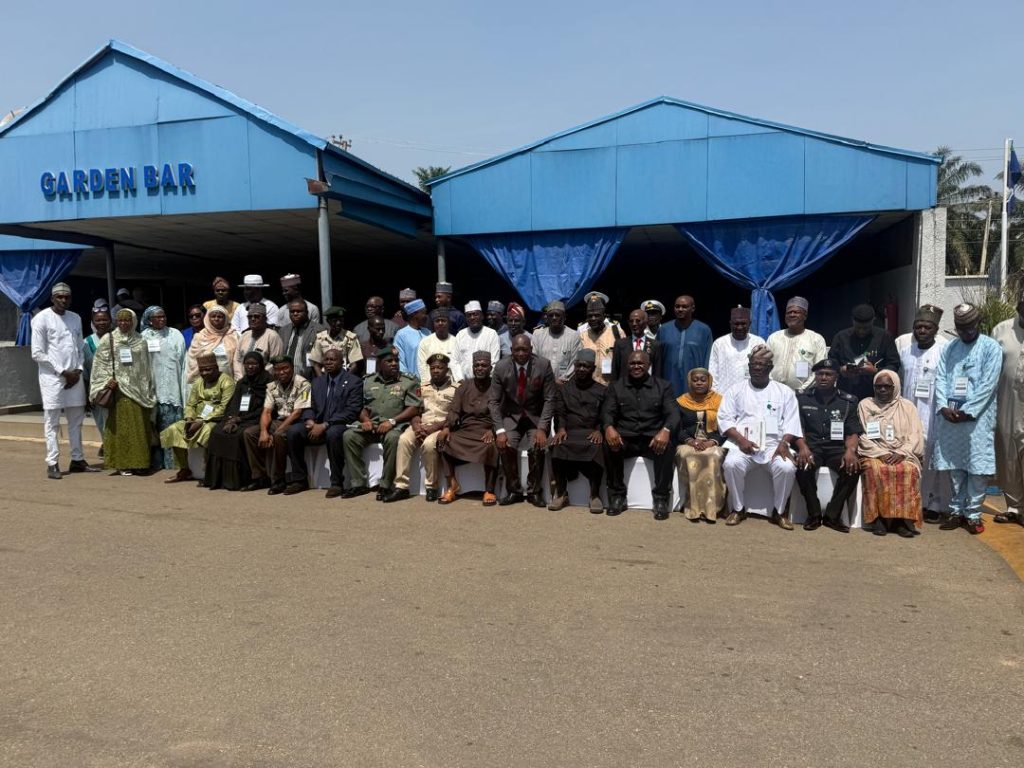
The symposium, themed: “ Inter-agency Collaboration, Public Trust and Cyber Threat Management in Crisis Communication,” brought together security chiefs, government officials and other stakeholders to examine strategies for countering misinformation, cyber threats and manipulated digital content.
According to Uba Sani, the battle for public trust has become as important as the fight against insecurity, warning that even when security threats are addressed through decisive action, poor communication could spread fear and undermine public confidence.
“Today, the battle for public trust is as important as the battle against insecurity. A nation may defeat a security threat through decisive action, but if communication is not credible, fear can spread and confidence can collapse,” he said.
He described misinformation as more than a communication challenge, saying it could threaten peaceful coexistence and be deployed as a weapon against democratic institutions.
The governor said his administration had adopted an inclusive, people-centred and non-kinetic approach to security through the Kaduna Peace Model, which emphasises dialogue, community participation, intelligence sharing and early warning mechanisms.
He stressed that sustainable peace could not be achieved through military and law enforcement operations alone, noting that effective communication and public engagement were essential to preventing conflicts and building lasting confidence.
“The most successful crisis communication strategy is one that prevents crisis. It means correcting errors openly when we make errors. Silence creates a vacuum. Credible information creates confidence,” he said.
Earlier, the Chairman of the Centre for Crisis Communication, Major General Chris Olukolade (rtd.), said effective communication had become central to national security, public safety and stability, rather than a peripheral component of crisis management.
He warned that delayed or contradictory official statements often create room for rumours, misinformation and public anxiety, particularly amid Nigeria’s expanding digital environment.
Olukolade cited estimates by DataReportal indicating that Nigeria had approximately 109 million internet users at the end of 2025, while the United Nations Office on Drugs and Crime estimated that the country lost about N1.1 trillion to cybercrime between 2017 and 2023.
He said security threats were increasingly being fought in the information space, where manipulated narratives could undermine public confidence and complicate security operations.
The CCC chairman also announced the unveiling of the Nigerian Journal of Crisis Communication, adding that the crisis communication hub established after the centre’s inaugural symposium in November 2025 had won the 2026 Golden World Award of the International Public Relations Association.
“Our idea in this centre is one crisis, one coordinated response,” he said, identifying preparedness, inter-agency coordination, transparency, accountability and resilience against cyber threats as key principles of effective crisis communication.
Olukolade further warned that disinformation, deepfakes and impersonation could be weaponised ahead of the 2027 general elections to erode public confidence in Nigeria’s democratic institutions.
Representing the Minister of Defence, Major General K. A. Ibrahim (rtd.), said the symposium was timely, given the country’s multifaceted security challenges, including insurgency in the North-East, kidnapping in the North-West, secessionist agitations and other criminal activities.
He maintained that no single security agency could effectively tackle the challenges in isolation, urging stakeholders to adopt a coordinated, whole-of-government and whole-of-society approach.
Representing the Chief of Defence Staff, Brigadier General Murtala Muhammed Abu said collaboration among security agencies must extend beyond operational activities to include communication and information management.
“Operational collaboration without communication collaboration is incomplete. Working together requires communicating together, through sharing of verified information, synchronising our narrative and presenting a coherent position of government to the public,” he said.
Abu described public trust as the currency of crisis communication, stressing that even well-crafted messages would fail if citizens did not trust the institutions delivering them.
He also raised concerns over the increasing use of artificial intelligence to produce convincing fake videos, audio recordings and images falsely attributed to military operations.
According to him, effective cyber threat management now requires digital forensics, rapid fact-checking, artificial intelligence-enabled detection tools and strategic engagement with media organisations and technology platforms.
The defence representative said the Nigerian people remained the most important stakeholders in the country’s security efforts, adding that credible communication should neither conceal operational challenges nor unnecessarily amplify public fear.
The symposium called for stronger institutional cooperation, transparent communication and timely dissemination of verified information to strengthen public confidence and improve Nigeria’s response to security threats.