By NGOBUA JOHNNIE, Abuja –
Director-General of the West African Health Organisation (WAHO), Prof. Palokinam Pitché, has described the accreditation of nursing and midwifery institutions as a strategic investment in national development rather than a mere formality.
Pitché made this known in Abuja on Thursday at a workshop to finalise harmonised regional accreditation criteria for the training of nurses and midwives in the Economic Community of West African States (ECOWAS).
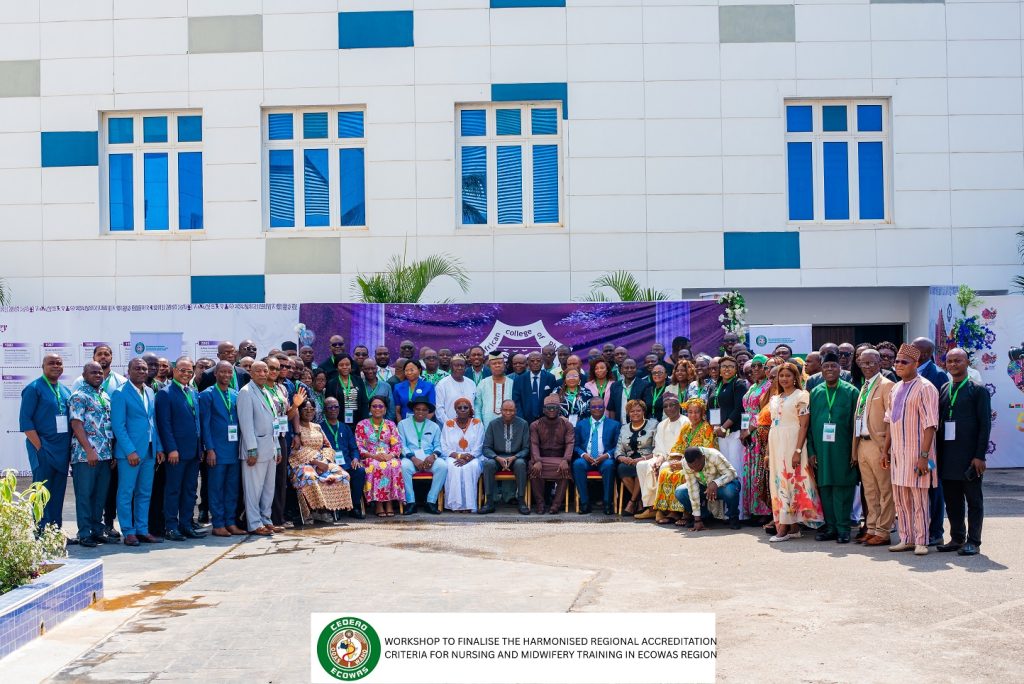
The workshop, holding from Oct. 29 to 31 at WACOP Hotel, is aimed at strengthening the quality of nursing and midwifery education and harmonising accreditation standards across the region.
Pitché said West Africa continued to face poor health indices despite years of interventions, citing inadequate funding, weak surveillance systems, poor public health infrastructure and severe shortages of healthcare workers.
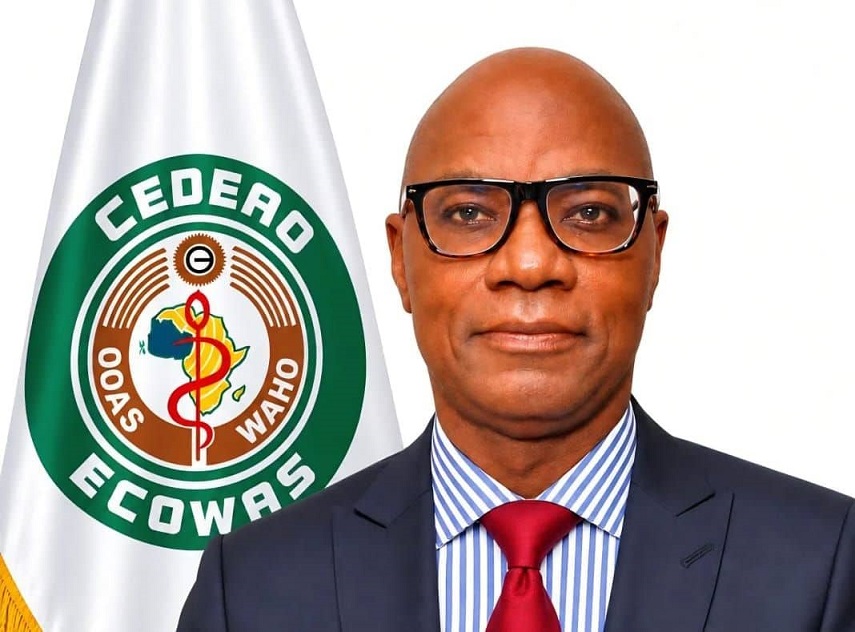
- Prof. Pitché
He said a 2017 World Health Organisation survey found that 57 countries had critical shortages of health workers, with all 15 ECOWAS member states among them.
According to him, the average density of healthcare professionals in the region stood at 0.73 per 1,000 population, far below the minimum threshold of 2.28 professionals per 1,000 population.
He said the region could not achieve its health objectives without addressing the shortage of qualified personnel, adding that outdated curricula, inadequate continuous professional development, inter-professional conflicts and poor staff retention continued to undermine progress.
The WAHO director-general stressed that accreditation should be based on quality assurance, regulatory alignment and institutional readiness, ensuring that curricula, facilities, faculty qualifications and clinical training environments met established standards.
He cited existing national accreditation practices, including formal applications, verification that at least 75 per cent of minimum programme requirements had been met before pre-accreditation visits, advisory visits and periodic reviews conducted every two to five years.
Pitché said WAHO had introduced several initiatives to address health workforce shortages, including the harmonisation and validation of 58 basic and specialist training curricula covering medical specialties, pharmaceutical sciences, allied health professions, nursing and midwifery across ECOWAS member states.
Other interventions include a regional training plan, financial support for member states to implement harmonised curricula, scholarships for health workers in shortage specialties and a work plan to improve the motivation and retention of healthcare personnel in rural areas.
He also listed the establishment of the Engaging Medical Experts in the Diaspora (E-MED) programme as part of efforts to strengthen healthcare delivery in the region.
According to Pitché, the regional accreditation framework is designed to promote a common approach to professional regulation, education and practice, including clearly differentiated scopes of practice for generalist and specialist nurses and midwives.
He urged participants to align national standards with regional and global priorities, strengthen inspection and regulatory functions, adopt digital accreditation management systems and ensure safe clinical training environments.
Pitché challenged the participants to develop competence-based harmonised accreditation criteria that would strengthen nursing and midwifery professions and facilitate the free movement of qualified health professionals across the ECOWAS region.
He thanked President Bola Tinubu and the Coordinating Minister of Health for hosting the workshop in Abuja.
In his remarks, the representative of the Deans of Faculties of Health Sciences, Professor Boni Avoaka, noted that the purpose of the three-day workshop was of strategic importance to the future of public health in West Africa.
“Nurses and midwives are at the forefront of our healthcare systems and play a fundamental role in
maternal, child and community health. Ensuring the quality, consistency and rigour of their education through harmonised accreditation criteria is no longer an option; it is an imperative,” he said.
“As leaders of academic institutions, we have a dual responsibility. First, we must ensure that our
training programmes meet the highest international standards. Second, we must facilitate the free
movement of health professionals within the ECOWAS region through mutually recognised
qualifications supported by credible accreditation mechanisms,” he added.
According to Professor Avoaka, the harmonisation of accreditation criteria would form the foundation of a stronger regional quality assurance system, just as it would help improve the standard of healthcare education and foster mutual trust among our universities, faculties and training institutions.
On his part, the representative of the West African Professional Colleges, Professor Yao Tettey, noted that the West African College of Physicians recently celebrated its 50th anniversary, during which sister colleges participated in a symposium to examine opportunities for collaboration and future development.
He recalled that one of the major issues discussed was the accreditation of training institutions, adding that it became evident that many participants were not sufficiently aware of the extensive work already
undertaken by WAHO in developing harmonised documents covering accreditation, training curricula, professional practice, ethics and health workforce development.
“I emphasised that the professional colleges do not need to duplicate these efforts. Instead, we should
build upon the considerable investment already made by WAHO and ensure that the outcomes
benefit all relevant institutions,” he said.
He pointed out that although the ongoing workshop focuses specifically on nursing and midwifery, it brings together representatives of professional colleges, training institutions and regulatory bodies. This broad participation offers an opportunity to develop accreditation criteria that can serve as a valuable
reference for institutions across the region.
While encouraging every participant to contribute their expertise and ensure that the final
document meets the highest possible standards, Professor Tettey said it was equally important that the harmonised criteria, once finalised, are effectively disseminated to professional colleges, training institutions and regulatory authorities for their adoption and implementation.
Earlier in her welcome address, Dr Awa Seck, who represented the President of Senegal and Chair of the ECOWAS Authority, His Excellency Bassirou Diomaye Diakhar Faye, said “the quality of healthcare delivered to our populations is inseparable from the quality of education and training received by the professionals responsible for providing it.”
“Nurses and midwives form the backbone of our healthcare systems. They maintain a continuous
presence within communities and are often the first, and sometimes the only, point of contact
between populations and health services. Their contribution to achieving universal health coverage is indispensable,” Dr. Seck said.
Continuing, she said: “Investing in the quality of nursing and midwifery education is therefore a direct investment in the health, safety and well-being of our populations.
“In a context characterised by rapidly evolving health needs, scientific and technological advances,
increasing professional mobility and growing expectations regarding patient safety, the
harmonisation of accreditation criteria is more than a technical necessity. It represents a major
strategic choice for the future of our region.
“The adoption of harmonised regional accreditation criteria will mark an important milestone in the
integration of nursing and midwifery education across ECOWAS Member States.
It will help establish a regional education framework in which nurses and midwives, regardless of
their country of training, benefit from programmes based on common, recognised and rigorous
standards.
“This will promote professional mobility, mutual confidence among training institutions and the
continuous improvement of healthcare quality.
“However, our collective responsibility will extend beyond the adoption of these criteria. We must
ensure their effective ownership, implementation and continuous improvement across our Member
States.”