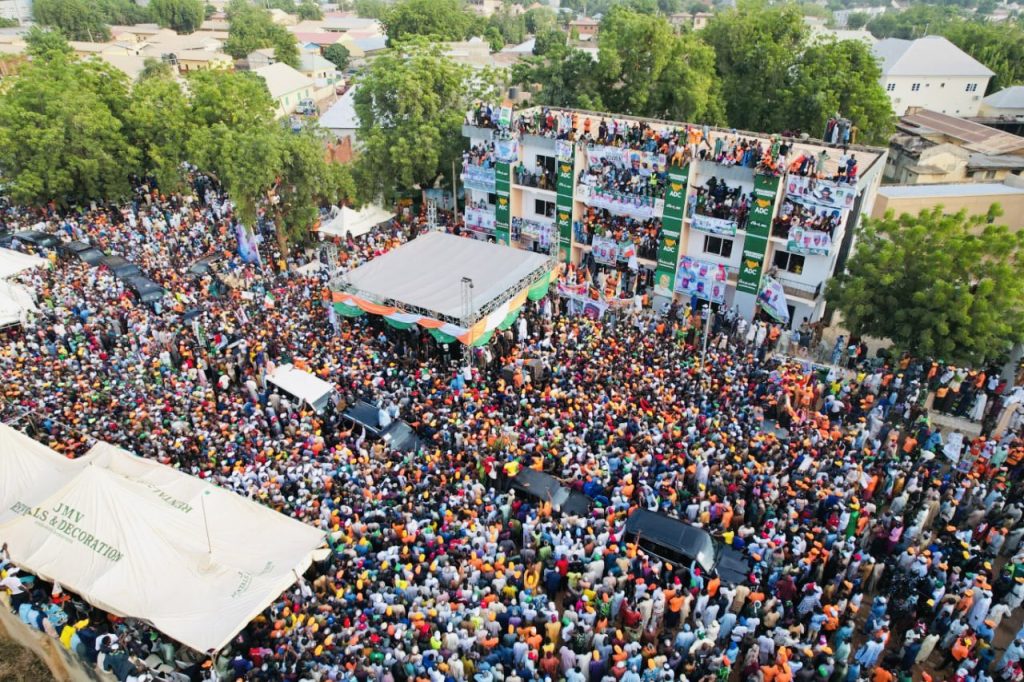
The African Democratic Congress (ADC) Presidential Campaign Council has described the massive reception received by its presidential candidate, Atiku Abubakar, in Sokoto as a sign of growing public dissatisfaction with the administration of President Bola Tinubu ahead of the 2027 general election.
The party said the large turnout recorded during the flag-off of its presidential campaign in Sokoto reflected Nigerians’ frustration over rising living costs and their search for an alternative political direction.
According to a statement by the Director of Strategic Communication, ADC Presidential Campaign Council, Phrank Shaibu, the campaign procession from Sultan Muhammad III International Airport to the party’s state secretariat attracted a huge crowd, with the movement reportedly lasting about three and a half hours due to the number of supporters who joined the convoy.
Shaibu said residents, including youths, women and elderly citizens, trooped out along the route to welcome Atiku, adding that several economic activities were disrupted as people left their workplaces to participate in the event.
The ADC campaign council interpreted the turnout as a reflection of growing concerns among Nigerians over the rising cost of food, transportation, fuel and other essential commodities.
“This was not a crowd assembled by inducement. It was a spontaneous turnout by Nigerians who are struggling with the cost of food, transport, fuel and other basic necessities,” the statement said.
The party also accused the Sokoto State Government of denying it access to public facilities requested for the campaign flag-off, claiming that attempts to restrict the rally only increased public interest in the event.
“The attempts to frustrate the rally only deepened public resentment. The people came out in even greater numbers and made their voices heard,” the council said.
The development comes as political parties begin to position themselves ahead of the 2027 presidential election, with economic hardship expected to remain one of the major issues shaping public debate.
At the rally, Atiku renewed his commitment to addressing the cost-of-living crisis, promising policies aimed at reducing pressure on households and businesses.
The former vice president said an ADC-led government would introduce a targeted, production-based subsidy for qualifying petroleum products refined in Nigeria, arguing that linking support to domestic production would help reduce fuel costs and ease the impact of transportation expenses on food prices.
The ADC said its message to Nigerians was centred on affordability, local production and responsive governance, insisting that the Sokoto turnout demonstrated increasing demand for change.
“When you have a message that connects with the people, you do not need to rent a crowd. The people show up on their own,” the campaign council stated.
However, the political significance of the Sokoto rally is expected to be closely watched as parties intensify their mobilisation efforts ahead of the 2027 elections, where economic performance and public confidence are likely to play a major role in determining voter choices.