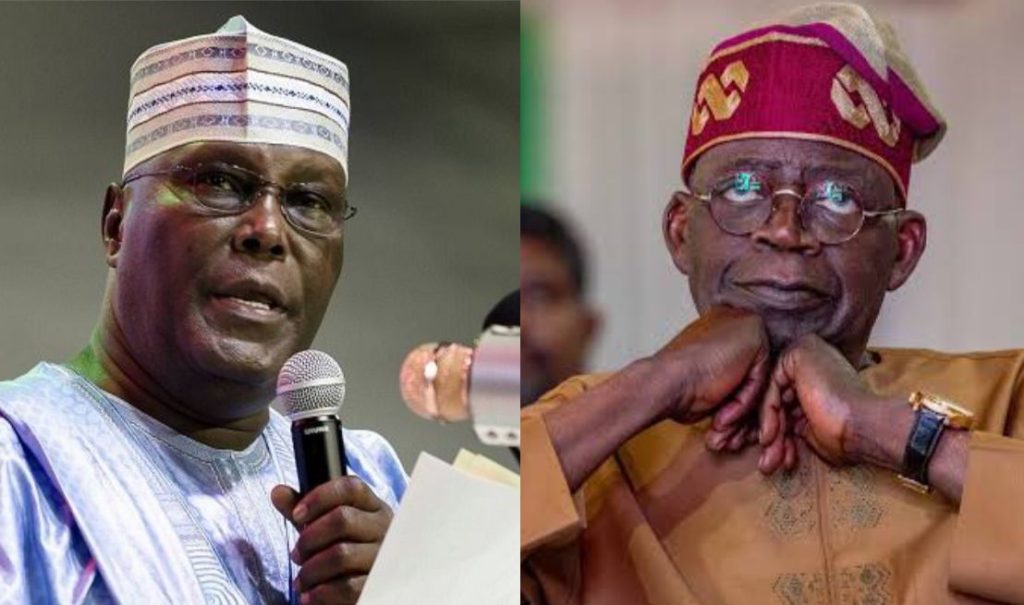
Former VP Atiku Abubakar and President Bola Tinubu
An aide to former Vice President Atiku Abubakar, Paul Ibe, has challenged the Federal Government’s explanation that its petrol discount programme through NNPC Retail does not involve public money.
In a statement addressed to the Chairman of the Presidential Committee on Fiscal Policy and Tax Reforms, Taiwo Oyedele, Ibe argued that the government’s position was misleading because NNPC Retail is owned by NNPC Limited, which belongs to the Nigerian Federation.
He said although there is a technical difference between a discount and a subsidy, the claim that “no public money is involved” does not reflect the true ownership of NNPC Limited.
According to him, NNPC Limited recently declared ₦5.8 trillion as dividends for the 2025 financial year and questioned whether reducing NNPC Retail’s profit margin would affect revenue due to the Federation.
He maintained that any reduction in the company’s earnings could lower the dividends eventually paid into public coffers unless increased sales make up for the shortfall.
Ibe said there is a clear difference between saying no money was taken from the federal budget and claiming that “no public financial interest is involved.”
He added, “Public corporate revenue is part of Nigeria’s wealth.”
The Atiku aide also questioned why the petrol discount was limited to just over 900 NNPC Retail outlets while thousands of independent filling stations across the country were excluded.
He asked, “What happens to millions of Nigerians who patronise other marketers’ outlets totalling about 21,781? And what happens when the discount expires on October 31?”
Ibe further argued that when Atiku Abubakar earlier proposed what he described as a transparent, production-based subsidy to make locally refined petrol cheaper, the proposal was rejected by the current administration.
According to him, the present policy has strengthened Atiku’s position that government policies should focus on easing the burden on citizens rather than debating economic terms.
He said Atiku’s proposal seeks broader and more sustainable support for local refining instead of what he described as a temporary intervention limited to one retail network.
While welcoming efforts to reduce the cost of petrol, Ibe insisted Nigerians deserve lasting solutions that benefit everyone.
He also called on Oyedele to “publish the financial implications of the discount, including its effect on NNPC Retail’s profitability and potential Federation dividends.”
He concluded by saying, “Governance is about improving lives, not winning arguments over the vocabulary of economic hardship.”
The Federal Government has consistently maintained that the temporary petrol discount introduced through NNPC Retail is a commercial pricing decision and not a return to the fuel subsidy regime, which President Bola Tinubu removed in May 2023 as part of wider economic reforms.