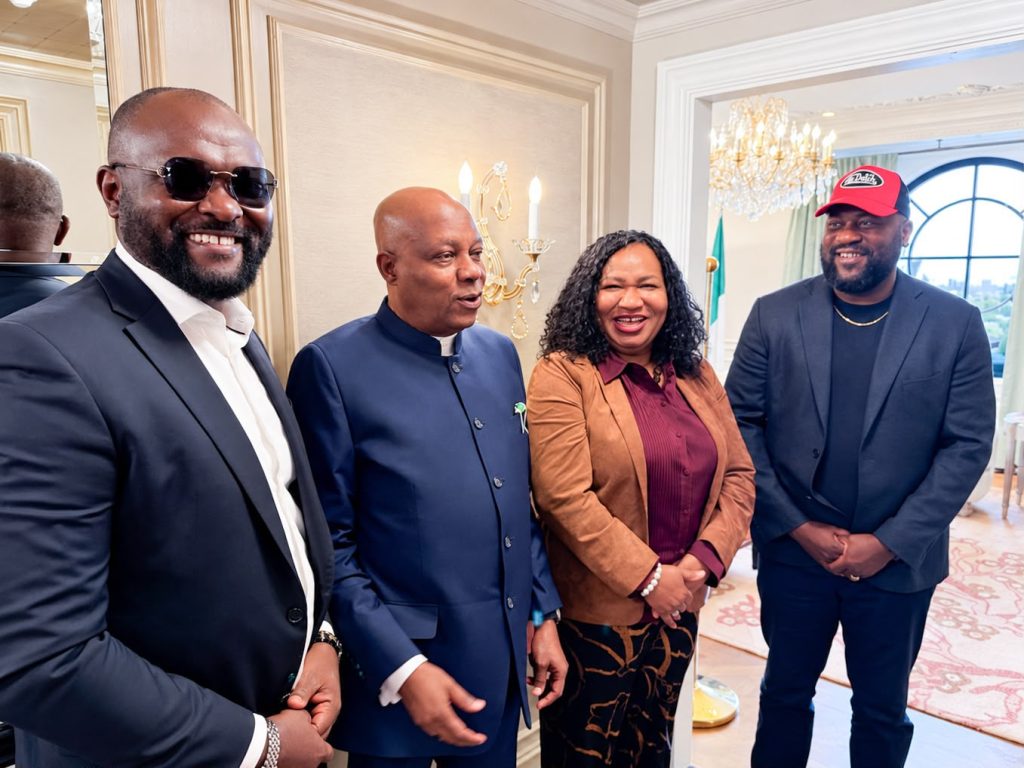
Chief Executive Officer of Winhomes Global Services Limited, Engr. Stella Ifeoma Okengwu, has commended Vice President Kashim Shettima for his openness to dialogue with Nigerians in the diaspora and willingness to listen to concerns surrounding investment in Nigeria.
Okengwu spoke on Monday while reflecting on her encounter with the Vice President on the sidelines of the 81st Session of the United Nations General Assembly (UNGA) in New York.
She said the interaction provided an opportunity to discuss Foreign Direct Investment (FDI), diaspora participation in national development, and the challenges confronting Nigerians abroad who bring their capital, expertise, and business interests back home.
Shettima had led Nigeria’s delegation to the UNGA on behalf of President Bola Ahmed Tinubu, where he participated in high-level engagements and also met with members of the Nigerian diaspora, urging them to contribute their investment, expertise and networks to national development.
According to Okengwu, what stood out for her during the interaction was the Vice President’s willingness to listen to the concerns of investors and engage them directly on issues affecting their confidence in the Nigerian business environment.
She said the conversation reinforced the importance of creating stronger institutional safeguards for Nigerians in the diaspora who invest their resources in the country.
“Patriotism cannot replace investment protection.
“If a Nigerian-American brings capital home, builds a legitimate enterprise, creates employment and introduces foreign investment, that person should be able to trust the institutions responsible for protecting lawful investment,” she said.
Okengwu noted that the Federal Government’s efforts to attract diaspora capital would have greater impact when investors could also have confidence that their legitimate interests would be protected after committing their resources.
She said investor experiences could influence the decisions of other Nigerians abroad and international investors considering Nigeria.
“When diaspora investors encounter serious institutional obstacles, the consequences extend beyond one investor or one project.
“Stories travel. Investor confidence travels with them. And when confidence disappears, capital can disappear too,” she said.
The Winhomes CEO described her interaction with Shettima as significant because it gave her an opportunity to communicate what she described as the human side of diaspora investment.
According to her, behind investment figures are families, employees, businesses and professionals who have chosen to commit their resources to Nigeria because of their belief in the country’s potential.
She described the Vice President as attentive and receptive during their conversation, adding that his willingness to hear the concerns of investors was important in building confidence between government and the diaspora community.
Okengwu, however, said such engagements would have greater significance when they translated into policies and institutional reforms that improved the experience of investors.
She also acknowledged the Federal Government’s development initiatives in the South-East, including the establishment of the South East Development Commission, saying the impact of such measures would ultimately be determined by their implementation.
She said residents of the region should be able to assess the benefits of government interventions through improved infrastructure, investment, employment opportunities and stronger confidence in public institutions.
“Their ultimate significance will depend on implementation,” she said.
“The people of the South-East should be able to measure progress through infrastructure, investment, jobs, economic opportunities and improved confidence in institutions.”
Reflecting on Nigeria’s investment drive, Okengwu said attracting capital was only one part of the process, stressing that retaining investor confidence after investments had been made was equally important.
She said Nigeria could strengthen its investment reputation when investors could point to concrete experiences of institutional support and protection.
“The strongest advertisement Nigeria can give the international investment community is not another conference brochure.
“It is the testimony of an investor who can say: ‘I invested in Nigeria. The institutions worked. My rights were respected. My investment was protected. I would invest again,’” she said.
Okengwu said Nigerians in the diaspora represented an important pool of capital, skills, professional networks and international business connections that could support Nigeria’s development.
She therefore called for diaspora engagement to go beyond remittances to encompass investment, entrepreneurship, technology transfer and professional expertise.
She also stressed that recognising positive engagements with public officials should not be interpreted as unconditional political support, saying officials should be acknowledged when they demonstrate openness while remaining accountable for the outcomes of government policies.
“I can say that Vice President Shettima treated me with humility and listened compassionately to my concerns while still believing that government must be held accountable for results. Both things can be true,” she said.
Okengwu said her encounter with the Vice President strengthened her optimism about the prospects of deeper engagement between government and Nigerians in the diaspora.
She called for continued collaboration among government, public institutions, citizens and investors to build greater confidence in Nigeria’s investment environment.
“Let compassion become policy. Let listening become action. Let invitations to the diaspora be accompanied by institutional protection,” she said.
She added that Nigerians abroad remained willing to contribute to national development but needed greater assurance that their investments would receive institutional protection.
“Nigeria does not lack talent. Nigeria does not lack investors. And Nigeria certainly does not lack Nigerians abroad who desperately want their homeland to succeed. What we need is a bridge of trust between government, institutions, citizens and investors,” she added.