Nigeria has taken another step to strengthen its creative economy after signing a new agreement aimed at properly valuing, protecting and generating economic benefits from the country’s National Art Collection.
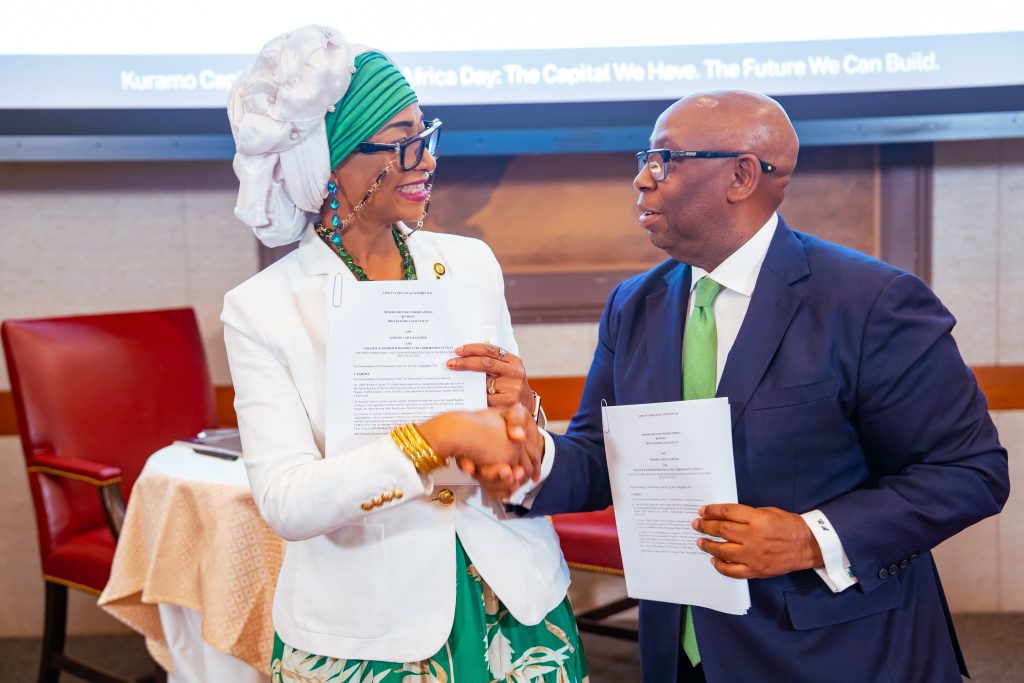
The Minister of Art, Culture, Tourism and the Creative Economy, Hannatu Musawa, announced that she signed a Memorandum of Understanding (MoU) in New York with Kuramo Capital and the Creative and Tourism Infrastructure Corporation (CTICo).
The agreement was signed on the sidelines of the 81st United Nations General Assembly (UNGA 81).
According to the minister, the partnership will advance the enumeration, valuation and monetisation of Nigeria’s National Art Collection.
Musawa explained that the first phase of the project had already recorded significant progress, with about 2,000 artworks identified, catalogued and entered into a formal national register managed by the Ministry of Finance Incorporated (MOFI).
She said the next phase would focus on carrying out professional valuation of the artworks and creating sustainable ways to unlock their economic value.
The minister stressed that the initiative is not intended to dispose of Nigeria’s cultural treasures.
“This is not about selling our heritage. It is about building the systems and partnerships that allow Nigeria to properly value, protect and generate sustainable value from its cultural assets through exhibitions, institutional loans, licensing, cultural tourism and international exchange.”
Musawa added that the collaboration would bring together government institutions, development finance partners and private sector expertise to strengthen Nigeria’s cultural economy.
“This partnership with Kuramo brings together government, development finance and private sector expertise to build a stronger foundation for the future of Nigeria’s cultural economy.”
The initiative is expected to improve the management of Nigeria’s rich artistic heritage while creating new opportunities for investment, tourism, international cultural exchanges and revenue generation.
The move also aligns with the Federal Government’s broader efforts to diversify the economy by promoting the creative and cultural sectors as major drivers of growth, job creation and national development.