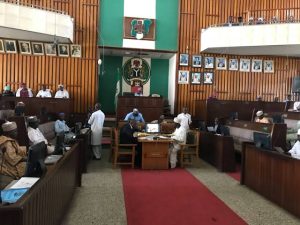
Taraba State Governor, Kefas Agbu
Taraba State Governor, Dr. Agbu Kefas, has officially launched the state’s Climate Change Policy and Action Plan, describing it as a major step towards protecting the environment and building a more climate-resilient future.
The launch, held on Friday, brought together government officials, development partners and other stakeholders committed to advancing environmental sustainability in the state.
Speaking at the event, the Commissioner for Environment and Climate Change, Hajiya Aishat B. Barde, urged Ministries, Departments and Agencies (MDAs), local government councils, traditional institutions, communities, youth and women groups, the private sector and development partners to actively support the implementation of the new policy.
She stressed that addressing climate change requires a united effort rather than the responsibility of any single institution.
According to her, the unveiling of the policy marks the beginning of a new era of coordinated, measurable and result-driven climate action in Taraba State.
Barde expressed confidence that the policy would position the state to become “environmentally sustainable, economically prosperous and resilient to the challenges of changing climate.”
She commended Natural Eco Capital, Society for Planet and Prosperity, and the African Climate Foundation for providing technical and financial support towards the development of the policy.
The commissioner also applauded Governor Kefas for creating an enabling environment that placed climate action at the centre of the state’s development priorities.
While unveiling the policy and action plan, Governor Kefas described the initiative as a defining moment for Taraba’s environmental future.
“We are taking the decision about the future of Taraba. We are deciding whether our forests will still be standing and whether our rivers will still be flowing,” the governor said.
Kefas observed that the effects of climate change were already being felt across the state, particularly in agriculture, where irregular rainfall patterns and shrinking rivers continue to threaten livelihoods and food production.
He explained that the Climate Change Policy covers key sectors such as health, infrastructure and education, emphasizing that environmental sustainability must be integrated into every aspect of government planning and development.
The governor maintained that successful implementation would require the active participation of government ministries, traditional rulers, local government councils and residents across the state.
He warned that any climate policy that failed to improve the lives of farmers would not achieve its objectives and urged communities to protect forests while discouraging bush burning.
Kefas also highlighted the need for improved waste management, noting that meaningful climate action could not be achieved if streets and drainage channels remained blocked by refuse.
He directed local government councils to take the lead in implementing the policy at the grassroots, explaining that environmental challenges such as flooding and bush burning are largely community-based issues.
According to the governor, the effectiveness of the Climate Change Policy would be measured by visible improvements in communities rather than the number of conferences or workshops held.
He appealed to the Federal Government, the National Council on Climate Change, international development partners and other stakeholders to collaborate with Taraba State in implementing the policy and action plan.
Kefas further encouraged residents to play their part by planting and protecting trees, while avoiding practices such as bush burning that contribute to environmental degradation.
Describing Taraba as one of Nigeria’s most naturally endowed states, with abundant forests, rivers and mountains, the governor stressed the importance of preserving these resources for future generations.
He reaffirmed that the Climate Change Policy would remain a permanent component of the state’s development agenda, underscoring his administration’s commitment to environmental sustainability.