Senator Ben Murray-Bruce
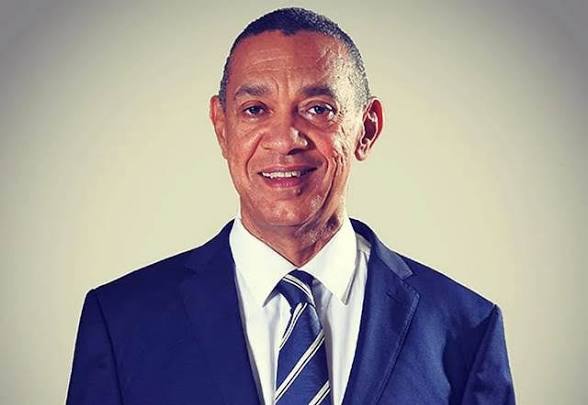
Former Senator Ben Murray-Bruce has opposed calls for the return of Nigeria’s fuel subsidy, insisting that the policy failed the country for decades and should not be revived.
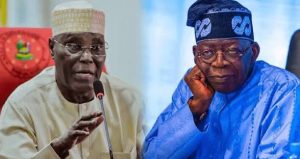
Reacting to recent comments by former Vice President Atiku Abubakar, Murray-Bruce argued that restoring the subsidy would only revive corruption and enrich a privileged few rather than ease the hardship faced by ordinary Nigerians.
“Atiku Abubakar is wrong. Bringing back the fuel subsidy is not the answer. We tried it for forty years. It made a few men billionaires, it fed smugglers at our borders, and it never once put money in the pocket of the woman selling tomatoes by the roadside. Going back to it would be going back to the same thieves,” he wrote in a post shared on X on Friday.
The former Bayelsa East senator commended President Bola Tinubu for removing the fuel subsidy despite the difficult consequences of the decision.
Addressing the President directly, he said: “Mr President, you have done well. Removing the subsidy was hard and you did it. You have also sent far more money to the states than any President before you. The Federal Government has done its part. Now the states must do theirs.”
Murray-Bruce argued that responsibility for reducing transport costs within states rests squarely with state governments, not the Federal Government.
According to him, urban transportation is constitutionally under the control of state governments, stressing that governors now possess even greater powers over transport following the 2023 constitutional amendment.
“Subsidising transport inside a state is the job of that state government. It is not the job of the President. It has never been his job. It is not his job today. It will not be his job tomorrow. Moving people around Ilorin is not the work of Abuja, it is the work of the Kwara State Government. Moving people around Kano is the work of Kano State. Moving people around Lagos is the work of Lagos State.”
He further stated: “This is not my opinion. It is our Constitution. Transport within a state is a state matter. The Federal Government has no business running a bus from Ozumba Mbadiwe to Ikorodu, and it should not be asked to. In fact, since the constitutional amendment of 2023, our governors have more power over transport than any governors in the history of this republic. They are simply not using it.”
Questioning how states have utilised increased federal allocations since the subsidy removal, Murray-Bruce challenged governors to account for the funds received.
“So when a governor tells you the hardship in his state is Abuja’s fault, ask him one question: what have you done with your own allocation? Because that is where the money is. And that is where the responsibility is.”
Citing rising transport costs, he noted that the average bus fare within Nigerian cities had climbed sharply in recent years, worsening the cost-of-living crisis.
“In December 2022, one bus drop inside a Nigerian city cost ₦644. Today it is ₦1,431. Our people are now working half the month just to pay the bus. A man who cannot afford to reach his workplace does not really have a job. A child who cannot afford to reach school does not really have an education.”
To address the situation, Murray-Bruce proposed a four-point transport subsidy programme for all 36 states and the Federal Capital Territory.
His recommendations include free transportation for students travelling to and from school, a maximum fare of ₦500 for trips across major cities, partnerships with existing transport operators instead of government purchasing new buses, and a technology-driven payment system using GPS tracking and electronic tap cards to eliminate fraud.
Explaining the proposal, he said: “One. Students ride free. Every student, to school and back home, at no cost. Not discounted. Free.
“Two. Nobody pays more than ₦500. From one end of a city to the farthest end of that same city, ₦500 maximum. And in our smaller cities and towns, it should be far less than that.
“Three. Do not buy a single bus. Governors, please. No buses. No taxis. No boats. We have seen those vehicles rusting in government yards from Sokoto to Yenagoa. Instead, register the drivers who are already on the road, fix the fare the passenger pays, and pay the driver the difference.
“Four. Pay only for trips you can prove. GPS on the vehicle, a tap card in the passenger’s hand. If a trip did not happen, nobody gets paid. That is how you kill fraud before it is born.”
He maintained that such a model would improve the earnings of transport operators while making commuting more affordable for millions of Nigerians.
“The drivers will not lose. The drivers will get richer. Today a driver chases passengers in traffic and prays. Under this scheme he earns a guaranteed payment from the state every month. With steady income he can service his vehicle, and in time he can buy a newer, cleaner, safer one.
“And our people will feel it immediately. Money that used to disappear into transport will stay in the pocket for food, for rent, for medicine, for school fees. That is a pay rise that costs nobody a job.”
On funding, Murray-Bruce argued that states could comfortably finance the programme by dedicating a small fraction of their monthly allocations from the Federation Account Allocation Committee (FAAC).
“FAAC allocations to the states have exploded since the subsidy was removed from ₦2.8 trillion in 2022 to ₦7.3 trillion in 2025. Nigerians have been asking a fair question ever since: where did it go?
“I am asking each state to spend no more than five per cent of its FAAC allocation on this. Five per cent. Ninety-five per cent remains untouched for everything else.
“If a governor cannot find five per cent to stop his own people from suffering, then the problem in that state was never money.”