An 18-year-old Nigerian-German technology entrepreneur, Georgia Oviesu, has developed SafeLink, an emergency response application that allows people to send distress alerts even when internet services are unavailable.
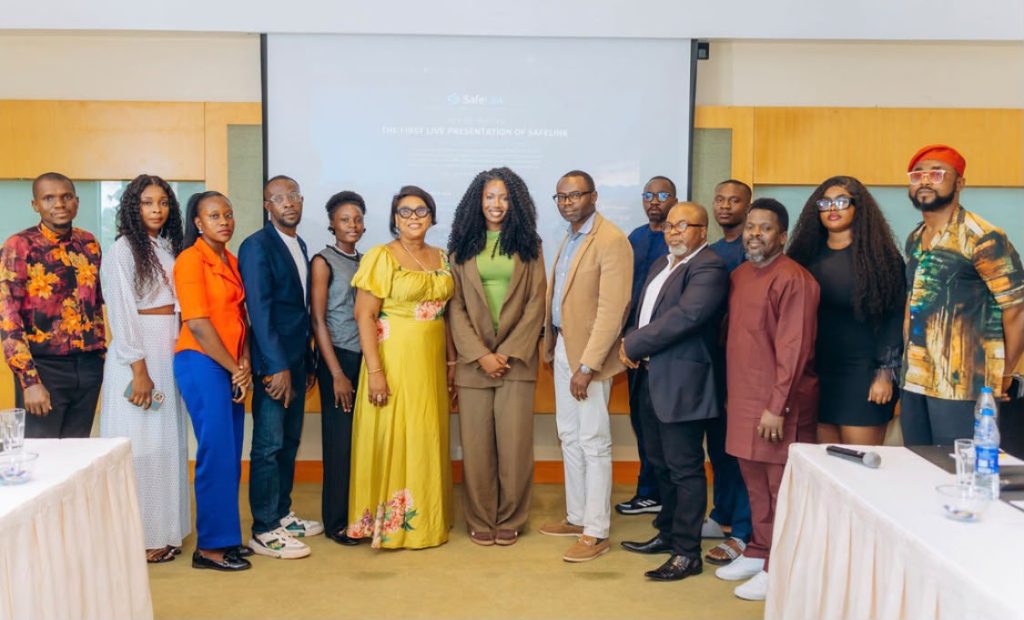
Oviesu, also known as Gia Réi in the music industry, unveiled the application during a presentation at the Radisson Blu Anchorage Hotel, Victoria Island, Lagos.
The Android-based app relies on Bluetooth Low Energy (BLE) mesh technology to create direct links between nearby devices. It therefore allows emergency messages to move between users without Wi-Fi, mobile networks or internet access.
The technology is designed to alert people within the vicinity when a user faces danger. It can also share the user’s location and coordinates with registered rescuers.
SafeLink allows an emergency message to be transmitted repeatedly for up to 30 minutes. Users can also provide personal details, including their names, ages and heights, which registered rescuers can access when an SOS alert is activated.
Oviesu said she developed the application after identifying a major gap in emergency response.
She explained that people often have to wait for rescue after an accident, disaster or security incident because they cannot reach those who could help them.
“Every year millions of people around the world lose their lives to natural disasters, kidnappings, building collapse,” she said.
According to the young entrepreneur, SafeLink is intended to provide another communication channel during emergencies, particularly in places where conventional networks may be unavailable or unreliable.
The app could be used during building collapses, natural disasters and medical emergencies such as seizures, heart attacks and strokes.
Oviesu demonstrated the concept using a fictional character, Segun, a father of two who becomes trapped after a building collapses while he is away from home.
Unable to shout for help or make a conventional phone call, Segun could activate SafeLink and send an SOS alert to nearby devices.
Users within the Bluetooth network would then receive the alert and could contact emergency responders or security authorities.
Oviesu said the model is based on the idea of using communities as part of the emergency response chain.
“Everybody in your vicinity can be able to receive your message, your SOS message,” she said.
She added that the system could allow someone nearby to recognise an emergency and seek assistance for the affected person.
“The thing is that every single Nigerian can have this app,” she said.
The concept generated questions from participants about its potential application to Nigeria’s security challenges, particularly kidnapping incidents and emergencies in rural communities.
George Uwaifo, IT Chief Technology Officer of Giteksol Solutions Limited, was among those who sought clarification on how the technology could work in such situations.
Oviesu said she hoped to work with police stations, security agencies and other relevant institutions. Such partnerships, she explained, could help ensure that emergency alerts reach authorities capable of responding.
Oviesu said her journey into the project began with her interest in computer science, coding and computational thinking.
She was introduced to Kotlin, the programming language used for the application, during an internship.
She later turned a compulsory school application project into an opportunity to develop technology aimed at addressing a social problem.
“In my course, we have to create an app, every single one of us, every student in my grade. We have to create an app,” she said.
Rather than develop a conventional student project, she chose to build an application around emergency communication.
The young entrepreneur appealed to individuals, organisations and government institutions to support the project.
She said the application was primarily intended to help vulnerable people who may not have access to other emergency resources.
“This is meant to help the poor, people who need saving,” she said.
Oviesu also said she was willing to receive criticism and suggestions as she continues to improve the technology.
Responding to concerns about partnerships with government institutions and the possible loss of control over the innovation, she said she did not consider criticism a threat to the project.
“Development without criticism is not development. It’s just you withholding your idea,” she said.
“I am very young. I’m 18 years old. I can’t know everything.”
The issue of false emergency alerts also came up during the discussion. Oviesu advised users against attempting risky rescues and urged them to involve the appropriate authorities.
She explained that SafeLink separates ordinary users from registered rescuers. This structure, she said, would help direct SOS messages to people designated to respond.
Participants also raised concerns about personal information collected through the application.
Oviesu said users’ information is stored in the cloud and accessed through her designated login.
The discussions further highlighted the need for public trust, strong partnerships and clear data protection measures as the project moves towards wider deployment.
A live demonstration of the application was conducted for journalists and other participants at the event.
Oviesu called for collaboration with the Federal Government, Nigerian Communications Commission (NCC), security agencies, Economic and Financial Crimes Commission (EFCC) and other relevant stakeholders.
Beyond technology, she is co-founder and vice president of the Bennie Griffins Academy, a free school for underprivileged children in Adiyan, Ogun State.
She also maintains a music career under the name Gia Réi, with an Afrobeats-influenced R&B and pop sound. Her recorded singles include “Cara” and “Taking Your Time.”