President Bola Tinubu
The return of President Bola Ahmed Tinubu to Nigeria after about one month in Europe has continued to generate reactions, with Paul Ibe, an aide to former Vice President Atiku Abubakar raising fresh concerns over the trip.
In a statement on Tuesday, Ibe said the President’s return did not answer questions surrounding his prolonged stay outside the country and the constitutional procedures followed during the period.
According to him, the Presidency had announced on August 30 that Tinubu was travelling to Europe for a three-week annual vacation, which it described as a “working vacation.”
He argued that “Calling the trip a ‘working vacation’ does not change the wording of the Constitution. It is a deliberate attempt to distract from Tinubu’s breach of the Constitution.”
The aide also questioned the impact of the President’s engagements abroad, saying Nigerians deserved to know the results of the meetings held during the trip. He stated: “Photographs and press statements document that meetings occurred; they do not, by themselves, demonstrate their outcomes.”
He further said, “The larger question is one of accountability: what did the extended stay abroad achieve, what constitutional steps were taken during the vacation, and what are the measurable results of the engagements cited by the Presidency?”
According to him, Nigeria continued to face security, economic and food security challenges while the President was away, adding that the issues remained despite his return.
The Presidency had earlier maintained that President Tinubu remained fully engaged in governance during the trip and repeatedly assured Nigerians that the President was “hale and hearty.”
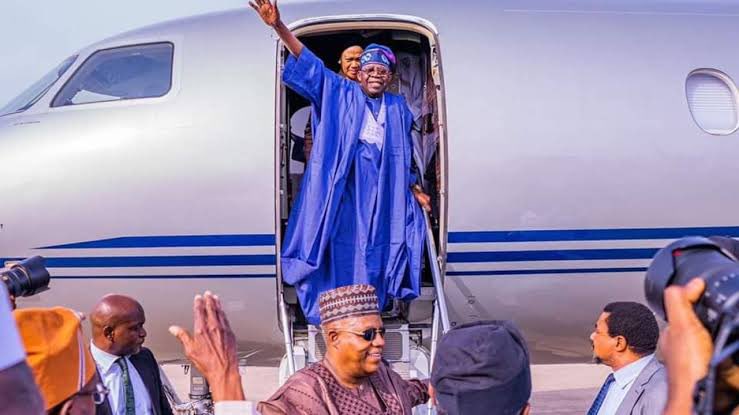
President Tinubu returned to Nigeria on Tuesday after visits to the United Kingdom and France, where the Presidency said he held official engagements alongside his annual leave.
The debate over the President’s trip comes as political stakeholders continue to differ on the interpretation of constitutional provisions relating to presidential vacations and the transfer of powers, while many Nigerians are calling for greater transparency and accountability in governance.