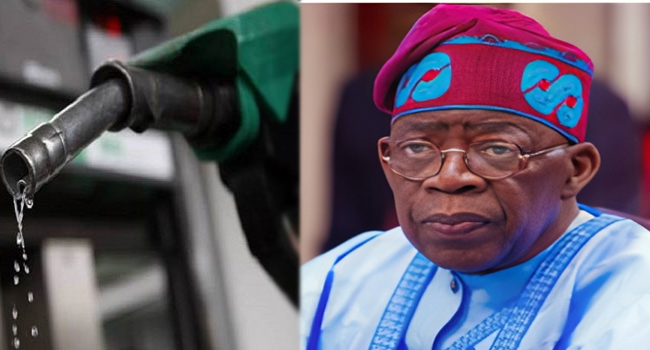
Nigerian National Petroleum Company (NNPC) Limited will forgo its petrol retail profit margin for 30 days and sell fuel at cost as the Federal Government introduces fresh measures to ease the impact of rising petrol prices on Nigerian households.
The decision, backed by President Bola Ahmed Tinubu, is aimed at reducing the burden of rising fuel costs on vulnerable Nigerians, particularly commercial transport operators and households struggling with the high cost of living.
The Finance Minister and Coordinating Minister of the Economy, Taiwo Oyedele, announced the measure on Thursday, October 8, 2026, alongside other government plans to manage the impact of global crude oil price shocks.
Under the arrangement, NNPC Retail will sell petrol at its landing cost without adding its retail profit margin. For instance, if the company’s landing cost is ₦1,300 per litre, it will sell the product at the same price.
Oyedele according to a statement by the presidential spokesman, Bayo Onanuga, said NNPC’s decision should encourage other fuel marketers to consider similar measures, noting that the current surge in crude oil and petrol prices was not expected to last long.
He, however, warned against interpreting the arrangement as a return to petrol subsidy, which the Tinubu administration ended on May 29, 2023.
The Federal Government is also negotiating a ceiling of ₦1,350 per litre on petrol’s ex-gantry or landing cost to reduce sudden price increases. Under the proposed arrangement, refiners and importers would initially bear costs above the ceiling and recover the shortfall later when crude oil prices or exchange rates improve.
Explaining the policy, Oyedele said: “This is neither a subsidy nor a price control: it is designed to smooth prices over time rather than suppressing them. The reasoning is simple. 1,400 naira a litre today and 1,400 tomorrow is better than 1,500 today and 1,300 tomorrow, because volatility itself adds to uncertainty and cost. And when fares rise sharply, they rarely fall as fast. The ceiling will be reviewed monthly, reset as costs require, and the figures published for transparency.”
Another measure involves forward sales of crude oil to domestic refineries. The government expects the arrangement, alongside increased production and the release of crude previously committed elsewhere, to help protect local fuel prices from international market fluctuations.
The government is also increasing funding for cash transfers to vulnerable households and providing subsidised credit to small businesses and consumers. It plans to work with state governments and security agencies to curb road taxes and levies that increase transport fares and the cost of moving goods.
As part of efforts to reduce transportation costs, the Federal Government is accelerating the rollout of compressed natural gas (CNG) in collaboration with state governments. According to the announcement, CNG is between 60 and 70 per cent cheaper than petrol, and transport operators are expected to pass the savings on to passengers through lower fares.
The government is also considering an excess-profit tax on operators found to be taking undue advantage of consumers across the energy value chain. Proceeds from any such tax would be dedicated to measures that cushion the impact of fuel prices, including transport support or vouchers for urban minimum-wage earners.
It will also work with the National Assembly to consider additional tax relief for low-income earners under the 2027 Finance Bill. Other planned interventions include reducing regulatory costs that contribute to higher prices of goods and services.
To prepare for future supply disruptions, the government announced plans to invest in a National Strategic Fuel Reserve. Under the proposed system, refined petroleum products would be released into the market under published rules whenever global disruptions or hoarding threaten supply and price stability.
The government said the reserve would help prevent artificial scarcity, discourage market manipulation and strengthen the country’s long-term energy security without restoring fuel subsidy or imposing fixed pump prices.
Additional measures include improving traffic management in major cities to reduce fuel consumption and using NIPOST’s newly launched address codes to make deliveries and logistics more efficient and affordable.
In a statement issued on Thursday, the Presidency acknowledged the hardship Nigerians continue to face because of high fuel prices. It maintained that the government would not reverse the removal of petrol subsidy but would introduce targeted measures to help households and businesses cope with the impact of the reforms.
“Removing the fuel subsidy came at a price. But the alternative has been tried. Nigeria has already lived through that cycle: scarcity, smuggling, a collapsing currency and a fiscal crisis. We cannot afford to live through it again, least of all in response to a temporary disruption, and at the very moment the results of reform are gathering pace.”
The Presidency added: “Government is not out to reverse a necessary reform designed to set our country on the path towards sustained prosperity. It is to ensure its gains reach more Nigerians, faster and in more tangible ways. That is our work, and we are committed to doing it.
“The Federal Government is also working on a comprehensive package of fiscal measures to bring inflation down to single digits sustainably in the near term.”