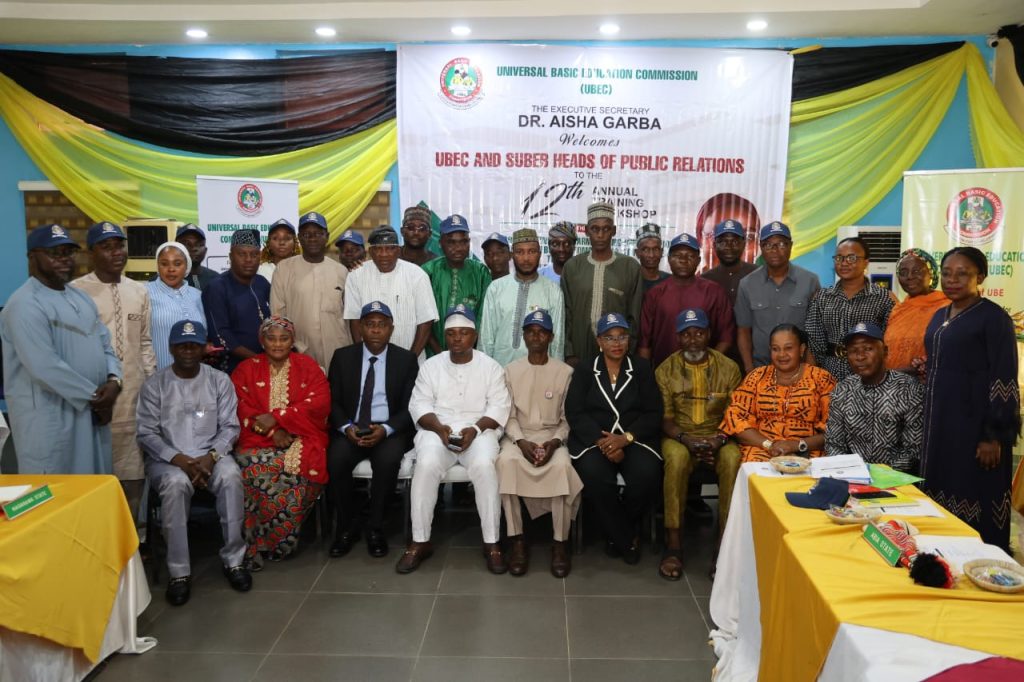
Universal Basic Education Commission (UBEC) has charged public relations and information officers across the country to embrace innovation, professionalism and strategic communication in promoting its interventions and improving public understanding of government investments in basic education.
Executive Secretary of UBEC, Dr Aisha Garba, gave the charge on Monday in Keffi, Nasarawa State, at the commission’s 12th Annual Training Workshop for public relations and information officers of UBEC and State Universal Basic Education Boards (SUBEBs) from the 36 states and the Federal Capital Territory (FCT).
The training programme was declared open by the Chairman of Nasarawa State Universal Basic Education Board, Dr Kassim Mohamed.
Garba, whose speech was delivered on her behalf by the Director, North Central Zone, Mr Edward Ababalaka, said effective communication was a strategic pillar of educational development and essential to ensuring that the achievements of government interventions were understood and appreciated by the public.
She noted that although substantial progress had been recorded in school infrastructure development, teacher professional development, provision of instructional materials and digital learning initiatives, the success of such interventions also depended on how effectively they were communicated to stakeholders.
According to her, public relations officers are critical to translating educational policies and programmes into narratives of impact, building public confidence and mobilising communities to support basic education delivery.
She urged the participants to be proactive, innovative and responsive in the discharge of their responsibilities, particularly in the face of the growing influence of digital media and the challenges of misinformation.
Garba said the workshop was designed to strengthen their capacity in advocacy, media relations, stakeholder engagement, content development, digital communication, reputation management and strategic information dissemination.
She urged them to go beyond routine publicity by documenting and showcasing success stories from schools and communities, noting that every classroom constructed, teacher trained and learning resource provided represented a story of transformation deserving public attention.
The UBEC boss also called on SUBEB chairmen to adequately support and empower their public relations departments, describing the officers as image-makers responsible for projecting the achievements of their respective boards.
Acting Head of Corporate Communications, UBEC, Mrs Kemi Abass, in her welcome address, said the responsibility of public relations officers went beyond issuing press releases, covering events and posting activities on social media.
She urged the officers to move from routine publicity to proactive, strategic and impact-driven communication capable of demonstrating how government interventions were improving teaching and learning outcomes.
Abass advised the participants to adopt modern communication tools, including short documentaries, human-interest stories, infographics, interviews and beneficiary testimonials, to make their messages more engaging and impactful.
She also called for stronger collaboration between UBEC and SUBEB communication units to ensure timely information sharing, coordinated messaging and consistent projection of achievements across the country.
She disclosed that the commission was looking towards establishing a regular UBEC publicity bulletin, producing a documentary showcasing success stories across UBEC and SUBEBs, and launching a coordinated national digital campaign to improve awareness and visibility of basic education interventions.
According to her, the workshop is expected to strengthen the communication capacity of UBEC and SUBEB personnel, improve collaboration among their public relations units and promote greater public awareness of interventions aimed at expanding access to quality basic education across the country.
Also speaking, the Special Adviser to the Minister of Education on Media and Communications, Mr Ikharo Attah, stressed the need for effective and timely communication to showcase the achievements of the Federal Government in the basic education sector.
Attah, while reaffirming the commitment of the Minister of Education, Dr Olatunji Alausa to transforming the education sector, acknowledged the progress recorded in school infrastructure development, saying such achievements must be consistently communicated to the public to prevent isolated cases of inadequate facilities from overshadowing broader improvements across the country.
He maintained that public relations officers must tell the stories of government interventions and ensure that the public was adequately informed about ongoing projects and their impact.
He also commended UBEC’s corporate communications efforts, particularly its publicity materials, frequently asked questions and public awareness activities, urging the commission to extend such initiatives to the state level.
Earlier, the Dean of UBEC/SUBEB Public Relations Officers, Mr Richard Nanpon Jonah, called for dedicated budgetary allocations for public relations activities across SUBEBs to enable the officers to effectively communicate the impact of interventions in their respective states.
Jonah said the substantial investments in basic education would achieve greater public impact if supported by effective communication, transparency and stakeholder engagement.