Stakeholders of Ron Chiefdom in Bokkos Local Government Area of Plateau State have rejected the proposed use of the 1974 Gazette as the basis for selecting the next Saf Ron, arguing that the instrument no longer reflects the present structure of the chiefdom.
The stakeholders, under the aegis of the Ron Integrity Advocacy Group, also appealed to Governor Caleb Mutfwang to urgently intervene and suspend the ongoing selection process until the historical and traditional issues surrounding the stool are resolved.
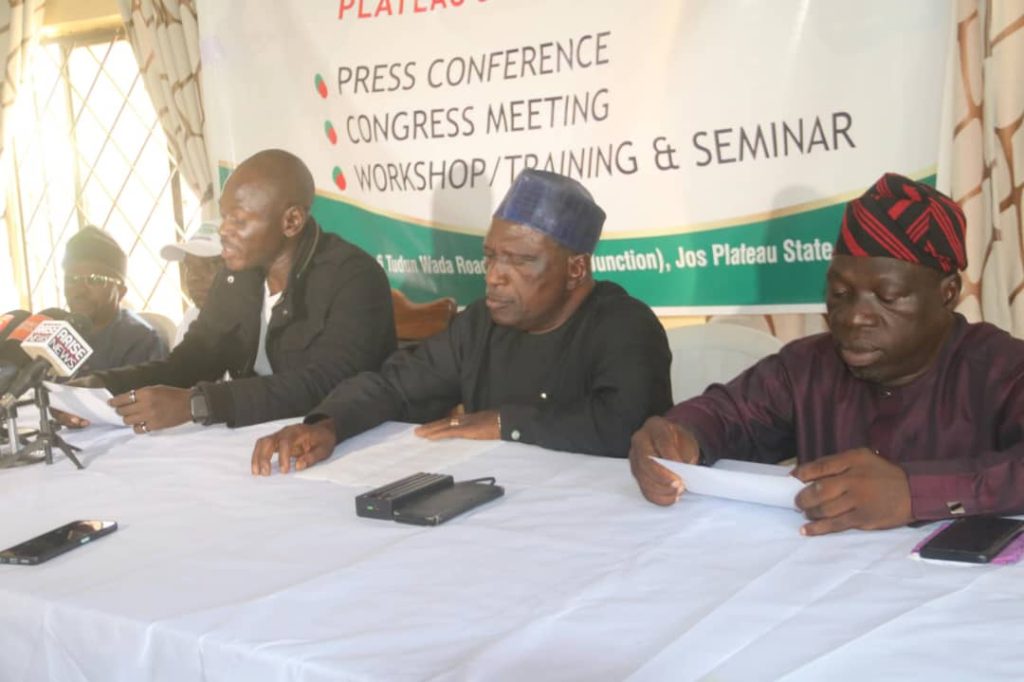
The group made the demand in a statement issued by its legal adviser, John Matong, alongside its Chairman, Chief Sunday J. Akuns, and Secretary, Hon. Chief Sylvanus M. Ayuba, at the NUJ Press Centre in Jos.
The position followed an announcement made on August 29, 2026, during a memorial Mass for the late Dah Lazarus Amashin Agai at St. Thomas Catholic Church, Bokkos, where the Permanent Secretary, Ministry of Local Government and Chieftaincy Affairs, Ishaya Mallo, represented the Commissioner, Ephriam Usman.
According to the group, Mallo stated at the event that the state government intended to proceed with the selection of the next “Saf Ron-Kulere” based on the 1974 Gazette.
The stakeholders, however, said applying the Gazette without reviewing it against the present structure of Ron Chiefdom could undermine the legitimacy and inclusiveness of the selection process.
They identified the provision for rotation between Ron and Kulere as one of their major concerns, arguing that the arrangement was established when the two were administered as one chiefdom.
The group said the subsequent creation of separate Kulere and Mushere Chiefdoms had altered the administrative circumstances upon which the old rotational arrangement was based, making a review necessary.
It also challenged the electoral college contained in the 1974 Gazette, which it said recognised eight districts, whereas Ron Chiefdom currently has 11 districts.
The stakeholders argued that relying on the old electoral structure could lead to the inclusion of districts that are now under Kulere and Mushere Chiefdoms, while failing to reflect the current composition of Ron Chiefdom.
They further questioned the reliance on the 1974 structure alongside the 2003 excision which, according to the group, resulted in Kulere and Mushere becoming separate chiefdoms.
The group consequently called on the state government to convene an urgent stakeholders’ meeting to review the Baba S.G. Mafuyai Committee Report and relevant historical records before proceeding with the selection.
It also demanded that the electoral college and selection method be updated to reflect the current 11 districts of Ron Chiefdom.
The stakeholders urged the government to ensure that the process was guided by what they described as authentic Ron customs and traditions rather than administrative convenience or political considerations.
They further called for the suspension of the current process until the historical and traditional questions surrounding the selection were resolved through consultation.
The group stated that if the government insisted on applying the 1974 Gazette in its entirety, “for the sake of legal consistency,” the excised Kulere and Mushere Chiefdoms would first have to be dissolved.
It stressed that its position was not intended to create confrontation, but to protect the cultural heritage and integrity of the Ron traditional institution.
“Our cultural heritage is not an administrative commodity, and the Saf Ron stool is not an experiment in outdated governance,” the group said.
The stakeholders appealed to Governor Mutfwang to personally intervene to prevent what they described as an irreversible and culturally damaging outcome.
They, however, warned that if government proceeded without addressing their concerns, they would pursue all lawful avenues to protect the integrity of the Ron traditional institution.